

The Shift From Roads and Bridges to Grids and Batteries
For most of the 20th century, “infrastructure investing” meant highways, airports, pipelines and power plants that burned coal, oil or gas. These assets were big, concrete-heavy and usually carbon-intensive. They were attractive because they offered long-term, relatively predictable cash flows backed by governments or regulated tariffs.
Today, in 2025, that picture has changed. Infrastructure still means long-lived, real-world assets, but now it also includes solar parks, offshore wind farms, battery storage, smart grids, EV charging networks, green hydrogen hubs and even climate-resilient water systems. In other words, investing in sustainable infrastructure is no longer a niche—it’s gradually becoming the default direction of capital.
How We Got Here: A Quick Historical Detour
If you zoom out, the current boom in sustainable infrastructure is the product of three big waves. First, in the 1990s–2000s, liberalization and privatization opened many infrastructure sectors to private investors, especially in Europe and parts of Asia and Latin America. Then, in the 2010s, cheap solar panels and wind turbines—largely thanks to mass production in China and supportive policies in the EU and US—suddenly made renewables commercially viable at scale.
The third wave arrived around 2020. COVID-19 recovery plans in the EU, US, Japan and elsewhere explicitly tied public spending to “green” outcomes. At the same time, extreme weather and net‑zero pledges from governments and corporations pushed climate risk and decarbonization from the footnotes of investment memos to the first page. By 2025, governments aren’t just allowing sustainable infrastructure; they’re actively steering capital toward it through tax credits, guarantees and long-term procurement contracts.
What Actually Counts as Sustainable Infrastructure?
We’re not just talking about wind turbines on a hillside. Sustainable infrastructure is better thought of as a whole ecosystem of assets and services that either reduce emissions, adapt to climate impacts or restore natural systems.
In practice, that can include:
1. Clean energy generation – solar PV, onshore and offshore wind, hydro (especially low‑impact projects), geothermal, and increasingly small modular reactors where nuclear is part of national strategy.
2. Enabling infrastructure – transmission lines, smart grids, grid‑scale batteries, demand-response platforms, EV charging corridors, interconnectors between countries.
3. Low‑carbon transport – electric buses and rail, metro systems, port electrification, and logistics hubs designed to cut emissions.
4. Water and waste systems – efficient desalination, wastewater treatment, circular-economy recycling plants, and methane capture from landfills.
5. Climate resilience – coastal defenses, flood management, nature‑based solutions like wetland restoration, and urban cooling infrastructure.
The key is that the project offers both infrastructure‑like cash flows and a measurable environmental benefit—reduced emissions, lower pollution or improved resilience.
Different Ways to Get Exposure: A Comparison of Approaches
For individual and institutional investors alike, there isn’t just one “right” path. There’s a spectrum of approaches, each with its own risk-return profile and level of involvement.
On one end, you have listed vehicles: the best sustainable infrastructure ETFs give diversified exposure to companies and projects across renewables, grids, water systems and related technologies. These are liquid, relatively easy to trade, and suitable for investors who don’t want to pick specific projects.
In the middle, there are sustainable infrastructure investment funds run by specialist asset managers. These can be open‑ended or closed‑ended and might target brownfield assets (already operating) or greenfield assets (under construction). They typically offer more direct exposure to underlying cash flows than ETFs, but with less daily liquidity and higher minimums.
On the far end, there are direct and co‑investments in single projects or portfolios—like buying a stake in a solar farm or a district heating network. This route is for large, sophisticated investors with the capacity to perform technical, legal and ESG due diligence themselves.
The Technology Landscape: Pros and Cons Without the Hype
When people think about renewable energy and infrastructure investment opportunities, solar and wind dominate the conversation. They deserve the attention, but each major technology brings its own strengths and weaknesses.
Solar PV is modular, quick to deploy and now one of the cheapest ways to generate electricity in many regions. That said, it’s intermittent and land‑hungry—large solar parks can compete with agriculture or ecosystems if not planned carefully. Solar returns often depend heavily on the regulatory and pricing framework of the local electricity market.
Onshore wind has a long track record, mature technology and good cost competitiveness. However, permitting can be contentious because of visual impact, noise concerns and biodiversity issues. Offshore wind offers stronger and more consistent winds plus larger project sizes—but it requires complex engineering, expensive foundations and grid connections, making it capital-intensive and sensitive to interest rate changes.
Battery storage is the rising star in 2025. It doesn’t generate power, but it makes renewables far more valuable by smoothing out supply. The pros: flexibility, fast response times, and the ability to earn revenues from multiple services (arbitrage, grid balancing, capacity markets). The cons: technology cycles are fast, supply chains are concentrated, and long-term performance data is still emerging.
Then there’s “enabling tech” like smart meters, demand-response platforms and EV charging. These assets can be more like infrastructure‑software hybrids. They’re essential for decarbonization, but valuation is trickier: they may behave partly like growth tech stocks rather than classic infrastructure with guaranteed tariffs.
Why Infrastructure Investors Care About Policy More Than Weather
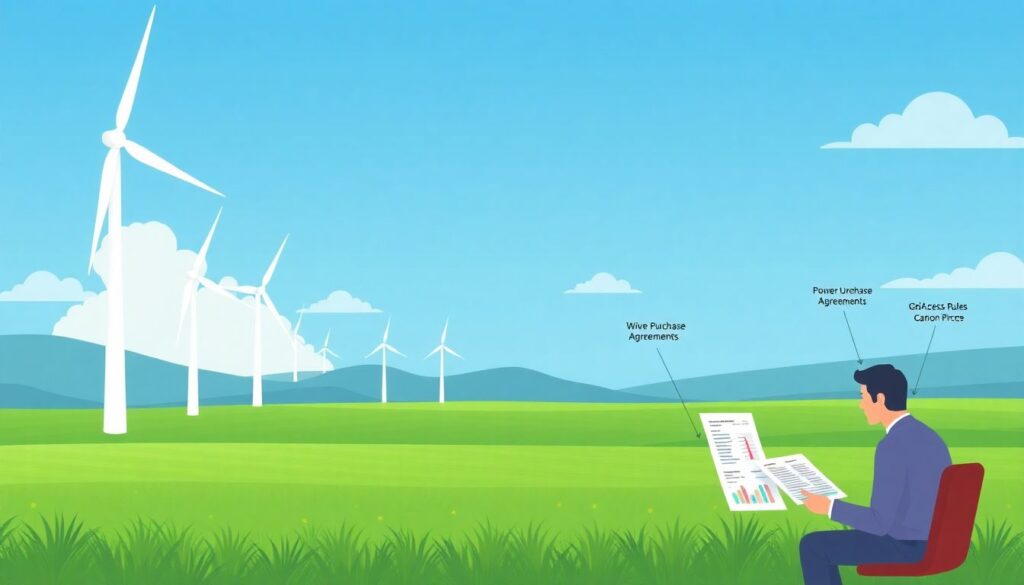
The profitability of a wind farm has less to do with whether it’s windy this year and more to do with power purchase agreements, grid access rules and carbon prices. That’s why investors often say policy risk is the new market risk for sustainable assets.
For instance, the US Inflation Reduction Act, still a major driver of capital flows in 2025, tilts the economics heavily in favor of domestic manufacturing and clean energy deployment through multi‑year tax credits. In Europe, evolving taxonomy rules and disclosure requirements are shaping what can be marketed as “green” or included in sustainable infrastructure private equity investments.
Sustainable infrastructure is thus a bet not only on electrons and concrete, but on long-term policy stability. Investors who ignore that dimension risk being surprised by retroactive tariff cuts, changing eligibility rules for subsidies or delays in permitting.
Practical Paths: How to Invest in Green Infrastructure Projects
The natural question is: how does a real person or an institution go from zero to actually allocating capital to this space? The answer depends on your size, expertise and time horizon, but a simple roadmap helps.
1. Clarify your mandate and constraints. Are you targeting pure climate impact, risk-adjusted returns, or both? What’s your investment horizon and liquidity need? A pension fund can lock up capital for 15 years; a retail investor usually can’t.
2. Choose your route to market. For most individuals, listed instruments like sustainable infrastructure‑focused ETFs and green infrastructure stocks are the most practical. For family offices and institutions, sustainable infrastructure investment funds or co‑investments with experienced managers may be more suitable.
3. Define your “green” criteria. Decide what counts: only renewable electricity, or also grids, water and adaptation? Align your selection with widely used frameworks (EU taxonomy, ICMA Green Bond Principles, or local equivalents) instead of inventing your own from scratch.
4. Assess policy and regulatory risk. Look at the country’s track record: has it changed feed‑in tariffs retroactively? Are permitting timelines predictable? Is there a robust independent regulator?
5. Look at the capital structure. Debt, equity and hybrids behave differently. Senior green bonds may offer modest yields but higher security; equity in early‑stage projects can give higher returns with more volatility.
In short, learning how to invest in green infrastructure projects is mostly about treating them like infrastructure first and “green” second: you still need to understand counterparties, contracts, leverage and political risk.
Funds, ETFs and Private Equity: Who Does What?

The ecosystem of capital providers has become more crowded and specialized. You’ll now find pure‑play sustainable infrastructure investment funds alongside broader real‑asset managers and generalist private equity firms adding green strategies. Each group brings slightly different incentives and time horizons.
ETFs, for example, track baskets of listed companies or yieldcos exposed to clean energy and grids. They’re transparent, diversified and accessible, which is why investors often start by scanning the universe of best sustainable infrastructure ETFs when building a climate‑focused portfolio. The trade-off is that you’re buying a bundle of corporate equity, not direct stakes in physical projects; earnings can be influenced by corporate strategy and market sentiment as much as by asset performance.
By contrast, sustainable infrastructure private equity investments typically involve acquiring majority or substantial minority stakes in project companies or platforms—say, a regional solar developer or a network of EV charging stations. Here, investors can influence strategy, operations and capital allocation. Returns may be less correlated with public markets, but illiquidity is much higher, and the due diligence burden is substantial.
How to Judge a Project: Beyond the Buzzwords

At project level, three core questions usually separate resilient investments from risky bets. And they apply just as much in 2025 as they did to gas pipelines in the 1990s:
1. Who pays, and for how long? Is revenue backed by a long-term contract with a creditworthy offtaker? A 20‑year agreement with a state‑owned utility is different from selling into a volatile merchant power market.
2. What can go wrong technically, and who bears that risk? Construction risk, technology risk and operating risk can be shifted between sponsors, EPC contractors, insurers and lenders. Inferior projects dump too much risk on equity investors without adequate return.
3. Is the asset future‑proof? Will the grid still need this battery configuration in 15 years? Could new regulations require expensive retrofits? Is the location resilient to climate impacts like flooding or heatwaves?
Environmental credentials also matter, but mostly as a way of assessing long-term viability and regulatory risk rather than as a feel‑good label. An asset that claims to be “green” yet harms biodiversity or local communities may face legal challenges or reputational damage down the line.
What’s New in 2025: Trends Investors Can’t Ignore
By 2025, the sustainable infrastructure story is no longer just about gigawatts of solar and wind. Several new themes are gaining real traction and shaping capital allocation decisions.
One is grid and flexibility investment. Many regions now have enough renewable generation that the bottleneck is transmission and system balancing, not production. This is pushing more capital into interconnectors, high‑voltage lines, digital grid management and long‑duration storage. Another is industrial decarbonization: infrastructure that serves steel, cement, chemicals and heavy transport—think green hydrogen hubs, carbon capture clusters and electrified industrial ports—is moving from pilot stage to early build‑out.
There’s also a strong push toward nature‑based and resilience‑focused infrastructure. Coastal wetlands that absorb storm surges, urban green corridors that limit heat islands, and advanced flood‑management systems are emerging as investable assets where revenue models (insurance savings, availability payments, resilience bonds) are starting to solidify.
The Interest‑Rate and Risk Premium Puzzle
One of the most important macro stories since 2022 has been higher interest rates. Sustainable infrastructure, like any capital‑heavy sector, feels this immediately: higher financing costs can squeeze returns or delay projects. Yet the demand for low‑carbon and resilient assets hasn’t gone away—if anything, mandatory climate‑related disclosures and net‑zero commitments keep pushing institutional investors toward long‑duration real assets.
In practice, this means investors in 2025 are paying more attention to capital structure optimization and risk premia. Assets with more contracted or regulated revenues can still attract cheap debt, while merchant-exposed projects must offer higher returns to equity backers. The end result is not a collapse in investment, but a repricing: slightly fewer marginal projects get built, but high‑quality platforms with strong counterparties remain in demand.
Putting It All Together: Building a Sensible Strategy
Rather than chasing every new buzzword, a practical strategy for sustainable infrastructure usually rests on a few grounded principles. Mix different technologies and geographies to avoid over‑exposure to one policy regime. Combine liquid listed exposures—like infrastructure‑oriented ETFs—with more targeted allocations to funds or co‑investments as your expertise grows. Pay more attention to regulation and contract structure than to marketing language.
Most importantly, treat sustainable infrastructure as core infrastructure that happens to be aligned with the energy transition, not as a speculative side bet. The underlying human needs—electricity, mobility, water, protection from climate impacts—aren’t going away. What’s changing, and rapidly, is how we meet those needs and who captures the cash flows along the way. Investors who understand that intersection of physics, policy and finance will be best placed to navigate the next decade.