
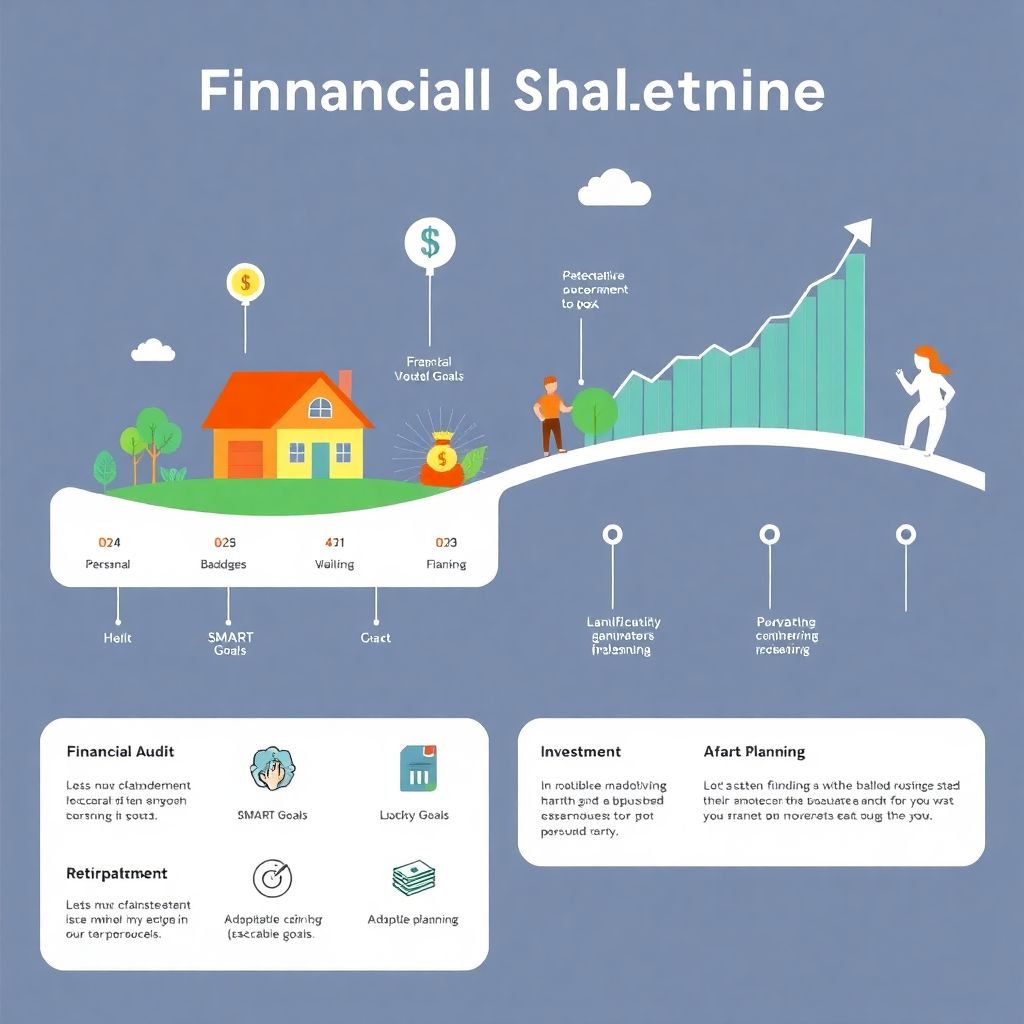
Understanding the Foundation of Financial Milestones
Why Financial Milestones Matter
Financial milestones serve as tangible checkpoints that guide individuals or businesses toward long-term financial stability. According to a 2023 report by the Federal Reserve, 64% of Americans could not cover an unexpected $400 expense without borrowing or selling something. This signals a widespread lack of financial planning. A well-structured timeline of financial goals can help mitigate such vulnerabilities by offering clarity, direction, and measurable progress.
Defining the Scope: Personal vs. Business Milestones
It’s essential to differentiate between personal financial milestones—such as saving for a home or retirement—and business-related goals like reaching a revenue threshold or securing Series A funding. Each requires a tailored approach, but both benefit from the same strategic framework: data-driven planning, realistic expectations, and consistent review.
Building the Timeline: Core Components
1. Perform a Financial Inventory
Start by evaluating your current financial position. This includes income streams, liabilities, assets, and cash flow. According to Deloitte’s 2022 Financial Well-being Survey, individuals who conducted quarterly financial assessments were 37% more likely to achieve their annual financial goals. This audit forms the baseline for setting achievable milestones.
2. Set SMART Financial Goals
Use the SMART framework—Specific, Measurable, Achievable, Relevant, Time-bound—to structure each milestone. For example, “Save $10,000 for an emergency fund within 12 months” is more actionable than “Save more money.” This clarity not only enhances focus but also improves accountability.
3. Prioritize Based on Urgency and Impact
Not all milestones carry equal weight. Rank them based on their urgency and potential impact. For instance, paying off high-interest debt should precede investing in long-term assets. A 2021 Experian study showed that individuals with high-interest debt were 45% less likely to invest consistently, reinforcing the need for prioritization.
Innovative Approaches to Timeline Creation
Leverage Behavioral Economics
Incorporate behavioral triggers to improve adherence to your timeline. One unconventional method is “commitment contracts,” where you pledge to meet a financial goal or face a self-imposed penalty. Apps like StickK and Beeminder apply this principle, and users report a 72% higher success rate when financial stakes are involved.
Gamify the Milestone Process
Gamification can transform a static timeline into an engaging experience. Introduce levels, badges, or even rewards for reaching specific checkpoints. This approach taps into intrinsic motivation, making the process feel less like a chore and more like a challenge. According to Gallup, gamified systems increase user engagement by up to 60%.
Use Adaptive Milestones
Rather than fixed goals, consider implementing adaptive milestones that adjust based on real-time financial performance. For example, if your side income increases, your savings target could scale accordingly. This dynamic model is especially useful for freelancers or entrepreneurs with fluctuating income.
Economic Factors and Industry Influence
Macroeconomic Indicators to Consider
When building your timeline, integrate macroeconomic data such as inflation rates, interest trends, and unemployment statistics. For instance, with inflation in the U.S. averaging 3.2% in 2023, static savings goals may lose purchasing power over time. Adjusting milestones to account for such variables ensures they remain realistic and effective.
Impact on Financial Services Industry
The growing demand for personalized financial planning tools is reshaping the financial services sector. Fintech startups are racing to offer AI-driven platforms that automate milestone tracking and suggest adjustments based on user behavior. This has led to a projected CAGR of 11.7% in the global personal finance software market through 2027, according to Grand View Research.
Step-by-Step Guide to Creating Your Timeline
1. Conduct a Financial Audit – Assess income, expenses, debts, and assets.
2. Identify Short-, Mid-, and Long-Term Goals – Categorize based on time horizon and financial impact.
3. Apply the SMART Framework – Ensure each goal is clear and actionable.
4. Integrate Flexibility – Allow for adaptive changes based on income or economic shifts.
5. Use Technology – Leverage apps or spreadsheets to visualize progress.
6. Review Quarterly – Regularly reassess your timeline and adjust milestones as needed.
7. Celebrate Small Wins – Reinforce positive behavior by acknowledging progress.
Forecasting the Future of Financial Planning
As AI and data analytics become more integrated into personal finance, the concept of static financial timelines may become obsolete. Future systems will likely offer predictive milestones that evolve with user behavior and economic conditions. This shift will empower individuals to make real-time financial decisions supported by intelligent forecasting.
Conclusion
Creating a realistic financial milestones timeline is more than a budgeting exercise—it’s a strategic roadmap shaped by data, behavior, and economic awareness. By integrating unconventional strategies like gamification and adaptive goal-setting, individuals and businesses can craft timelines that are not only achievable but also resilient. As the financial landscape evolves, those who embrace innovation and flexibility will be best positioned to thrive.