
Start with a 2‑minute “statement scan”
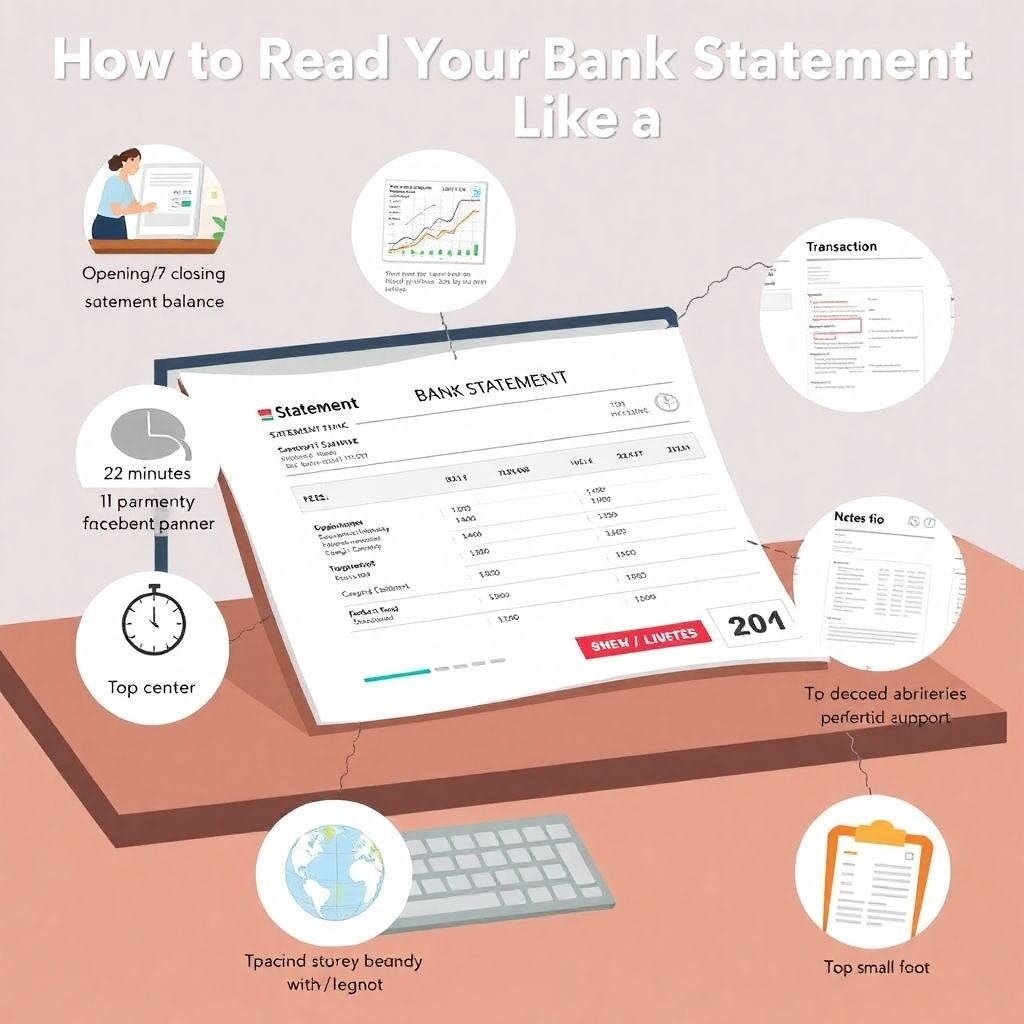
Before diving into every line, give your statement a quick scan like a security check at the airport. You’re not decoding yet, just spotting anything odd. Look at the opening and closing balance, statement period, and account number. Then run your eyes down the list of transactions and highlight anything that instantly makes you frown or think, “Wait, what is that?” This 2‑minute ritual sets the scene: you know roughly how much came in, how much went out, and whether something looks off before you get stuck in the details. It also keeps you from getting overwhelmed, because you’re separating “quick triage” from deep analysis. Think of it as the trailer before you watch the full movie of your money month.
Decode the layout: bank statement explained for beginners
Most people get confused not by the numbers, but by the layout. So, step one: treat the statement like a map. Find these sections: account summary (opening/closing balance, interest, fees), transaction list (dates, descriptions, amounts), and any notes or legends that explain abbreviations. That tiny legend box is usually where the good stuff hides. If you want a bank statement explained for beginners in one move, read the legend and then go back to the transactions; suddenly mysterious codes like “POS”, “ATM WDL”, “INT CHG” start making sense. Once you know the structure, your brain stops panicking and starts sorting information automatically.
Create a custom “translation key” for weird codes

Your bank won’t rename cryptic codes for you, so do it yourself. The first time you see a code or description you don’t understand, don’t shrug and move on. Look it up on your bank’s website or contact support, then create your own translation list in a notes app or notebook. Next month, when that same code appears, you’ll know instantly what it means. Over time, you build a personal glossary that works like subtitles for your money. This one habit turns “random gibberish rows” into a clear narrative of what exactly your bank is doing with your cash.
How to read bank statement charges without guessing
Instead of blindly accepting every fee, dissect it. When learning how to read bank statement charges, always ask three questions: what triggered it, can it be avoided, and is there a cheaper alternative account type? Circle or mark every fee on the statement. Then, once a month, spend 10 minutes checking your bank’s tariff page on their website and matching each fee to its rule. You’ll often discover you’re paying for things like paper statements, foreign transactions, overdrafts, or “maintenance” you don’t actually need. Treat each new or higher fee as a negotiation trigger: call the bank, ask for better terms, or switch products if necessary.
Turn your statement into a spending x‑ray
Your statement is not just a list of payments; it’s an x‑ray of your habits. Once a month, grab a highlighter or use color tags in a PDF reader and mark each transaction as: needs (rent, utilities, groceries), wants (restaurants, subscriptions, impulse buys), and financial progress (savings, debt repayments, investments). Try not to overthink the categories; you’re not doing tax accounting, just pattern hunting. When the colors pile up in “wants”, you see exactly where your month leaked money. That visual shock works far better than vague resolutions like “spend less”. You’re using the bank’s data to build a brutally honest mirror of your behavior.
Understand bank statement fees and transactions using “3-bucket sorting”
To understand bank statement fees and transactions faster, stop reading them line by line like a novel. Instead, sort them into three buckets: income, recurring payments, and one‑off expenses. Income is anything that puts money in: salary, refunds, side gigs. Recurring payments are those predictable, often sneaky, auto-charges: streaming, gym, insurance, software, memberships. One‑off expenses are the rest: groceries, coffee, gifts, repairs. You can do this with a simple symbol next to each item, or by copying them into a spreadsheet if you like structure. Once sorted, expensive patterns jump out: subscriptions you forgot, services you don’t use, or paychecks that aren’t covering the recurring base anymore.
Use “location + time” to identify fraudulent transactions on bank statement
Suspicious line item? Don’t panic, investigate. To identify fraudulent transactions on bank statement records, first check the date and location or merchant name. Ask yourself: where was I that day, what was I doing, could this be a delayed online charge under a parent company name? Google the merchant description exactly as written; many weird names are simply umbrella companies behind familiar brands. If you still don’t recognize it, check your email and messages for related payment confirmations. Only when you’ve eliminated all “legit but confusing” options, treat it as potential fraud: immediately lock your card in the banking app (if available) and call support. The rule: confusion deserves curiosity first, urgency second.
Build a “subscription firewall” from your statement
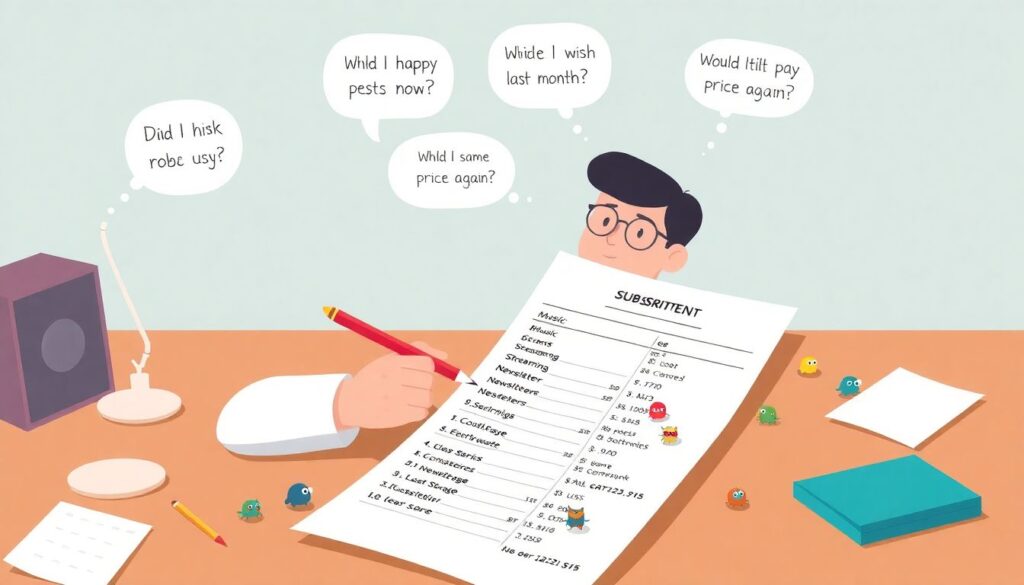
Non-standard trick: use your statement as a weapon against subscription creep. Once a quarter, go down the list and mark every repeat charge: music, series, apps, newsletters, cloud storage, gyms, software. Then ask for each one: “Did I consciously use this last month, and would I pay the same price again today?” If the answer isn’t a hard yes, cancel it on the spot. To keep control, set one specific card or account as your “subscription hub” and pay all recurring services from there. That way, each statement instantly shows the full price of your digital lifestyle, instead of having it scattered across different cards and getting ignored.
How to reconcile bank statement with personal budget in 15 minutes
You don’t need complex software to figure out how to reconcile bank statement with personal budget. Do this once a month: open your budget (spreadsheet, app, or notebook) and your latest statement side by side. Check three things only: total income planned vs. actual, total spending planned vs. actual, and whether your ending bank balance matches what your budget says you should have. If something’s off, track it back: maybe a cash withdrawal you forgot to log, a fee you didn’t include in the budget, or a late posting transaction from the last month. Reconciliation isn’t about perfection; it’s about keeping reality and your plans close enough that your decisions stay rational.
Use pattern alerts instead of checking constantly
Instead of obsessively refreshing your banking app, use your statement history to set smart alerts. Look at the last three to six statements and ask: what patterns would I want to be warned about immediately? For example: transactions over a certain amount, international charges, balance dropping below a threshold, or new merchants you’ve never used before. Then, in your banking app, enable only those specific notifications. Your statements gave you the pattern; alerts now guard it. This non-obvious move turns random “you spent money” pings into targeted early‑warning signals that actually help you, instead of just stressing you out.
Create a monthly “money debrief” ritual
Turn reading your bank statement into a short, structured ritual, not a passive scroll. Once a month, sit down with a drink, open your statement, and answer five questions: What surprised me? What annoyed me? What made me proud? What can I avoid next month? What must I watch more closely? Write the answers in a single page or a note on your phone. Over time, these mini‑debriefs tell a story more valuable than any budgeting app: they capture your decisions, not just your transactions. You’re no longer just “checking the statement”; you’re running a personal financial review in a language you understand.
When to call the bank and when to change the bank
Your statement is also a performance review for your bank. If you constantly see unclear fees, late posting of transactions, or a messy layout that makes it hard to understand what’s going on, treat that as a product flaw, not your failure. First step: call or chat with support, ask them to walk you through confusing items, and request fee waivers where justified. Take notes during the call and add edits to your personal “translation key”. If, statement after statement, clarity doesn’t improve and the costs stay high, vote with your feet. A good bank makes your financial life clearer, not more mysterious. Your statement should read like a story of your choices, not a puzzle you dread solving.
Quick checklist: read it like a pro, every month
Use this quick checklist each time you open a statement:
– Scan balances and dates for sanity
– Mark all fees and unknown items
– Sort transactions into income / recurring / one‑offs
– Highlight subscriptions and cancel the “meh” ones
– Check for suspicious or unrecognized charges
– Compare totals with your budget and note gaps
– Write a 3–5 line debrief for yourself
Follow this routinely, and your bank statement stops being a confusing document you ignore and becomes a control panel you actually know how to use.