
Understanding Finance: Common Pitfalls for Beginners
What Is Finance, Really?
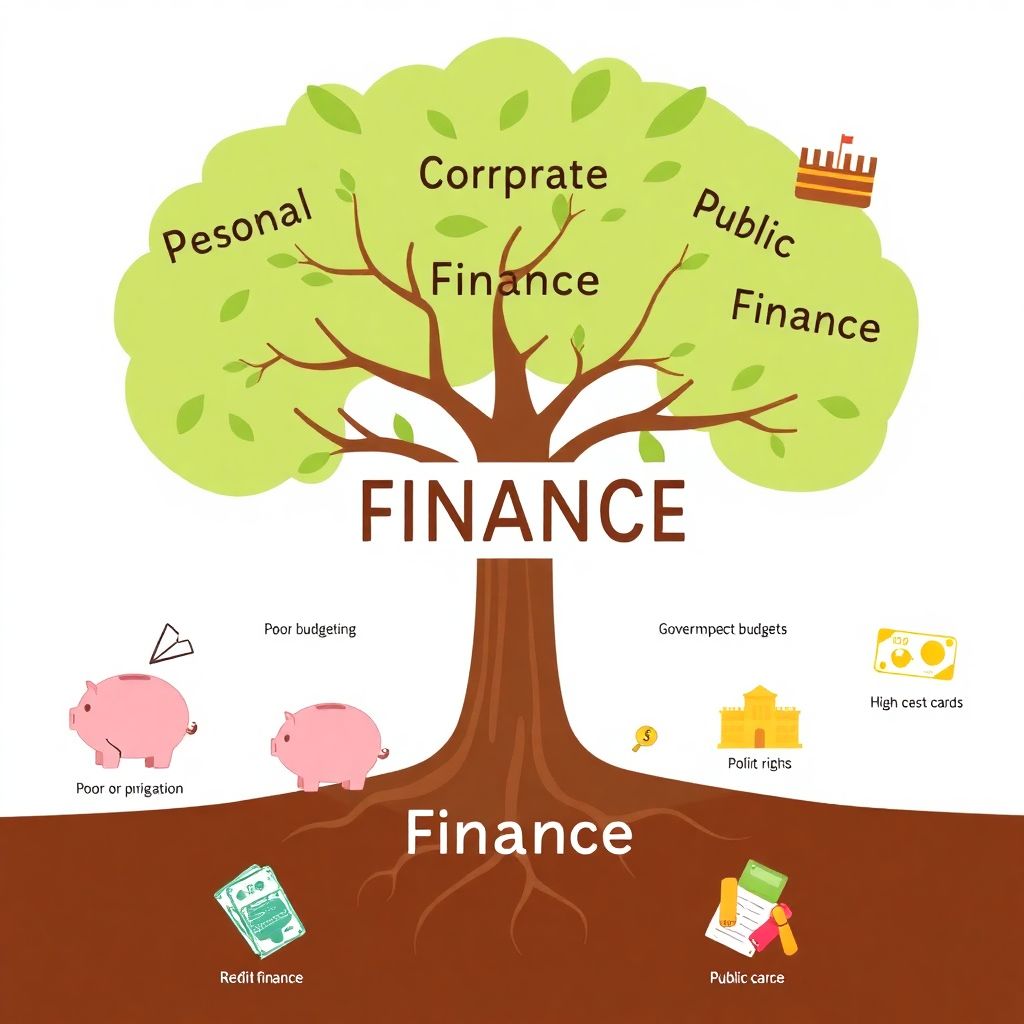
In simple terms, finance is the art and science of managing money. It includes budgeting, investing, borrowing, lending, saving, and forecasting. Finance splits into three main branches: personal finance (individual money management), corporate finance (business capital structuring), and public finance (government budgets and expenditures). While the field may seem overwhelming at first, understanding key principles can help avoid costly mistakes.
Let’s break down the concept with a mental diagram:
Imagine finance as a tree.
– The roots represent personal finance, the foundation of all financial health.
– The trunk symbolizes corporate finance, supporting the “body” of business decisions.
– The branches spread into public finance, reaching out into society and infrastructure.
This tree thrives only when all parts work together. If you neglect the roots (your personal budgeting), the whole system may collapse.
1. Ignoring Budgeting Basics
Many financial missteps start with poor budgeting. Newcomers often think budgeting means restriction, but it’s actually about awareness and control. One classic mistake is underestimating expenses—especially variable ones like eating out or transportation. People may track fixed costs, like rent or subscriptions, but fail to account for spontaneous purchases.
Let’s say you earn $3,500 per month. You list your rent ($1,000), utilities ($200), and groceries ($400). That sounds manageable. But if you don’t consider weekend dinners, streaming services, or ride-shares, you can easily go over budget.
Why it matters: Without a realistic, detailed budget, it’s hard to identify leaks in your spending. Budgeting apps like YNAB or Mint can help, but the key is consistency—not just tracking, but adjusting.
2. Misunderstanding Debt
Debt isn’t always bad—but misunderstanding it can be dangerous. Beginners often lump all types of debt together, ignoring the difference between “good” debt and “bad” debt. Good debt, like a student loan or mortgage, contributes to long-term value. Bad debt, such as high-interest credit card balances, usually funds depreciating assets or consumption.
For example, taking a loan to invest in your education can increase your future income. However, financing a vacation on a credit card with 25% interest doesn’t offer any return—and often leads to financial stress.
Another red flag is only paying the minimum balance. This habit prolongs debt and maximizes interest. If you owe $5,000 on a credit card at 18% APR and only pay $100/month, you could be in debt for over 7 years, ultimately paying thousands more.
3. Overlooking Emergency Funds
Emergencies are inevitable. Whether it’s a medical bill or a car repair, unplanned expenses can derail your finances. Yet many beginners skip building an emergency fund, assuming their paycheck or credit card will cover it. This creates a cycle of dependency on debt.
A solid emergency fund should ideally cover 3–6 months of essential expenses. If your monthly needs total $2,000, aim for $6,000–$12,000 in an easily accessible savings account. This cushion prevents you from borrowing at high interest during crises.
Think of it as a financial airbag. You rarely use it, but when you do, it can save your financial life.
4. Chasing “Hot” Investments Without Research
The fear of missing out (FOMO) drives many first-time investors into trendy assets: meme stocks, cryptocurrencies, or “the next Tesla.” With social media amplifying success stories, it’s easy to feel left out. But investing without research is gambling, not strategy.
A beginner might put $5,000 into a hyped-up stock based on a TikTok video, ignoring fundamentals like revenue, debt, or market conditions. When the market dips, panic selling kicks in, locking in losses.
Instead, novice investors should start with diversified ETFs (exchange-traded funds) or index funds, which spread risk across sectors. Historical data shows that long-term, broad-market index funds like the S&P 500 outperform most individual stocks.
5. Not Setting Clear Financial Goals

Without a destination, it’s hard to know if you’re on the right track. Many people save or invest without defining what they’re working toward. Goals give your money a purpose—whether it’s buying a home, retiring early, or traveling the world.
There’s a big difference between “I want to save money” and “I want to save $10,000 in the next 12 months for a down payment.” The latter is measurable and actionable.
Here’s a helpful 3-step framework:
1. Define the goal (e.g. “Pay off $7,000 student loan in 18 months”).
2. Break it into monthly targets ($7,000 ÷ 18 = ~$390/month).
3. Automate contributions to stay consistent.
6. Comparing Finance Tools With Each Other
Newbies often jump between tools hoping to find the perfect solution. But each financial tool has its strengths and weaknesses. For example:
– Spreadsheets offer full customization but require time and discipline.
– Apps automate tracking but may miss transactions or lack flexibility.
– Financial advisors provide expert advice but can be costly if you’re just starting out.
Instead of constantly switching, pick a method that suits your personality and stick with it until it becomes habit. Treat your financial toolkit like a gym membership—results come with consistency, not novelty.
Final Thoughts: Build Smart Habits Early
Finance can be intimidating at the start, but most mistakes stem from the same core issues: lack of clarity, impulsive behavior, and underestimating risk. By focusing on fundamental habits—budgeting, understanding debt, building a safety net, and investing with purpose—you set the stage for long-term success.
Remember, your financial foundation is built one decision at a time. Start small, stay consistent, and learn from missteps. Finance isn’t about perfection—it’s about direction.