
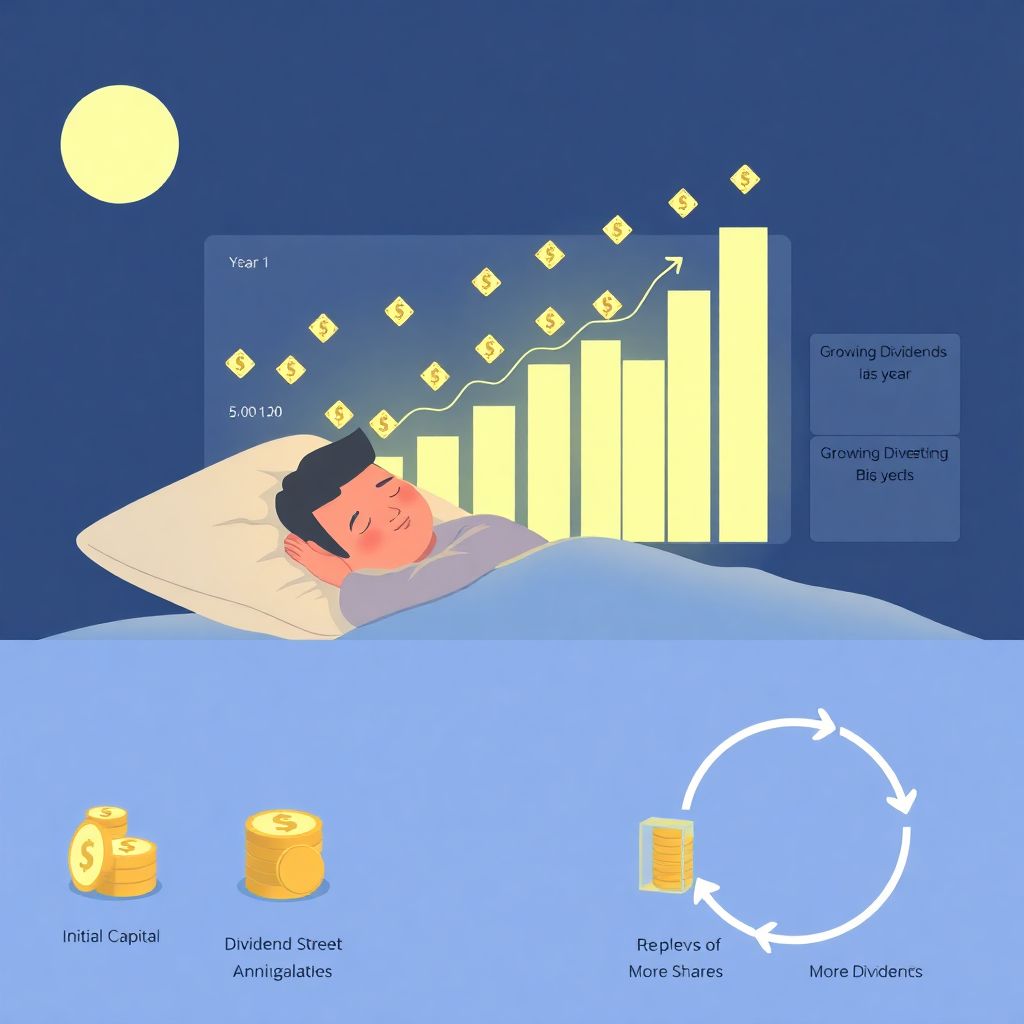
If you like the idea of your money working quietly in the background while you sleep, dividend growth investing is one of the cleanest ways to get there. Instead of betting on the next hot stock, you focus on businesses that steadily raise the cash they send you every year. As of 2025, after years of low interest rates, high inflation scares and wild market swings, more investors are rediscovering this boring‑but‑beautiful approach as a way to build a steady income stream that can keep up with real‑world prices.
—
What dividend growth investing really means
At its core, a dividend is simply a cash payment a company sends to shareholders, usually every quarter. The dividend growth investing strategy focuses not on the highest current yield, but on companies that increase those payouts year after year. You are aiming for three things at once: a reliable payment today, a growing payment in the future and a business strong enough to sustain both. Over time, those rising dividends can outpace inflation, smooth out market volatility and turn a normal portfolio into a genuine income engine without forcing you to constantly trade or time the market.
Put differently, you are buying a stream of cash flows, not just a fluctuating stock price. Think of it as renting out a small but ever‑expanding piece of a company’s profits. Today the dividend might pay your phone bill; in ten or twenty years, the same number of shares could cover your entire monthly utilities if the company keeps raising its payout. The key is discipline: sticking with high‑quality businesses and reinvesting those dividends long enough for compounding to do the heavy lifting.
—
A quick historical tour: from Rockefellers to 2025
Dividend investing is not some modern internet fad. In the early 1900s, industrial giants like Standard Oil made shareholders rich mainly through hefty dividends. Many wealthy families treated shares as “coupon‑clipping” machines, living off the payouts and rarely selling the stock itself. After World War II, when economic growth exploded and pension funds grew, steady dividend payers became the backbone of retirement portfolios, especially in the US and UK.
The culture shifted in the 1980s and 1990s. Tech firms preferred to reinvest profits instead of paying dividends, and investors chased capital gains. The dot‑com bust in 2000 reminded everyone that profits and cash matter. Then in 2008–2009, when many banks slashed or suspended dividends, a new class of stricter, more conservative “dividend growth” investors emerged, screening for companies that had not only paid but raised their dividends through recessions and crises.
From roughly 2010 to 2020, ultra‑low interest rates pushed income‑hungry investors into stocks. Companies with long streaks of dividend increases—“Dividend Aristocrats” (25+ years) and “Dividend Kings” (50+ years)—became cult favorites. The 2020 pandemic crash saw many payouts cut, but also showed the strength of firms that kept raising dividends anyway. Then inflation spiked in 2021–2022, reminding investors that a 4% yield is useless if prices jump 8%. That is exactly where dividend growth shines in 2025: not just paying you now, but increasing your income to keep up with a more inflation‑prone world.
—
Key terms you actually need
Core definitions
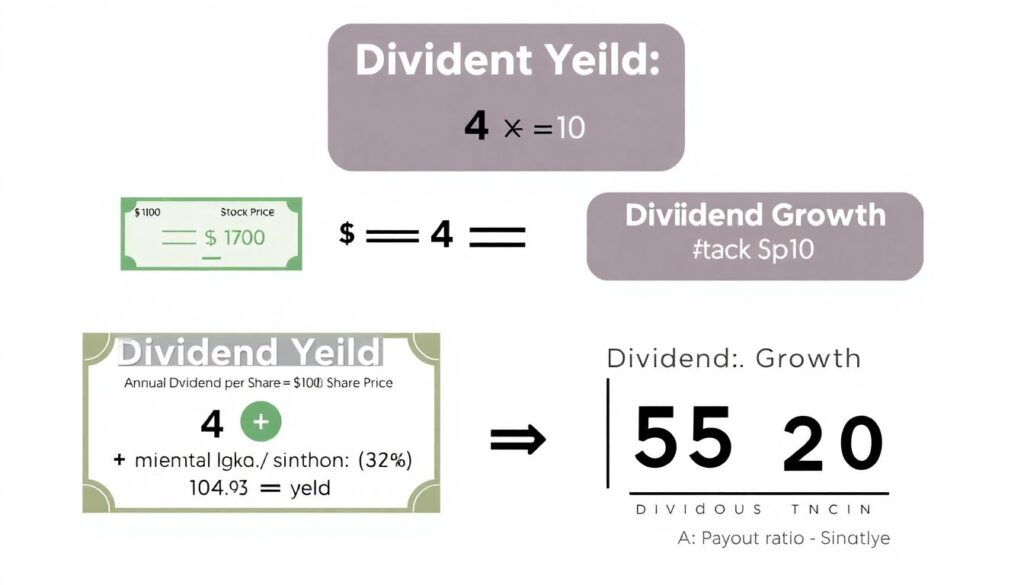
A dividend yield is the annual dividend per share divided by the share price. If a stock pays $4 a year and trades at $100, the yield is 4%. Dividend growth is the rate at which that per‑share dividend increases each year. If the payout rises from $4 to $4.20, that’s 5% dividend growth. A payout ratio shows what share of earnings is paid out as dividends—say 50% of profits. Sustainable dividend growth usually requires enough earnings growth to support rising payments without pushing this ratio into dangerous territory.
Two more concepts matter. A dividend growth investment portfolio is simply a collection of stocks and funds chosen for consistent dividend increases, not just yield. Yield on cost is your personal yield based on the price you originally paid. If you bought at $50 and now receive $3 a year, your yield on cost is 6%, even if the market yield at today’s higher price looks lower. That’s how patient investors can end up with double‑digit effective yields on long‑held positions, even in a modest‑yield world.
—
Why focus on growth, not just yield?
Chasing the highest yield is tempting, but often dangerous. Ultra‑high yields can signal a business in trouble, where the dividend might be cut. Dividend growth investors intentionally accept a lower starting yield in exchange for a higher likelihood of sustainable increases. In practice, a stock yielding 2.5%–3% but growing dividends at 8%–10% per year can beat a 6% high‑yield stock that never grows—or worse, eventually slashes its payout. Stability plus growth tends to win the long game.
Think about it this way:
Cash Flow (Year 1)
You → Stock A (3% yield, 8% growth) → Dividends
Cash Flow (Year 10)
You → Same shares of Stock A → Much larger dividends
If that 3% yield grows 8% annually, your income roughly doubles in nine years. You did not buy more shares, you just let time and compounding work. That is the quiet advantage of dividend growth versus static high‑yield strategies that look appealing upfront but often disappoint as inflation eats their real value.
—
How dividend growth compares to other strategies
Compared with pure growth investing, dividend growth tends to select more mature, profitable businesses with a track record of returning cash to shareholders. You might miss the next explosive startup, but you also avoid many firms that never turn profits. Compared with traditional “value” investing, you get a built‑in discipline: if management wants a reputation for reliable increases, they must allocate capital more carefully and avoid overly aggressive bets that could endanger the payout.
Against pure income strategies, like owning only real estate investment trusts or high‑yield bonds, dividend growth sits in the middle: the income starts modest but can grow faster, with less credit risk than junk bonds and more diversification than a few properties. For many long‑term investors, it becomes the “spine” of the portfolio, around which they may add small slices of growth stocks, bonds or real estate, depending on age and goals.
—
Building a dividend growth investment portfolio
Choosing individual stocks
When people ask about the best dividend growth stocks to buy, they often expect a magic list. In reality, what matters is a repeatable checklist. Look for companies with: a multi‑year record of dividend increases, consistent free cash flow, moderate payout ratios and business models that can handle recessions—think consumer staples, healthcare, quality industrials and some large tech names that now pay and raise dividends. Add conservative debt levels and honest, shareholder‑friendly management, and you have a solid starting point.
Your goal is not perfection but resilience. You can mix “core” long‑time raisers (like classic dividend aristocrats) with a few younger companies that have only a 5–10 year record but stronger growth. Size positions so that if one company stumbles and freezes or cuts its payout, your overall income stream still trends upward. Diversification by sector and geography reduces the risk of a single regulatory change or industry disruption derailing your long‑term income plan.
—
Using funds and ETFs
Not everyone wants to pick stocks. Learning how to invest in dividend growth funds is often the easiest on‑ramp. Dividend growth mutual funds and ETFs screen for companies with consistent and rising payouts, rebalancing automatically. You outsource the grunt work of tracking financials, cuts and additions. The trade‑off is fees and less control over individual positions, but for most investors that is a fair exchange.
In 2025, there is a wide menu of top dividend growth ETFs for income, ranging from broad US funds that track dividend growth indexes to global products that include Europe and Asia. Some funds focus on strict increase streaks, others combine quality metrics like return on equity and low leverage. When comparing them, focus on expense ratio, index methodology, diversification and the fund’s history of maintaining or growing its own distribution through downturns. That tells you how it might behave in the next rough patch.
—
Simple diagrams for compounding and cash flow
To visualize compounding dividends, imagine this timeline:
Year: 1 5 10 20
Div: $1 → $1.5 → $2.2 → $4.7 (assuming ~8% growth)
If you reinvest dividends:
[Initial Capital]
↓
[Buy Dividend Stock]
↓
[Receive Dividends] → [Reinvest] → [More Shares] → [More Dividends] → (loop)
Each loop slightly increases your share count, which increases next year’s dividends, which buys even more shares. Even modest increases become powerful over 20–30 years. The relationship between price and dividends over time might look like this:
Price: ────///─── (bumpy, volatile)
Dividend: ──▁▂▃▄▅▆█ (steadily climbing staircase)
The staircase is what you are really buying.
—
Practical steps to get started in 2025
1. Define your income goal
Before buying anything, decide what you want the dividends to do. Are you aiming to cover a specific bill, partially fund retirement or eventually live almost entirely from your portfolio? A target income number in today’s dollars—say, “I want $2,000 per month in real terms”—helps you reverse‑engineer how much to invest, what yield and growth mix you need, and how long you might need to reinvest before drawing cash out.
2. Pick your building blocks

For many investors, a simple mix is enough: a handful of core blue‑chip dividend growers plus one or two broad dividend growth ETFs. The funds provide instant diversification, while individual stocks let you tilt toward companies you understand well. Use automatic dividend reinvestment plans (DRIPs) during your accumulation years to streamline compounding. Later, when you want income, you can turn DRIPs off and have the dividends paid out in cash instead.
—
Risks and how to handle them
Dividend growth is not risk‑free. Companies can misjudge their prospects, over‑promise and eventually cut payouts. Sectors can fall out of favor for years. Inflation can outpace dividend growth if you chase slow‑growing utilities with high yields. And in major bear markets, stock prices can fall 30–50%, even if dividends remain stable. You still need the temperament to watch your account balance swing while focusing on the underlying cash flow.
The antidote is a process: diversify across sectors and issuers; avoid chronically over‑leveraged businesses; favor companies with clear competitive advantages; and monitor at least once or twice a year whether earnings and cash flow still comfortably cover the dividend. If a company’s story breaks—falling profits, rising debt, management behaving recklessly—don’t hesitate to replace it with a healthier payer. Protecting the long‑term growth of your income stream matters more than loyalty to any single stock.
—
Bringing it all together
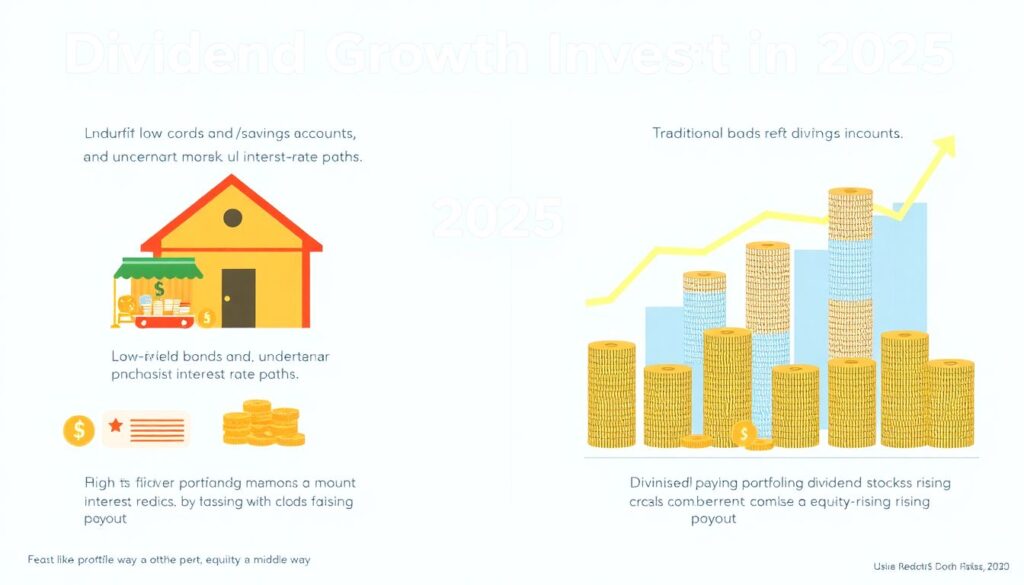
By 2025, with higher inflation risk and uncertain interest‑rate paths, relying solely on bonds or savings accounts for income feels increasingly fragile. A well‑built dividend growth investing strategy offers a middle way: equity‑like growth potential combined with a steadily rising cash payout that can support real‑life spending. Whether you use individual stocks, curated funds or the broad menu of top dividend growth ETFs for income, the principle stays the same—own businesses that share their growing profits with you.
If you structure your holdings thoughtfully, reinvest patiently and resist the urge to constantly tinker, your portfolio can evolve into a durable, inflation‑resistant income source. It will not be flashy, and it will not make headlines. But over decades, that quiet, compounding staircase of dividends can do what speculation rarely does: give you both financial flexibility and genuine peace of mind.