
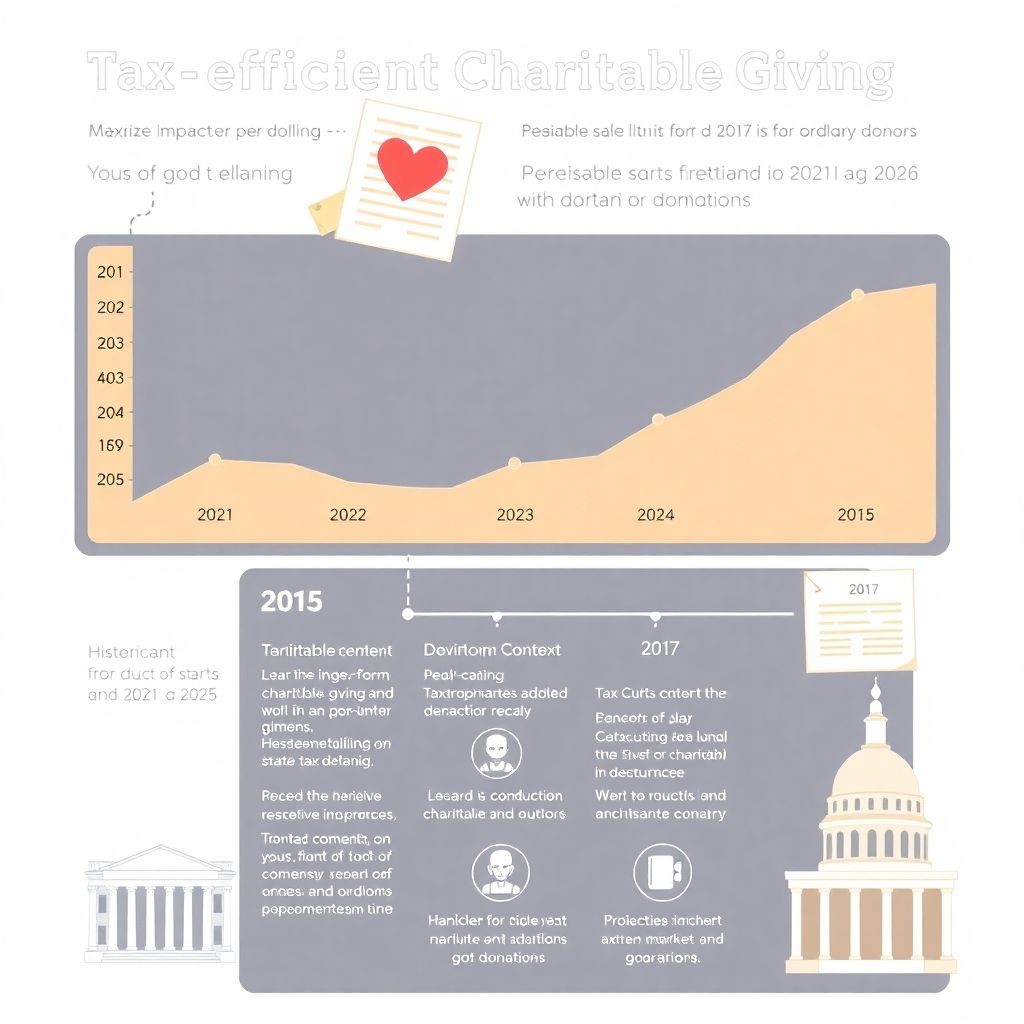
When you first hear “tax‑efficient giving”, it can sound like something only billionaires’ advisors talk about. In reality, it’s just about making sure every unit of your money does as much good as possible, both for the cause and for your own budget. In the US, according to Giving USA, individual donors still provide more than two‑thirds of total charitable dollars. In 2021 Americans gave over $515 billion, in 2022 giving dipped a few percent in real terms, and early 2023 data shows a modest rebound despite inflation and market swings. That volatility is exactly why planning your donations thoughtfully now, in 2025, really matters.
Историческая справка
The link between taxes and giving is not new. The US first allowed deductions for charitable gifts in 1917, mainly to protect nonprofits during wartime tax hikes. Over the next century, each tax reform either widened or narrowed who could claim a benefit, but the basic deal stayed: support public‑benefit organizations and government will share part of the cost. A huge modern shift came with the 2017 Tax Cuts and Jobs Act, which raised the standard deduction and suddenly made itemizing – and therefore deducting donations – irrelevant for many households. Between 2018 and 2021 the share of Americans who itemized fell sharply, yet total giving stayed historically high, which shows people give for many reasons, not just tax breaks.
If you’re curious why tax talk is everywhere now, look at the last three reporting years. In 2021, buoyant markets pushed giving to one of its highest levels on record. In 2022, stock and bond prices dropped, inflation hit budgets, and real charitable dollars shrank even though nominal totals hovered around half a trillion. Preliminary 2023 figures suggest donors adjusted: fewer small, impulsive gifts and more deliberate, planned contributions, often via donor‑advised funds and appreciated assets. In other words, tax efficient charitable giving strategies moved from a niche topic for wealth managers into mainstream donor conversations, especially among people who watched their portfolios whipsaw through the pandemic and inflation cycle.
Базовые принципы

Let’s strip the jargon. At its core, tax‑efficient giving is about the timing, the form, and the location of your gifts. Timing means lining up donations with your income spikes or big taxable events so you get the strongest deduction in the years you need it most. Form means choosing what you give: cash is simple but not always optimal; appreciated stocks, mutual funds, or even crypto can let you avoid capital‑gains tax and still deduct the full market value if you itemize. Location refers to which vehicle you use – direct gifts to a 501(c)(3), donor‑advised funds, private foundations, or qualified charities abroad that work through US intermediaries.
If you’re wondering how to maximize tax deductions for charitable donations, start by checking whether you itemize. In 2022 and 2023, only about 10–12% of individual filers itemized, so for most people the standard deduction rules the show. That doesn’t mean you’re stuck: you can “bunch” several years of giving into one calendar year so that, combined with other itemized expenses like mortgage interest and state taxes, you cross the standard‑deduction line and unlock actual tax savings. In off years you can still support your favorite nonprofits with smaller gifts that fit your cash flow. This rhythm lets even middle‑income donors punch above their weight in terms of impact per after‑tax dollar.
For investors, some of the best tax advantaged ways to donate to charity involve using assets instead of cash. When you donate long‑term appreciated securities directly to a qualified nonprofit or donor‑advised fund, you typically sidestep capital‑gains tax and still deduct the fair market value if you itemize. That two‑step advantage is powerful: the charity receives more than if you had sold the stock and paid tax first, and your deduction is larger than a same‑size cash gift funded from after‑tax proceeds. Over 2021–2023, major charities and sponsoring organizations reported steady growth in gifts of appreciated assets, even when overall cash donations wobbled, which shows how strongly this tactic has caught on.
Примеры реализации

Picture a young professional whose bonus landed in early 2023 after a strong 2022 performance. Her salary plus bonus pushed her into a higher bracket, and she’s passionate about education nonprofits. Instead of spreading modest donations over several years, she and her tax preparer decide to bunch three years of planned gifts into 2023. They route the money into a donor‑advised fund, claim a sizable deduction in a single high‑income year, and then recommend grants to schools and scholarship funds gradually through 2024 and 2025. Same total support for the causes, but a bigger tax benefit and more flexibility in how and when the nonprofits receive the funds.
Now consider a retiree who watched his portfolio climb in 2021, sag in 2022, then partially recover in 2023. He owns stock bought years ago at a very low price, so selling would trigger painful gains. Instead, he donates shares directly to his favorite health charity each December. Because he is no longer itemizing every year, he coordinates his gifts: in 2022 he kept things small, then in 2023 he transferred a larger block of stock, allowing him to itemize again. That simple move trimmed his overall tax bill while preserving his retirement cash. This is donating to charity for tax benefits without losing sight of genuine generosity – the strategy just stretches each donated dollar a bit further.
charitable giving tax planning for high income earners can be even more structured. Imagine a tech founder who expects a liquidity event in 2025 after several years of volatile income from 2021 to 2023. Working with advisors, she pre‑funds a donor‑advised fund in the same year her company sells, using highly appreciated shares. She locks in a large deduction in that peak‑income year, removes future growth of those shares from her taxable estate, and creates a long‑term pool for climate and STEM education grants. Because high earners often face additional surtaxes and phaseouts, careful coordination between compensation, stock vesting, and charitable funding can shift hundreds of thousands of dollars from the IRS line of the ledger to organizations she actually chooses.
Частые заблуждения

One stubborn myth is that tax‑efficient giving is only “worth it” for the ultra‑rich. In reality, the underlying math applies at almost every income level. Yes, the absolute dollar savings are larger at higher brackets, but the percentage you can redirect from taxes to causes stays meaningful. Another misconception is that smart strategies are always complex or risky. In practice, the building blocks – bunching donations, giving appreciated assets, using donor‑advised funds, or aligning gifts with big income years – are routine tools that mainstream nonprofits and custodians handle every day. Over 2021–2023, the steady growth of small‑balance donor‑advised accounts shows ordinary donors are adopting them without needing a family office.
People also often assume that if they take the standard deduction, there’s no room for optimization. That’s an oversimplification. You can still choose the timing and type of gifts, coordinate them with life events like home purchases or medical expenses, and use workplace programs like payroll giving or employer matches to magnify impact. Another common worry is that focusing on tax angles somehow taints the generosity. In truth, when you use thoughtful tax efficient charitable giving strategies, you typically increase what the charity receives without reducing your net commitment. If anything, understanding the numbers often encourages people to give more confidently, because they see clearly how the tax system reinforces their philanthropic choices rather than competing with them.