
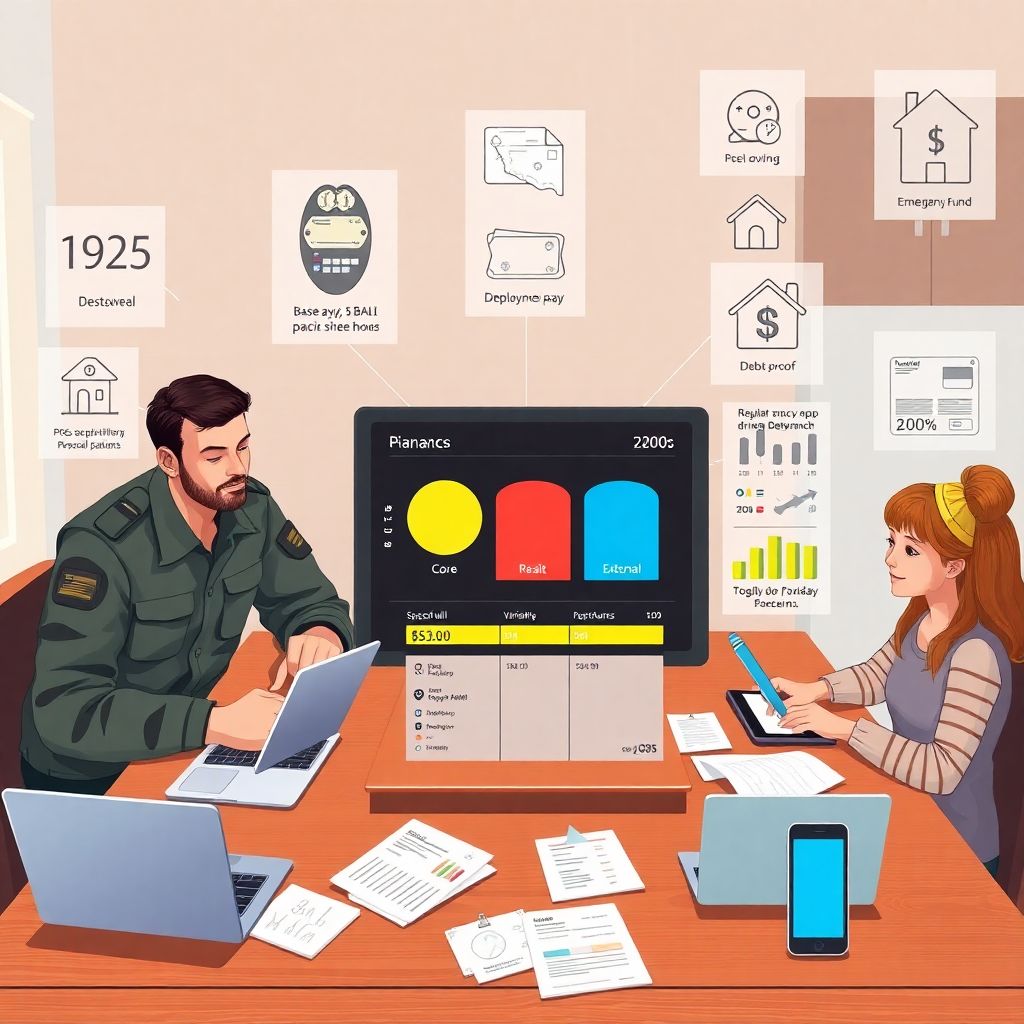
Why Military Family Budgeting Feels Different in 2025
If you’ve ever tried to copy a civilian friend’s budget and wondered why it collapses the moment PCS orders drop, you’re not imagining things. Military pay, benefits, and lifestyle create a very specific financial puzzle. Frequent moves, deployments, unpredictable extra pay, and the constant possibility of sudden change mean that “just track your expenses” advice is rarely enough. A realistic military family personal finance guide has to start by recognizing that your money life is built around orders, not around a fixed ZIP code. That’s why a budget for a dual‑income couple in one city for ten years will look nothing like a budget for a sergeant whose spouse is restarting their career after the fourth move in eight years and is still figuring out child care and licensing rules in a new state.
If we look back historically, this difference isn’t new—it’s just more visible in 2025. After World War II, the GI Bill helped millions of veterans buy homes and get degrees, but day‑to‑day budgeting still depended on a paper check and a kitchen table calculator. During the all‑volunteer force era after the 1970s, pay and benefits became more structured, but financial education lagged behind. By the time the post‑9/11 wars stretched into the 2010s, a lot of military families had steady BAH and Tricare but very little training on compound interest, consumer debt traps, or how to plan for frequent PCS. Today the tools are better—there are apps, on‑base counselors, and online courses—but the core challenge remains: turning irregular stress‑tested income into long‑term stability.
Step 1. Map Your Real Income (Not Just Base Pay)

The first step in any serious plan is to define what “income” actually means for your household. For military families, this is absolutely not just the number in the “base pay” column. Your pay stub is a mix of taxable and non‑taxable income, special pays, and allowances that look steady—until an assignment or status change rewrites them. Historically, one of the consistent causes of financial stress in the military has been treating PCS‑specific or deployment‑specific extra money as permanent income, then locking it into car loans or rent you can’t truly afford. So before you budget, separate your income into categories and be brutally honest about what can disappear with one set of orders.
A practical way to do this in 2025 is to pull your last 6–12 months of LES statements and list your inflows in three buckets: core income (base pay, BAH, BAS), variable military income (special duty pay, deployment pay, bonuses), and civilian/side income (spouse income, freelance work, Guard/Reserve drill checks). This historical average gives you a realistic baseline and protects you from building a lifestyle around hazard pay that might vanish when you rotate home. Treat anything that depends on specific orders or locations as “temporary” in your plan, even if it has lasted for a couple of years already.
Income Categories You Should Actually Track
– Core: Base pay, BAH, BAS – likely to exist as long as you’re in and in similar status
– Variable: Special pays, TDY per diem, bonus money, deployment differentials
– External: Spouse or partner income, side hustles, VA disability (for vets), drill pay
The analytical advantage of this split is simple: you budget your basic life around core income only, you aim to save or invest as much of the variable income as possible, and you treat civilian income as powerful but not guaranteed—especially in a world where a spouse’s job can be disrupted by every PCS move and shifting local job markets.
Step 2. Turn PCS Chaos into Predictable Categories
Every family has housing, utilities, food, transport, and personal expenses. What makes military family budgeting tips different is how often the numbers behind those categories jump because of PCS orders, deployment, or changes in BAH. Historically, every major conflict era has seen waves of families bouncing between high‑cost and low‑cost areas while trying not to reset their entire lifestyle each time. In the 1990s, that meant mailing checks to old landlords and negotiating long‑distance; in 2025, it’s more about online leases, variable BAH rates, and booking movers while also juggling virtual school or child care.
Instead of trying to lock in a perfect “one and done” budget, think in terms of ranges and scenarios. For example, you can define a housing “band”: maybe 25–30% of your core income as your target rent or mortgage. When you move to a high‑cost area with higher BAH, you still cap your housing at the same percentage instead of simply spending every dollar of allowance. Apply similar thinking to the rest: set a normal range for groceries, gas, subscriptions, and personal spending. That way, when the new duty station has higher gas prices or limited shopping options, you adjust within a predefined band instead of panicking and defaulting to credit cards.
Beginner Mistakes to Avoid When You PCS
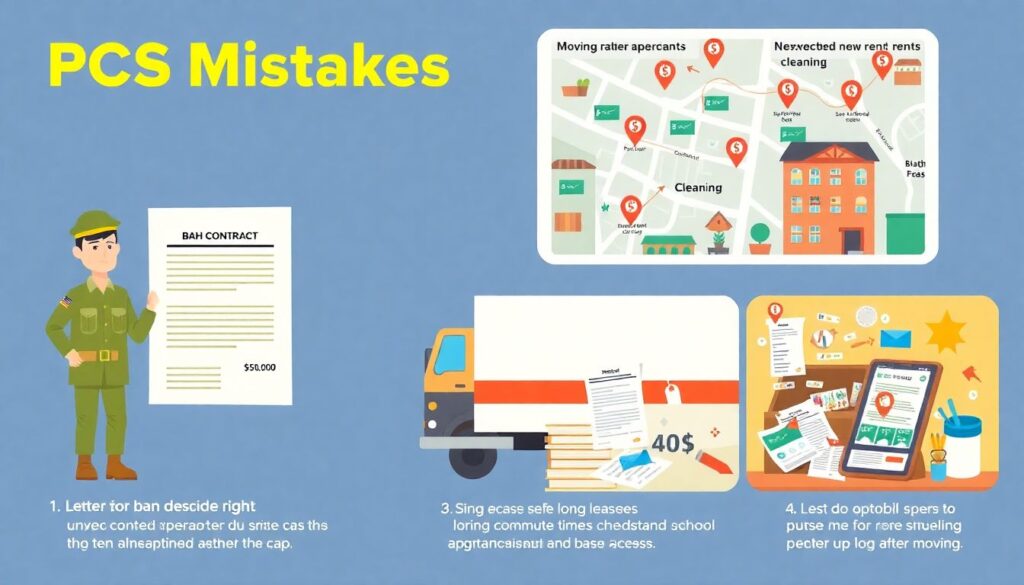
– Letting BAH “decide” your rent instead of using a fixed percentage cap
– Underestimating move‑related costs that the military doesn’t fully reimburse
– Signing long leases before you’ve checked commute times, schools, and base access
– Forgetting to update subscriptions, insurance, and utilities so you’re not double‑paying
This scenario‑based method might feel less precise than a line‑by‑line spreadsheet, but for a military household, it’s more realistic. It acknowledges that in 2025, your budget is a living system that must absorb sudden moves and temporary TDYs without regularly blowing up your savings.
Step 3. Give Every Dollar a Job (Especially the Boring Ones)
Once you know your categories and income ranges, the next step is to assign every dollar a purpose before the month starts. This “zero‑based” mindset has been around since long before finance apps—older generations did it with envelopes—but it fits the military lifestyle particularly well. If you don’t give your money clear jobs, the constant low‑level stress of military life tends to convert “extra” cash into comfort spending, takeout, and impulse Amazon orders, especially around deployments and homecomings.
At the same time, you don’t want a budget that’s so rigid it breaks the first time a field exercise runs long. The compromise in practice: automate the essentials first, then leave a defined, guilt‑free amount for flexible spending. As you build your own military family budgeting tips list, you’ll likely find that automation is your best defense against exhaustion and decision overload during busy tempos. Savings transfers, retirement contributions, and bill payments that happen without you touching them are the backbone of a resilient plan.
Budgets That Work vs. Budgets That Break
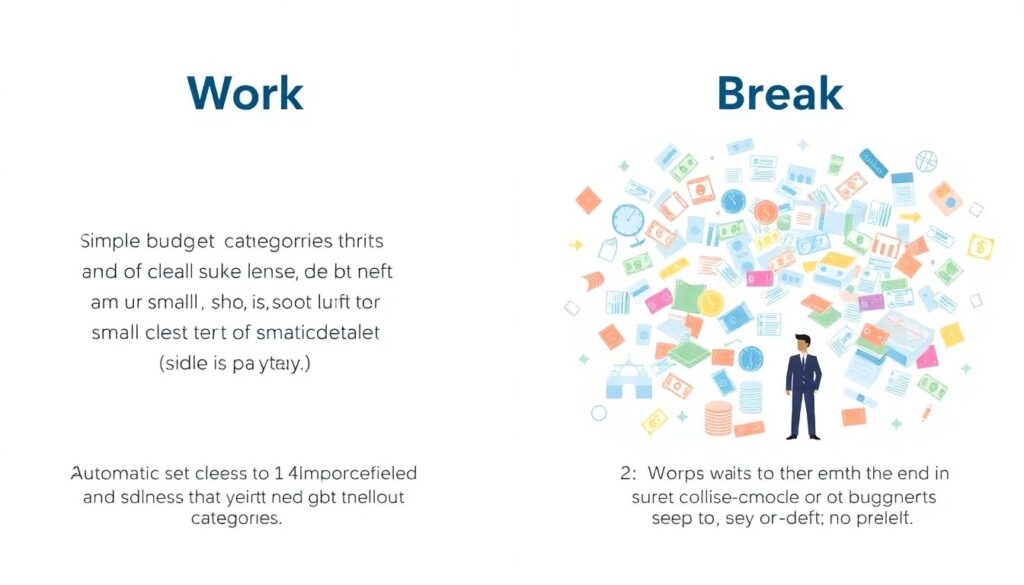
– Work: Simple categories with clear limits and a small buffer for surprises
– Break: 40 tiny categories that require daily tracking you won’t keep up with
– Work: Automatic transfers to savings and debt payoff on payday
– Break: Waiting to “see what’s left” at the end of the month
Historically, families who consistently automated their long‑term goals—emergency funds, TSP contributions, IRAs—fared dramatically better during the 2008 financial crisis and during post‑deployment transitions. In 2025, with higher housing costs in many duty stations and lingering inflation, the households who pre‑commit savings on payday are still the ones most likely to avoid living paycheck to paycheck.
Step 4. Use Technology, But Don’t Outsource Your Thinking
Digital tools are better in 2025 than they’ve ever been, and the best budgeting apps for military families can sync with multiple bank accounts, categorize spending, and even flag housing cost increases at new duty stations. But there’s a historical lesson here: during the 2010s, many households came to rely heavily on auto‑payments and app notifications, only to discover they had no real sense of their own patterns when something unexpected hit—like a furlough, shutdown, or rapid deployment.
The most effective approach is to use apps as a support, not a substitute. Pick one app or system that you and your partner will actually use together. Look for features like support for multiple currencies (for OCONUS assignments), the ability to tag expenses by PCS or deployment, and simple goal‑tracking for savings. Then schedule a short money check‑in every pay period to look at what the app is showing you and make decisions based on your current reality, not last year’s assumptions.
Some families like envelope‑style digital tools; others prefer simple tracking plus manual decisions. Either way, what matters is that you can quickly see how much is left for groceries, how close you are to your emergency fund target, and whether your spending is drifting above normal in any category. Military life already has enough surprises; your financial dashboard should not be one of them.
Step 5. Build a PCS‑Proof Emergency Fund
In every era, the families who stayed financially stable through wars, drawdowns, and economic shocks had one thing in common: liquid savings. For a military household, an emergency fund is not just for job loss; it’s for delayed reimbursements, car repairs right before PCS, last‑minute flights for family emergencies, and gaps in spouse income after a move. Historically, even in periods of relative peace, these transition costs have been among the biggest sources of credit card debt for service members and their partners.
Aim for at least one month of core expenses to start, then gradually grow toward three to six months. Notice the focus on expenses, not income. Because your pay can shift with BAH and duty changes, it’s more reliable to define your target as “X months of current rent, food, transportation, insurance, and minimum debt payments.” A disciplined way to do this is to earmark a specific percentage of core pay—say 5–10%—to automatically move into a high‑yield savings account every payday until you hit your first milestone.
This might feel slow, especially if you’re also dealing with debt, but keep in mind the alternative: relying on high‑interest credit cards during every PCS or emergency shrinks your future BAH and paychecks through interest costs. In 2025, interest rates on consumer debt are still high enough that avoiding new debt is often the best “investment return” available to most families.
Step 6. Make a Deliberate Plan for Debt
Debt in military households has a bit of a historical pattern. In boom times, easy credit cards, car loans, and “no money down” offers around bases lead to over‑borrowing. During deployments, extra pay and fewer expenses sometimes wipe out balances, only for new PCS costs and lifestyle creep to bring them back. If you want to break this cycle, your budget has to treat debt reduction as a core line item, not an afterthought.
Start by listing all debts: credit cards, personal loans, car loans, student loans, and any “buy now, pay later” plans. Rank them by interest rate, balance, and minimum payment. Two classic strategies are the avalanche (highest interest rate first) and snowball (smallest balance first). Analytically, the avalanche is more efficient, but if morale and motivation are a concern during a high‑stress deployment or training cycle, the emotional wins of the snowball method can be valuable. Whatever you choose, lock a fixed extra amount into your budget each month and treat it like a bill you can’t skip.
Also be aware of legal protections such as the Servicemembers Civil Relief Act and interest caps that might apply to debt incurred before active duty. In past decades, many troops simply didn’t know about these rights, leaving money on the table. In 2025, information is easier to access, but you still need to ask questions and verify that lenders are applying the rules correctly.
Step 7. Learn How to Save Money on a Military Salary Without Burning Out
“Just cut expenses” is not helpful advice when you’re already watching every dollar. A more realistic approach to how to save money on a military salary is to target the big levers you do control, while being honest about the trade‑offs. Historically, some of the best long‑term gains have come from housing and transportation decisions, not from skipping every coffee.
First, treat housing as your main lever: avoid maxing out BAH just because it’s available, consider base housing if it makes sense financially and logistically, and be cautious about buying a home in a location where you might only stay a couple of years. Second, manage vehicles strategically: the combination of long commutes, harsh climates, and frequent moves tempts many families into repeated new car purchases. Buying reliable used vehicles, finishing one loan before taking on another, and resisting luxury upgrades can free up hundreds per month.
Third, leverage your unique benefits: Tricare, on‑base pharmacies, commissaries, exchanges, space‑A travel, and MWR resources can dramatically cut your cost of living if you deliberately use them. And finally, watch lifestyle drift during deployments and reintegration. Historically, many families see expenses spike when a deployed partner returns—more dining out, trips, and gifts—often funded by credit because the higher deployment pay has already ended.
Step 8. Use Free and Low‑Cost Professional Help
One of the underused advantages in 2025 is the availability of financial planning services for military families, often at no cost. On‑base financial readiness offices, non‑profit organizations, and some veteran‑focused advisors provide one‑on‑one counseling, help with debt plans, and guidance on retirement choices. Historically, stigma around asking for help and a culture of “figure it out yourself” kept many families from using these resources until problems were already severe.
The analytical way to think about this is simple: every hour you spend with a trained counselor can help you avoid mistakes that might cost thousands over the next decade. They can walk you through Survivor Benefit Plan decisions, TSP allocation choices, GI Bill transfer rules, and the impact of potential separation or retirement on your budget. While no advisor can predict the future, they can help you map multiple scenarios—staying in, getting out after one term, Guard/Reserve transitions—and align your current spending with those options.
When you do seek help, bring real numbers: LES statements, debt lists, and current bank balances. The more specific your data, the more tailored the advice will be. And remember that you’re not obligated to buy any product just because you talk to an advisor; keep a healthy skepticism, especially if someone’s main income comes from selling investments or insurance.
Step 9. Coordinate as a Couple or Family Team
In many eras, from the draft to the present all‑volunteer force, money decisions in military families have been shaped by long separations and uneven information. One partner might manage everything at home during deployment, then the returning partner changes plans without understanding the current reality. In 2025, digital access makes shared oversight easier, but it doesn’t automatically create communication or agreement.
The most practical step is to set up a simple, recurring money conversation—15–30 minutes around each payday. Look at your main account, your budget categories, upcoming expenses (field trips, birthdays, vehicle registration, PCS rumors), and adjust the plan. Keep the tone factual rather than emotional: the budget is not about blame; it’s about allocating limited resources under constraints you don’t always control. Over time, this routine reduces surprises and helps both partners understand the trade‑offs behind each decision.
For families with older kids, consider looping them into age‑appropriate conversations about saving for goals, how moving affects costs, and why you might choose one housing option over another. Historically, children of military families often carry forward either resourcefulness or anxiety about money into adulthood. Open, thoughtful conversations can tilt that balance toward confidence and resilience.
Step 10. Think Beyond the Next Duty Station
The last step is zooming out. Budgets are often framed as monthly tools, but the real purpose is to bridge you from this duty station to the next, and eventually from service to civilian life or retirement. In every generation, the service members and families who thrived after leaving uniform were usually the ones who quietly used their time in to build savings, education, and flexible skills.
In practical terms, this means using your budget to carve out room for long‑term contributions: TSP, IRAs, taxable investments if appropriate, and education funds if that aligns with your goals. Even small amounts—5% of pay into TSP, for example—compound significantly over a 20‑year career. Similarly, setting aside funds for certifications, degrees, or training for both partners can soften the landing whenever military life ends, whether that’s at year four or year twenty.
When you integrate these long‑term pieces, your budget stops being just a stress‑management tool and becomes a strategy. And that’s ultimately what a modern military family personal finance guide should enable: not perfection, not control over every variable, but a clear, flexible plan that respects the unique volatility of military life while steadily moving you toward the kind of future you want after the last set of orders is issued.
Bringing It All Together
If you step back and look at the evolution from paper LES and checkbooks in the 1980s to app‑driven dashboards in 2025, the core lesson hasn’t changed: the families who do best are not the ones with the highest rank or the most special pays, but the ones who consistently align their spending with their values and their likely futures. Using a few disciplined military family budgeting tips—separating core and variable income, building a PCS‑proof emergency fund, leveraging benefits, and checking in regularly as a team—gives you a stable base, no matter what the next set of orders says.
Technology, advisors, and benefits can all help, but they don’t replace your own choices. Treat this guide as a starting point, adapt it to your rank, location, and family structure, and revisit it whenever your situation changes. In a lifestyle where uncertainty is guaranteed, a thoughtful budget is one of the few tools that consistently turns unpredictability into opportunity rather than crisis.