
Why AI ETFs Are Suddenly Everywhere
Artificial intelligence stopped being sci‑fi the moment algorithms began quietly deciding which posts you see, what prices you pay for flights and how your phone camera enhances your face. By 2025, AI is a full‑blown infrastructure layer, a bit like electricity 100 years ago. Instead of trying to pick one “next NVIDIA” or the single magic startup, many investors are jumping into artificial intelligence ETFs – ready‑made baskets of AI‑related stocks. The idea is simple: let a fund spread your bet across chips, cloud, software and robotics, while you focus on how much risk you actually want to take and for how long.
If you’re wondering whether this is just hype, think about how cloud computing ETFs looked in 2012. Back then it felt niche; now cloud is the default. AI is following a similar arc, but faster, because models, data and hardware are evolving at breakneck speed and attracting record R&D budgets.
Key Terms, Without the Jargon Overload
First, some clear definitions. An ETF (Exchange‑Traded Fund) is a basket of assets you can buy and sell like a regular stock on an exchange. An AI ETF, more specifically, is a fund that holds companies earning a significant share of revenue from artificial intelligence: chip makers powering model training, cloud platforms selling AI services, software firms embedding machine learning, and sometimes robotics or automation players. When people search for the best artificial intelligence ETFs to invest in, they usually look at three things: what’s inside the basket, how much it costs per year (the fee), and how wild the price swings can get compared to a broad market index like the S&P 500.
So when you see “index‑tracking AI ETF”, it simply means the fund follows a predefined rulebook: for example, “hold the top 60 global companies by AI revenue share, weighted by market cap, rebalanced twice a year”. You’re not trusting one manager’s gut feeling every day; you’re following a transparent formula, which is exactly why beginners often prefer ETFs to stock picking.
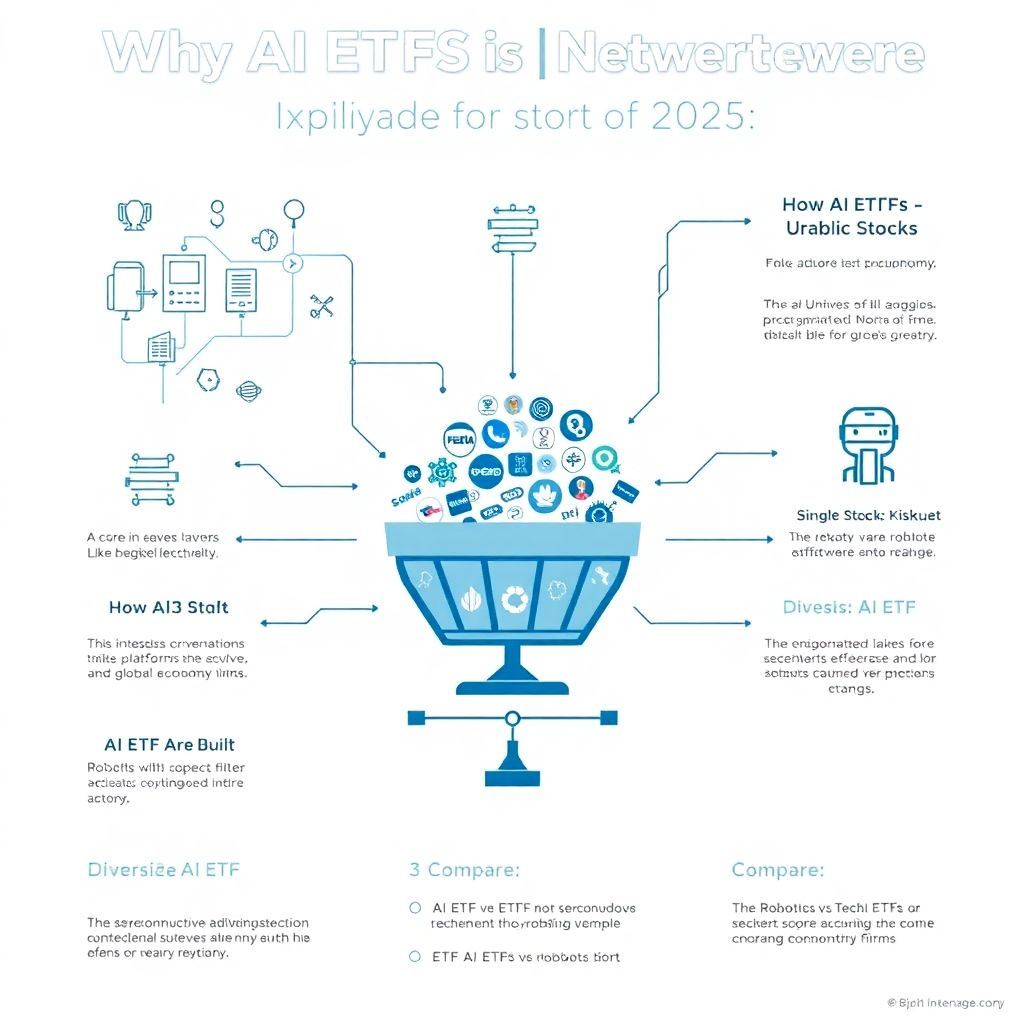
How AI ETFs Are Built: A Text Diagram
Under the hood, building an AI ETF is more systematic than mystical. Imagine this as a step‑by‑step sketch in text form rather than a fancy chart:
[Diagram: AI ETF Construction Flow]
1) Universe: All global stocks with decent liquidity
↓
2) Filter: Revenue from AI, chips, cloud, automation, or enabling tech ≥ X%
↓
3) Score: Rank by market cap, AI exposure, liquidity, sometimes R&D intensity
↓
4) Select: Top N stocks that meet rules
↓
5) Weight: Market‑cap or equal‑weight or factor‑tilted
↓
6) Rebalance: Every quarter/half‑year to keep the portfolio aligned with AI trends
This process matters because it explains why two “AI ETFs” can behave very differently. One might be 40% in mega‑cap US chip giants, another more evenly spread across mid‑cap European automation firms and Asian robotics manufacturers.
AI ETFs vs Buying Individual AI Stocks
Think about the last AI stock that went parabolic on social media. Everyone talks about the wins; the quiet graveyard of AI‑themed small caps that never made a profit is less glamorous. A focused AI ETF automatically diversifies your exposure: if one company’s model flops or gets regulated into the ground, it’s just one slice of the pie. Compared to picking stocks, an artificial intelligence ETF investment strategy tends to rely more on asset allocation questions (“how much AI in my portfolio?”) than on forecasting which specific CEO will execute perfectly for the next decade.
That said, ETFs are not magic shields. If AI hardware spending slows or regulations hit data‑hungry models, most holdings in an AI ETF will feel it. The trade‑off is simple: lower single‑company blow‑up risk, but still meaningful sector risk. Many investors pair an AI ETF with a broad global equity ETF to keep things from becoming a one‑theme bet.
Choosing Between Different AI ETFs
By 2025, there is no single “official” AI ETF; there’s an entire ecosystem. When people talk about the top AI ETFs for beginners, they usually mean funds that tick three boxes: global diversification, reasonable fees, and clear, rules‑based selection criteria. Some funds lean heavily into US mega‑caps like NVIDIA, Microsoft, Alphabet and Amazon, since they dominate model training and cloud AI services. Others tilt toward robotics, industrial automation and AI‑driven manufacturing, capturing the physical side of the story rather than only the software and chips narrative that dominates headlines.
Because marketers love the buzzword, you’ll also find ETFs that slap “AI” on the label but mostly hold general tech or even broad Nasdaq names. This is why it’s worth spending ten minutes inside the holdings list. If the top ten stocks look no different from a generic tech ETF, you’re not getting much targeted AI exposure, just a rebranded tech basket with a trendy name.
Comparing AI ETFs with Tech and Robotics ETFs
It helps to compare an AI‑branded ETF against two close cousins: a broad tech ETF and a robotics/automation ETF. A traditional tech ETF spreads across semiconductors, software, hardware, internet, and often includes plenty of “plain vanilla” businesses whose AI usage is secondary. A robotics fund may focus on factory automation, sensors and mechatronics, some of which use AI, some of which don’t. An AI ETF, in theory, sits at the intersection: it wants tech and robotics players where machine learning, neural networks or data‑driven automation are central to the business model, not just side projects.
In practice, overlaps are big: the same chip giant or cloud provider will appear across all three fund types. The difference is emphasis. If you want “AI as a service and infrastructure”, you’ll lean toward AI ETFs; if your thesis is “machines replacing repetitive labor”, robotics might be closer; if you simply want growth tech without caring what’s under the hood, broad tech ETFs usually do the job.
Fees, Liquidity and the “Low‑Fee List” Idea
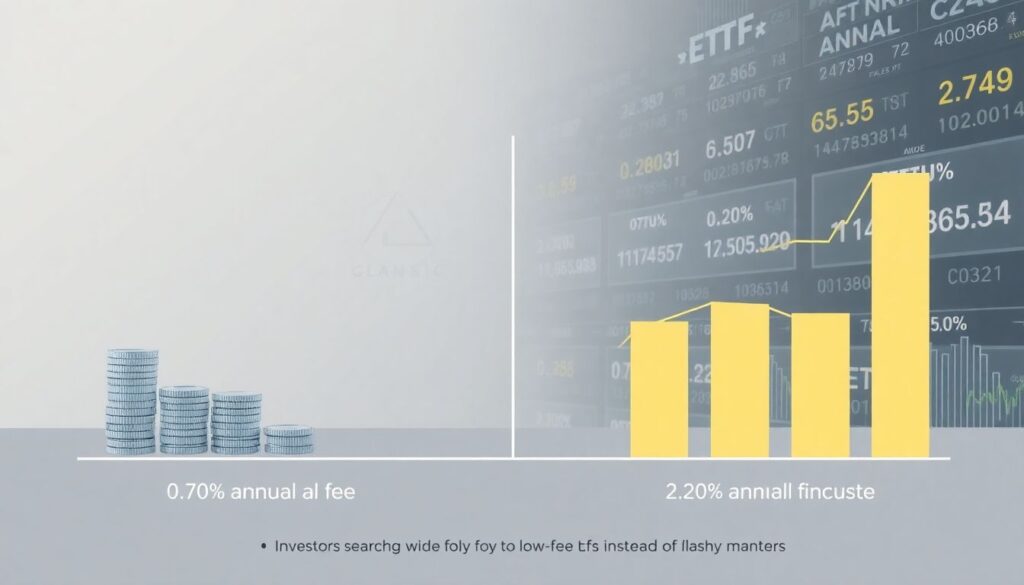
Costs quietly eat returns over years. A seemingly small 0.70% annual fee compounds away more of your gains than a 0.20% fee if performance is similar. That’s why investors keep hunting for an AI ETF list with low fees rather than grabbing the flashiest marketing brochure. Liquidity matters, too: higher daily trading volume usually means tighter bid‑ask spreads, so you lose less money just entering and exiting positions.
In plain terms, if two AI ETFs give similar exposure, the cheaper and more liquid one tends to win over a decade. For short‑term trading, people may tolerate higher fees if they believe the index design is superior, but long‑term compounding usually rewards frugality on costs and discipline on position sizing.
How to Invest in AI ETF Funds Step by Step
Let’s walk through how to invest in AI ETF funds without overcomplicating it. Step one: open a brokerage account that gives access to major US and global exchanges; most modern online brokers do, and many offer fractional shares so you don’t need a big lump sum. Step two: decide your allocation. For many beginner portfolios, treating AI as a “theme sleeve” of, say, 5–15% of total equity exposure is a starting point, rather than going all‑in and turning your retirement into a science experiment. Step three: pick one or two core AI ETFs with transparent methodologies and moderate fees rather than scattering small amounts across many overlapping products.
Once invested, the boring part kicks in: rebalancing. If your AI ETF doubles while the rest of your portfolio creeps up slowly, your AI slice can silently expand from 10% to 25%. Periodic rebalancing—say once or twice a year—brings it back in line with your target, locking in some gains and preventing the theme from hijacking your risk profile when markets get euphoric.
A Simple AI ETF Strategy for Beginners
A basic artificial intelligence ETF investment strategy in 2025 might look like this in practice: hold a broad global equity ETF as your “core” and layer one diversified AI ETF on top as a “satellite”. You contribute regularly—monthly or quarterly—regardless of market noise, and you only tinker with your allocation if your life situation or risk tolerance changes, not because a headline screamed about a new chatbot. The goal is to let time, compounding and the structural growth of AI do most of the heavy lifting.
Someone slightly more advanced might hold two complementary AI ETFs: one that leans into large, profitable AI infrastructure players and another that gives smaller exposure to earlier‑stage, higher‑beta innovators. The key is still position sizing: innovative doesn’t have to mean oversized in your portfolio.
Risk Reality Check: What Can Go Wrong

AI feels unstoppable today, but the path from 2025 to 2035 won’t be smooth. Regulatory risk is climbing: governments are drafting rules on training data, model transparency, and how AI can be used in finance, healthcare and security. This can increase compliance costs or even kill certain business models. There’s also “winner‑takes‑most” risk: if a few hyperscalers dominate AI platforms, smaller listed “AI pure plays” inside your ETF might underperform or get acquired at unimpressive premiums. Volatility risk is real, too: AI‑heavy indexes can fall much faster than broad markets in risk‑off periods, especially when valuations bake in aggressive growth assumptions.
One more subtle risk: technological disruption inside AI itself. A breakthrough in open‑source models or energy‑efficient chips could erode the moat of current leaders. An ETF helps by spreading exposure, but if the entire AI stack gets repriced—because profits lag lofty expectations—your AI ETF will feel that shock, even with good diversification across companies and regions.
2025–2035 Outlook: Where AI ETFs Might Go Next
Looking ahead from 2025, AI is likely to seep into three big investment layers. First, “horizontal” AI, where models are generic tools: coding assistants, office productivity, creative tools. This benefits cloud platforms and software giants already core holdings in many AI ETFs. Second, “vertical” AI, tailored to industries like healthcare, manufacturing and finance, potentially bringing more specialized names into AI indices as they scale revenue. Third, “AI infrastructure 2.0”: new chip architectures, photonic computing, specialized accelerators and smarter data‑center design to reduce energy use, which could shift index weight toward currently smaller hardware innovators.
Over the next decade, expect new ETF variants: climate‑aware AI ETFs focused on energy‑efficient computing; region‑specific funds targeting Asian or European AI champions; and factor‑based AI ETFs combining AI exposure with value, quality or dividend screens. Performance will likely be lumpy—strong multi‑year runs followed by sharp corrections—but if AI remains a core productivity driver, the long‑term trend in revenues and margins for leading players should be upward, though not evenly distributed.
Putting It All Together
Investing in artificial intelligence ETFs in 2025 boils down to a few grounded decisions: understand what the fund actually owns, be honest about how much volatility you can stand, keep fees and liquidity on your radar, and treat AI as a powerful theme inside a diversified portfolio rather than the whole show. For many people, the best artificial intelligence ETFs to invest in are not the most complex or aggressive ones, but the straightforward, low‑cost, rules‑based funds that quietly track the rise of AI across chips, cloud and software.
If you approach AI ETFs the same way you’d approach any long‑term investment—clear strategy, realistic expectations, and patience through cycles—you don’t need a PhD in machine learning to benefit from the AI wave. You just need a sensible plan and the discipline to stick with it while the technology, and the headlines, keep racing ahead.