
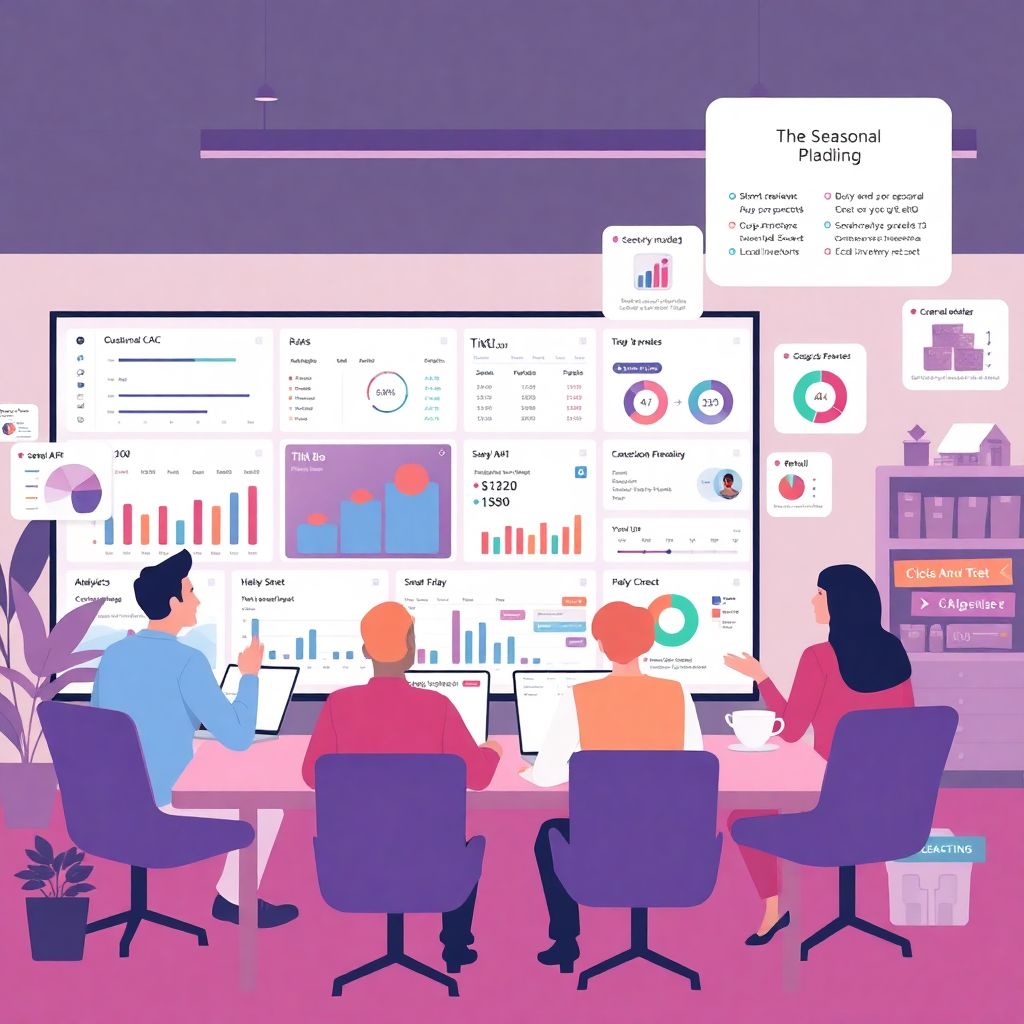
Before we dive into the “how”, a quick reality check: in 2025 seasonal promos are less about shouting the biggest discount and more about precision—data, timing, and ruthless focus on ROI. Budgets are tight, tracking is messier (thanks, privacy rules), and customer acquisition costs keep creeping up. The good news: with a clear system, seasonal campaigns can still be your most profitable periods of the year.
—
Why seasonal budgeting in 2025 looks different
Seasonal promotions used to be relatively simple: pick dates, blast discounts, hope for the best. Now you’re budgeting into a world of:
– Restricted tracking (post‑cookie, consent banners, iOS privacy)
– Algorithmic ad platforms that change weekly
– Fragmented attention across TikTok, Reels, Shorts, marketplaces, and offline retail
Your seasonal promotion strategy for ecommerce has to account for all that. Budgeting is no longer “X% of last year’s spend”. It’s closer to portfolio management: small tests, fast learning, and shifting money toward what works in near real time.
For omnichannel brands, the line between online and offline has also blurred. A retail seasonal sales promotion plan now needs to consider things like BOPIS (buy online, pick up in store), local inventory ads, and how foot traffic spikes affect your warehouse and last‑mile delivery costs.
—
Core tools you need to budget seasonal promotions
You don’t need a Silicon Valley tech stack. But you do need a minimum toolkit that ties data, money, and operations together.
Data & analytics stack

At the center sits analytics. If your tracking is wrong, your seasonal budget will be guesswork.
Longer paragraph: In 2025, first‑party data is the backbone. Make sure you have a clean analytics setup (GA4 or equivalent), plus server‑side tracking or a customer data platform if your volume justifies it. Connect your ecommerce platform (Shopify, WooCommerce, custom) with your analytics and your ad accounts. Track channels separately, but also look at blended performance—especially when you use influencers, TikTok, or upper‑funnel video that doesn’t convert immediately.
Key tools to consider:
– Web analytics (GA4, Plausible, Matomo or similar)
– Conversion APIs and server‑side tracking (Meta CAPI, Google Enhanced Conversions, TikTok Events API)
– A lightweight CDP or integrated CRM for segmenting customers
Planning & collaboration tools
Short and simple: your budget lives or dies on how well your team stays aligned.
Use shared planning tools so marketing, finance, and operations see the same numbers:
– Spreadsheets or Notion/ClickUp workspaces for budgets and calendars
– A shared promo calendar with exact dates, offer types, and channels
– Simple workflow/approval processes for creative and copy
If your team is remote (which is increasingly common), tight documentation beats long meetings.
Financial & forecasting tools
This is where your seasonal plan becomes real money.
You can absolutely get by with a robust spreadsheet model, but many brands now use an “ecommerce holiday advertising budget calculator” style template that pulls in historical ROAS, margin by product, and fixed costs. Whether custom or off‑the‑shelf, your tool should help you:
– Model spend and expected revenue by channel
– Include product margins, shipping, and payment fees
– Stress‑test pessimistic and optimistic scenarios
The goal isn’t perfect prediction. It’s having a clear view of where profit actually comes from during each peak period.
—
Step‑by‑step process: from idea to seasonal budget
This is a practical framework you can reuse each season—Black Friday, Singles’ Day, summer sales, back‑to‑school, or local holidays.
Step 1. Analyze previous seasons (and fill the gaps)
Start with data, not with discounts.
Look at last year’s seasonal runs: what you spent, revenue, profit, and key metrics (CAC, ROAS, AOV, repeat rate). Separate branded from non‑branded search, prospecting from remarketing, and paid from organic/owned channels. If the data is messy, fix tracking now rather than “later”. The cleaner your history, the smarter your current budgeting becomes.
Step 2. Set concrete goals and non‑negotiable limits
Short paragraph: vague goals create vague budgets.
Define specific targets for each season:
– Revenue and orders
– Profit or minimum ROAS
– Customer mix (new vs returning)
At the same time, fix hard constraints: maximum total budget, cash‑flow limits, warehouse capacity, and service level (e.g., “no more than 2‑day shipping delay”). When people ask how to budget for holiday marketing campaigns, this is the piece they skip—tying the marketing wish list to operational reality.
Step 3. Allocate budget across channels like a portfolio
Now split your seasonal pot.
Use a “core + test” model:
– 60–70% to proven channels (e.g., branded search, email, high‑performing Meta campaigns, loyalty promos)
– 20–30% to growth channels (TikTok, YouTube Shorts, new influencers, marketplaces)
– 10–20% buffer to scale winners mid‑season
Think like an investor. The best seasonal marketing campaigns for online stores don’t start huge everywhere; they start small, prove where they win, then double down while the season is still live.
Step 4. Design offers, creatives, and timing around your numbers
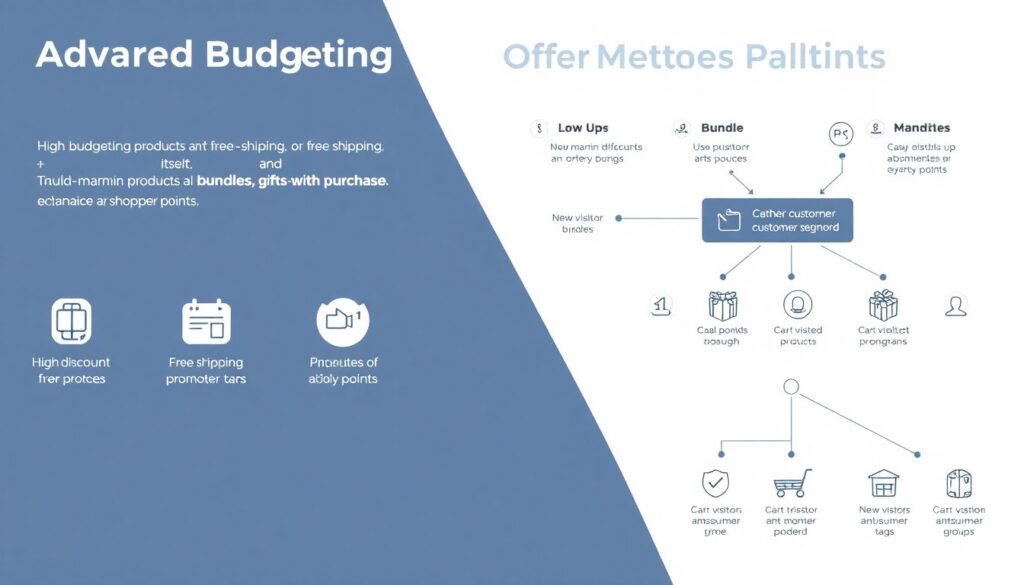
Longer paragraph: Budgeting isn’t separate from your offer; it should shape it. High‑margin items can sustain deeper discounts or free shipping; low‑margin staples might work better with bundles, gift‑with‑purchase, or loyalty points. Map out which promos go to which segments—new visitors, cart abandoners, VIPs, dormant customers—and assign rough budget shares per segment and channel. Time your heaviest spend around actual conversion peaks, not just “holiday dates”; many brands now see pre‑event and last‑minute spikes outperform the exact day.
Step 5. Build scenarios and buffers
Best practice in 2025: assume your first plan will be wrong.
Create three versions:
– Base case – what you actually expect
– Upside – what if CAC drops and you can scale?
– Downside – what if CPMs spike or a key channel underperforms?
Attach clear rules: “If ROAS > 4 for 3 days, increase budget by 20% up to $X.” or “If CAC rises 30% above target for 5 days, cut prospecting by 25% and move budget to email/SMS.” These rules prevent panic decisions in the middle of your peak week.
Step 6. Track in real time and rebalance ruthlessly
Short: once the season starts, the budget becomes a living thing.
Monitor daily or every 48 hours at least. Watch blended numbers (total spend vs total revenue) and not just per‑channel ROAS. Be ready to pause underperforming campaigns, move spend into high‑intent audiences, or shift from prospecting to remarketing as the season matures.
—
Modern tactics shaping seasonal promos in 2025
Seasonal promotions today live at the intersection of performance marketing and entertainment. Budgeting has to follow that reality.
Creators, short‑form video, and live shopping

Creator‑driven content and live events can be deceptively expensive—or insanely efficient.
In 2025, a growing share of seasonal sales comes from:
– Short‑form video on TikTok, Instagram Reels, and YouTube Shorts
– Live shopping events with influencers or your own team
– “Shop the look” and UGC‑style videos integrated directly into product pages
These don’t always show up as last‑click conversions. When you plan your seasonal promotion strategy for ecommerce, set aside a portion of your budget for top‑of‑funnel creator content and measure success via assisted conversions and branded search lift, not just direct ROAS.
Personalisation and AI‑driven promos
Longer paragraph: AI tools in 2025 can spin out dynamic offers, product recommendations, and email/SMS flows tailored to each segment—or even each user. Use this to push margin‑friendly bundles, personalised gift guides, and time‑limited offers triggered by behaviour (browse abandon, repeated visits, loyalty thresholds). Budget‑wise, that means allocating money to tools and data infrastructure, not only to media spend. Often a 5–10% investment in better lifecycle tools yields more profit than the same money thrown into more ads.
Omnichannel: online, retail, and marketplaces
If you operate physical stores or sell on marketplaces, your retail seasonal sales promotion plan has to integrate them.
Some trends to budget for:
– Click‑and‑collect promos that drive both online conversion and in‑store upsells
– Local inventory ads tied to store stock, reducing shipping costs and last‑minute delivery issues
– Marketplace‑only deals that offload overflow inventory without training your own customers to expect permanent discounts
Give each surface (own site, marketplaces, retail) its own P&L view. Spend levels that look “too high” on ads might be totally fine if they de‑risk inventory or lower fulfillment costs elsewhere.
—
Necessary tools in practice: a minimal, realistic stack
To ground all this, here’s the lean set of tools many small and mid‑size brands successfully use for seasonal budgeting:
– Analytics & tracking: GA4 (or similar) + conversion APIs
– Planning: One well‑structured spreadsheet acting as your “ecommerce holiday advertising budget calculator”
– Execution: Ad platforms (Meta, Google, TikTok), email/SMS platform, loyalty/referral tools
– Ops visibility: Inventory dashboard and simple warehouse capacity report
You don’t need ten dashboards—just one reliable source of truth that everyone trusts.
—
Troubleshooting: when your seasonal budget goes sideways
Even with good planning, things break. The key is diagnosing the right problem quickly.
If traffic is up but sales aren’t
Short paragraph: more visitors, flat revenue, shrinking ROAS—classic seasonal headache.
Work through this checklist:
– Check intent mix. Are you over‑investing in broad or interest audiences?
– Audit on‑site UX. Slow pages, checkout bugs, or confusing promos kill conversion.
– Review offer clarity. If your promo feels complicated, people bounce.
Sometimes the fix is not “spend less” but “simplify the path to purchase”.
If customer acquisition cost explodes mid‑season
Longer explanation: During peak periods, everyone bids harder, so CPMs and CPCs spike. If CAC shoots up, don’t blindly cut all spend. First, split performance by audience type. Scale back broad prospecting or low‑intent placements, but maintain (or even grow) budget into high‑intent search, remarketing, and your best‑performing lookalikes. Parallel move: shift more focus to owned channels—email, SMS, app push, and loyalty offers—where cost per incremental sale is much lower.
Also, watch frequency. In 2025, algorithms are aggressive; if a small audience gets hammered with your ads, CAC rises simply because you’re annoying people. Cap frequency or renew creatives faster.
If inventory or logistics can’t keep up
If your warehouse melts down or products go out of stock, your beautiful seasonal budget becomes useless.
Troubleshooting steps:
– Immediately pause or reduce spend on SKUs that are low or gone
– Pivot creative to in‑stock alternatives, bundles, and gift cards
– Communicate delivery cut‑offs clearly in ads and on‑site
From a planning perspective, future budgets should include a “logistics contingency” buffer—room to slow down acquisition if you’re approaching capacity, or funds reserved for rush shipping when delays are unavoidable.
—
Quick checklist before your next season
Use this as a pre‑flight before you lock your numbers:
– Clean tracking is in place, tested, and connected to all ad platforms
– Goals for revenue, profit, and CAC/ROAS are clearly defined
– Your seasonal budget is split into core, test, and buffer portions
– Offers and creative are mapped by segment, channel, and date
– Scenario rules (when to scale up/down) are written and shared
– Inventory, finance, and marketing are aligned on what “success” looks like
If you treat each peak period as an experiment—documenting what worked, what didn’t, and why—you’ll build your own internal playbook of the best seasonal marketing campaigns for online stores in your niche, instead of copying generic “top 10 tips” from the internet.
That’s the real superpower in 2025: not a single hack, but a repeatable, numbers‑first way to plan and budget your seasonal promotions, year after year.