

Why Debt Feels Different When You Have Kids
Juggling bills is one thing; juggling bills while a toddler screams for snacks is another universe entirely. When you’re a parent, money decisions are never just about you: every swipe of the card competes with school shoes, daycare, sports fees, and future college costs. That’s why classic advice like “just cut expenses” often sounds tone‑deaf. You can’t simply cancel childcare or stop buying food with protein. Yet the math of compound interest doesn’t care how tired you are. The goal of modern budgeting and debt reduction plans for families with kids is to respect the emotional chaos of parenting while still using solid financial science: structured repayment, interest‑rate optimization and realistic behavior change instead of guilt or magical thinking.
Essential Tools Modern Parents Actually Use
Numbers, Not Vibes: Tracking Cash Flow
Before any plan, you need to see where money truly goes, including all the “invisible” kid costs like birthday gifts, field trips and streaming services that exist mostly for peace and quiet. A simple budget app or even a shared family spreadsheet works, but it must capture both parents’ spending and all recurring subscriptions. The psychology here is important: when you measure spending without judging it, you get a clearer baseline to design debt reduction plans instead of reacting emotionally to each bill. Parents often discover that small, automatic leaks—delivery fees, unused memberships, duplicated apps for kids—add up to a full debt payment they didn’t think they could afford, creating the first realistic opportunity to accelerate payoff.
Outside Help: Counseling, Consolidation, and Relief
Not every family can fix debt alone, especially after divorce, maternity leave gaps or medical bills. This is where debt relief programs for parents and professional guidance step in. In the US and many other countries, non‑profit agencies offer credit counseling services for single parents who are stretched thin by childcare and reduced earning time. For some households, the best debt consolidation loans for families can simplify multiple high‑interest cards into one structured payment, reducing mental load as well as interest. Others may lean on hardship programs from lenders, temporary forbearance or debt management plans negotiated by counselors, which bundle unsecured debts into a more predictable, parent‑friendly schedule.
Smart Products: Refinancing and Safety Nets
Credit cards are like open wounds: they keep bleeding interest while you’re busy with everything else. One scientifically sound move is to refinance credit card debt with personal loan options that have lower fixed rates and clear payoff dates. This doesn’t magically erase debt, but it converts an unpredictable revolving balance into a more stable, loan‑style obligation that you can align with pay cycles and school‑year rhythms. Alongside that, having even a tiny emergency fund—sometimes just one paycheck in a separate account—changes behavior. Parents are less likely to swipe a card for every urgent‑seeming kid request, because they know what is truly an emergency and what is just noise, which gradually reduces reliance on credit.
Step‑by‑Step: Building a Parent‑Proof Reduction Plan
Step 1: Define the “Why” in Kid Terms
Abstract goals like “be debt‑free” rarely motivate exhausted parents at 11 p.m. A more effective first step is tying your debt reduction plan to concrete kid‑centered outcomes: funding a summer camp, cutting back overtime to see school plays, or freeing up cash for tutoring instead of late fees. Neuroscience research on motivation shows that emotionally vivid goals beat vague numbers, especially when self‑control is already depleted by sleep loss. So write down two or three family‑focused reasons and keep them visible: on the fridge, in your budgeting app, or even as the name of your debt‑payoff savings pot, so every payment feels like it’s buying time and options for your children, not just paying for past mistakes.
Step 2: Map Every Debt and Choose a Strategy
Next, collect every balance: credit cards, buy‑now‑pay‑later plans, car loans, personal loans, medical bills and lingering student debt. Record interest rates, minimum payments and due dates. Then pick a payoff strategy that fits your personality and parenting reality. The “avalanche” method attacks the highest interest first, saving the most money over time; the “snowball” hits the smallest balances first to generate quick emotional wins, which can be crucial when your life already feels like constant uphill work. Many parents blend the two, clearing small nagging debts while still giving extra attention to one high‑interest card. The key is consistency: automatic transfers scheduled right after payday, before kid expenses crowd in.
Step 3: Build a Flexible but Firm Budget

Rigid budgets fail parents because children are walking surprise machines. A more scientific, parent‑friendly approach uses “buckets”: fixed essentials, variable kid costs, long‑term goals and debt payments. In each paycheck, money flows first to essentials and minimum payments, then to scheduled extra debt reduction and finally to “kid chaos” spending. You intentionally leave some buffer for school events, birthday parties and last‑minute supplies so you don’t constantly feel like you’re blowing the plan. Over a few months, track patterns: maybe sports season spikes in spring, or daycare drops in summer when grandparents help. Adjust your plan seasonally instead of pretending every month is identical, which keeps the system realistic enough to survive real life.
Troubleshooting: When the Plan Meets Real Life
Dealing with Setbacks and Emotional Whiplash
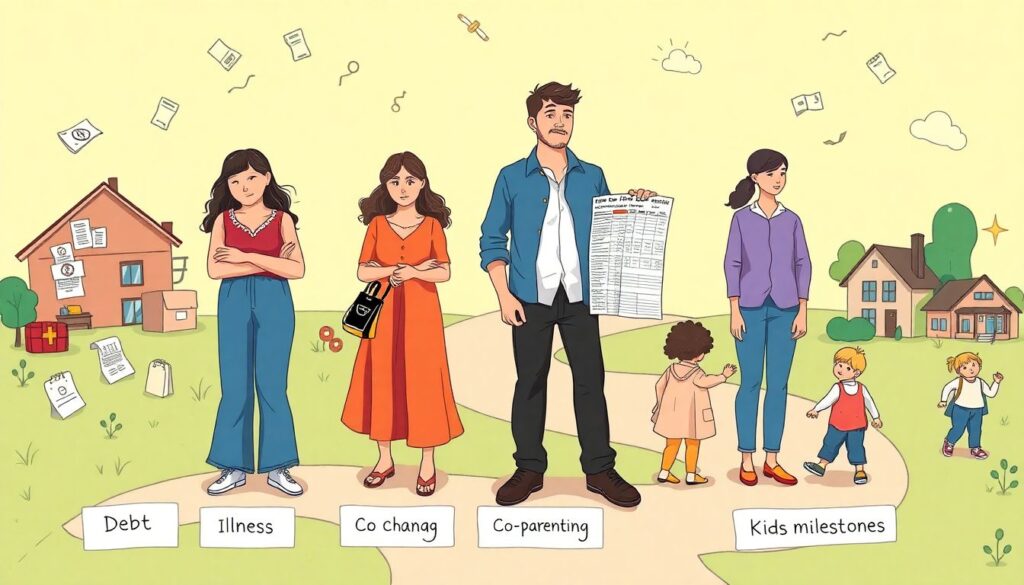
Parents rarely move in a straight line from debt to freedom. Illness, job changes, co‑parenting conflicts and developmental milestones all collide with your careful spreadsheet. When things go sideways, the instinct is often to abandon the plan entirely, but a more robust mindset is to treat the plan like a lab experiment: update the data, adjust the variables and keep going. If a month blows up because of car repairs and school fees, rename it a “stabilization month” rather than a failure, focus on covering essentials and minimums, and resume extra payments next cycle. This reframing lowers shame, which research shows is a major driver of avoidance and late payments, especially among overwhelmed caregivers.
Negotiating with Lenders and Co‑Parents
Troubleshooting isn’t always about math; it’s often about conversations. If you hit a wall, contact creditors before you miss payments to explore hardship options, rate reductions or temporarily lowered minimums. Scripts help here: clearly stating that you have kids, a specific income and a commitment to repay can unlock more flexible terms than staying silent. If you’re co‑parenting, align on a shared picture of priorities: which debts to attack first, how to handle joint cards and what happens when one parent wants to spend more on enrichment while the other prioritizes balance reduction. Written agreements, even informal ones, reduce conflict and prevent debt from becoming another battleground in already tense family dynamics.
Spotting Red Flags and Knowing When to Escalate
Some signals mean you need more than tweaks: using one card to pay another, hiding purchases from a partner, or skipping medical care to make minimum payments. At that stage, professional help isn’t a luxury; it’s damage control. Independent financial coaches, licensed therapists and reputable agencies can help untangle the web of money, stress and parenting pressures. If collectors are calling daily or legal action looms, escalating to formal debt management or even bankruptcy counseling may be the most rational path toward stability, not a moral failure. The critical skill for parents is distinguishing between a temporary rough patch and a structural problem that requires systemic change rather than just “trying harder.”
The Future of Family Debt Reduction After 2025
Tech, Policy, and Culture Shifts on the Horizon
Looking ahead from 2025, debt reduction plans for parents are likely to become more personalized and less stigmatized. We’re already seeing budgeting apps that link to school calendars, predicting cash‑flow crunches around back‑to‑school and holidays, and nudging families to set aside micro‑savings months in advance. AI‑driven tools will increasingly analyze spending and suggest tailored debt strategies, flagging when a family would truly benefit from consolidation or when lifestyle changes matter more than new products. At the same time, governments and employers are experimenting with childcare subsidies, student loan relief and workplace financial‑wellness programs targeted at caregivers, slightly easing the pressure cooker parents have long accepted as normal.
How Parents Can Prepare for the Next Decade
Over the coming years, expect more integrated offerings: banks bundling family accounts with automatic debt‑payoff features, schools partnering with non‑profits to teach kids and parents money skills together, and more transparent disclosure rules around lending to households with dependents. The trend line suggests that debt relief and planning will be treated less like individual failure and more like a public‑health issue, much like mental health has evolved. To benefit, parents can start building financial literacy now, keep their data organized and remain skeptical but open to new tools. The combination of better tech, smarter policy and more honest conversations about money and kids won’t erase debt overnight, but it will make the path from survival mode to stability far more walkable for real families.