

Most people first notice the healthcare sector not through a chart, but in a hospital corridor or a pharmacy queue. Then one day they see a fund called “Healthcare ETF” in their brokerage app and wonder: is this how professionals bet on aging populations, expensive drugs and AI in medicine? This guide is for that exact moment: you know the story sounds promising, but you’re not yet sure what button to press or what all those tickers actually mean.
—
Why the Healthcare Sector Matters for Investors
Demographics are doing half the marketing for healthcare sector investment funds. The UN estimates that the global 65+ population will almost double between 2020 and 2050, and older people consistently spend more on drugs, surgeries, diagnostics and long‑term care. In the U.S., healthcare already accounts for about 17–18% of GDP and has kept rising despite recessions, elections and pandemics. That “need to stay alive” demand makes the sector structurally different from, say, retail or travel, where consumers can simply postpone purchases when things get tough.
If you look at the last three years, the numbers back that resilience story. According to S&P Dow Jones data, the S&P 500 Health Care sector delivered roughly 6–8% annualized total return from the start of 2022 through late 2024, depending on the exact month you measure. The broader S&P 500 did better, around 10–11% annualized, largely thanks to tech. So healthcare hasn’t been the hottest trade, but it also didn’t collapse when rates spiked or when AI narratives distracted investors elsewhere.
—
Real‑world example: the “boring but there” portfolio
A financial planner I worked with in 2023 had a 55‑year‑old client, Laura, who panicked during the 2022 market drop. What calmed her was noticing that the healthcare slice of her portfolio – mostly a broad ETF and one mutual fund – was down much less than her tech stocks. Over the 2022–2024 window, her healthcare funds ended up compounding in the mid‑single digits annually, while some speculative growth names never recovered. That experience turned healthcare from an abstract theme into a “sleep‑at‑night” core holding for her, not a flashy bet.
—
What Exactly Are Healthcare Sector Funds?
In simple terms, these funds collect a basket of healthcare companies and let you buy them through a single ticker. Inside that basket you’ll usually find big pharmaceutical names, medical device manufacturers, health insurers, hospital operators and sometimes biotech firms running clinical trials. Instead of trying to guess which single stock will launch the next blockbuster cancer drug, you own a diversified set of businesses that make money across the whole healthcare system. The cost you pay for that diversification is the management fee, but for beginners it’s usually a trade‑off worth making.
“`text
Technical note: Main fund types
– Healthcare ETFs (exchange-traded funds): trade like stocks during the day, usually low fees, track an index (e.g., U.S. health care sector or global).
– Healthcare mutual funds: priced once per day, sometimes actively managed, often available in retirement plans.
– Index vs active: index funds simply follow a benchmark; active managers try to outperform, typically with higher fees.
“`
—
ETFs vs mutual funds: how they feel in practice
Imagine you buy a healthcare ETF at 10:17 a.m. and sell it at 2:43 p.m. the same day – that’s normal, because ETFs trade intraday like any stock. With a mutual fund, you can send an order at noon, but the actual price you get is calculated after the market closes. For most long‑term investors this difference doesn’t matter much, but the ETF format tends to have lower expenses and more transparency, which is why many people doing their own research gravitate to them.
—
Recent Performance: What the Last 3 Years Tell Us
Let’s anchor expectations using real figures. Data from Morningstar and major index providers (rounded for clarity) show that from January 2022 to roughly October 2024, large U.S. healthcare ETFs tracking the sector delivered about 5–8% annualized total return. In contrast, the Nasdaq‑100, boosted by mega‑cap tech and AI plays, saw mid‑teens annualized returns over the same period. Yet in 2022 specifically, when rising interest rates hammered growth stocks, broad healthcare funds generally fell much less than the overall market. In other words, you didn’t win the performance race, but you took far fewer punches along the way.
A concrete example: SPDR Health Care Select Sector ETF (XLV), one of the largest U.S. healthcare ETFs, was down only in the high single digits in 2022 while the Nasdaq‑100 dropped more than 30%. Over 2023 and 2024, XLV’s recovery was calmer than the tech rebound, but the volatility profile remained noticeably smoother. That’s why many advisers place healthcare alongside staples and utilities as a “defensive growth” area – not immune to drawdowns, just more resistant when sentiment turns sour.
“`text
Technical note: Risk metrics
– Standard deviation (volatility) for big healthcare ETFs over the 3 years to late 2024 has typically been lower than for broad tech funds.
– Max drawdown during 2022 was smaller for healthcare than for high-growth sectors.
– Beta vs S&P 500 often sits just below 1.0, meaning slightly less sensitivity to overall market swings.
“`
—
Global angle: not just a U.S. story
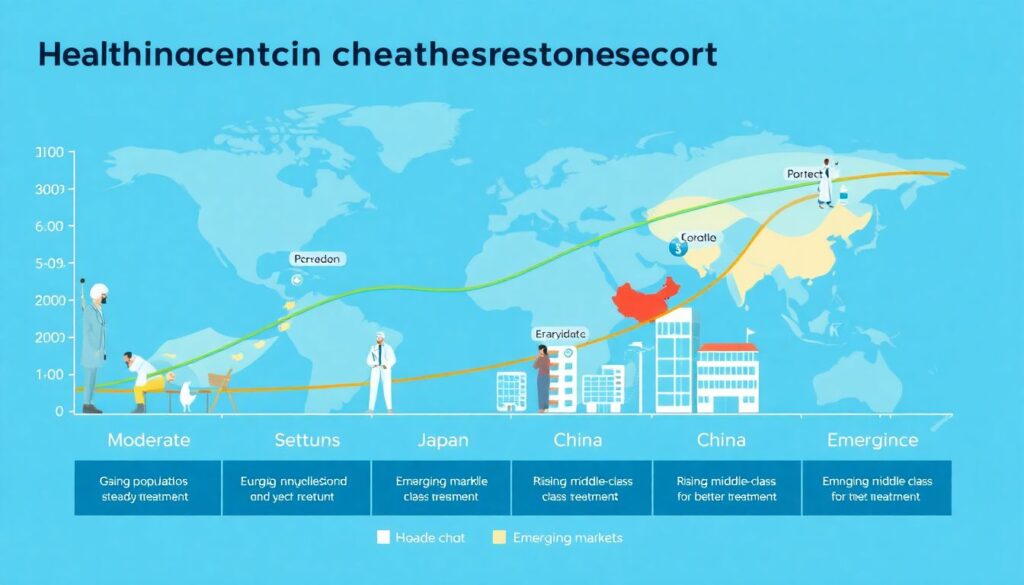
If you zoom out, global healthcare indices show a similar pattern: moderate but steady returns for 2022–2024, with much lower volatility than “hot” sectors. Aging populations in Europe, Japan and China, plus rising middle‑class demand for better treatment in emerging markets, have supported revenues even when local economies were weak. Many best healthcare sector funds to invest in now hold both U.S. giants and non‑U.S. names to tap that global trend rather than betting on one country’s system.
—
Types of Healthcare Funds and What They Really Own
Beginners are often surprised by how different two “healthcare” funds can be. One might be packed with safe, dividend‑paying blue‑chip drugmakers and insurers; another might be 70% small‑cap biotech with no profits yet. The first behaves more like a defensive stock fund, the second more like a venture‑capital proxy. This is where reading the top holdings and strategy description actually matters. A broad sector ETF will usually give you more balance between pharma, equipment and services, whereas a niche biotech fund can swing 5–7% in a single day on clinical‑trial headlines.
“`text
Technical note: Key healthcare subsectors
– Pharmaceuticals & biotech: drugs, vaccines, gene therapies.
– Medical devices & equipment: implants, surgical tools, diagnostics.
– Managed care & insurers: health insurance, pharmacy benefit managers.
– Healthcare providers & services: hospitals, clinics, labs, telehealth.
– Long-term care & ancillary services: nursing homes, home health, rehab.
“`
In practice, top healthcare ETFs for beginners tend to focus on those broad subsectors rather than taking concentrated bets. You’ll usually see big names like UnitedHealth, Johnson & Johnson, Eli Lilly, Abbott, Medtronic or major insurers among the top holdings. That mix helps soften the blow when a single drug trial goes badly – the loss is diluted within a large, diversified portfolio instead of wrecking your entire position.
—
Case study: the “hidden biotech tilt” surprise
In 2024, I reviewed a young investor’s account. He thought he owned a “safe” healthcare fund. On closer inspection, his ETF tracked a biotech‑only index, with over half its holdings in companies with no earnings. Over the previous 3 years, that fund had been flat to slightly negative, with wild swings of ±40% in between. Once we compared it with a broader healthcare ETF, he realized he was accidentally speculating, not building a defensive core. That’s why a quick healthcare ETF comparison and reviews search before investing can save you a lot of emotional turbulence.
—
How to Evaluate Healthcare Sector Funds
Start with three simple questions: what exactly does the fund own, how much does it charge, and how bumpy has the ride been historically? For holdings, skim the top 10 positions and the subsector breakdown; you’ll instantly see if you’re buying mostly big pharma, devices, insurers or early‑stage biotech. For cost, check the expense ratio: many index healthcare ETFs charge around 0.10–0.20% per year, while active mutual funds may be closer to 0.6–1.0%. Over a decade, that difference can quietly eat a meaningful slice of your gains, especially in a sector where returns may be mid‑single to low‑double digits.
“`text
Technical note: Core metrics to check
– Expense ratio (annual fee %)
– 3- and 5-year annualized returns (vs a benchmark and peers)
– Volatility and max drawdown history
– Assets under management and trading volume (for liquidity)
– Tracking error (for index ETFs) or manager tenure (for active funds)
“`
From a performance angle, healthcare sector investment funds with high returns over the last 3–5 years often had a heavier allocation to high‑growth biotech and cutting‑edge devices. But those same funds also suffered deeper drawdowns when sentiment turned. It’s tempting to sort your screener by “1‑year performance” and pick the winner, yet in healthcare that usually means you’re buying last year’s hottest narrative, not a balanced exposure to the long‑term aging trend.
—
Risk check: what can go wrong?
Even “defensive” sectors have landmines. Healthcare faces regulatory risk (think drug‑price reform), patent cliffs, litigation, political noise and reimbursement changes from big payers like Medicare. Biotech adds clinical‑trial risk and financing risk. Over 2022–2024 we saw several periods when headlines about U.S. drug pricing or insurer margins knocked the whole sector down for weeks, even if long‑term fundamentals hadn’t changed. A diversified fund won’t shield you from every drawdown, but it spreads those risks across dozens of companies rather than concentrating them in a single story stock.
—
How to Actually Invest: Practical Steps for Beginners
Let’s turn to the mechanics: how to invest in healthcare mutual funds and ETFs without getting lost in ticker soup. If you use a broker or robo‑advisor, you can usually search for “health care” or “healthcare” in the fund section, filter by “ETF” or “mutual fund,” and then sort by expense ratio or size. If you invest via a workplace retirement plan, you may only have one or two sector funds to choose from; in that case, check the fund’s fact sheet for its benchmark and fee. Most beginners start with a single broad, low‑cost healthcare ETF rather than juggling multiple niche strategies.
“`text
Technical note: Implementation checklist
1. Decide on allocation (e.g., 5–15% of equity portion of portfolio).
2. Choose vehicle: ETF (taxable or IRA) or mutual fund (often in 401(k)/pension).
3. Prefer diversified, broad healthcare exposure for a core holding.
4. Use limit orders for ETFs if liquidity is low; avoid trading at the open/close.
5. Review annually: has the fund changed strategy or fees? Has your allocation drifted?
“`
If you’re more comfortable with mutual funds, many large providers offer actively managed options where a professional team researches companies and adjusts holdings. That’s one answer to the question of how to invest in healthcare mutual funds if you don’t want to pick individual stocks yourself. Just be honest about fees: if the active fund hasn’t consistently beaten a cheap index ETF after costs over 5–10 years, you’re mostly paying for marketing and glossy reports.
—
Blending healthcare into a balanced portfolio
In practice, plenty of investors cap healthcare at a slice of their overall equity mix – say, 10% of stocks – rather than making it the core. For instance, a 60/40 portfolio might hold 48% in a global equity index fund, 12% in a healthcare ETF, and 40% in bonds. That way you benefit from the sector’s defensive growth and demographic tailwinds but still stay diversified across technology, industrials, financials and other areas.
—
Examples and Expectations: Putting It All Together
When you scan articles about the best healthcare sector funds to invest in, you’ll repeatedly see a few broad ETFs mentioned alongside more specialized biotech or medical‑device funds. The broad options tend to have massive asset bases, tight bid‑ask spreads and ultra‑low fees. Over the 2022–2024 period, many of these core healthcare ETFs delivered single‑digit annualized returns with measured volatility, acting as a stabilizer when high‑beta growth names whipsawed. Specialized funds, especially in biotech, offered higher upside in specific years but often gave it back when one or two major drug stories disappointed.
Expectations matter. If you go in hoping for “tech‑like” 20%+ compound annual returns, the sector will probably disappoint you. If you expect mid‑single to low‑double‑digit returns over a full cycle, with shallower drawdowns than the broad market and a strong long‑term demographic thesis behind it, healthcare fits that profile more credibly. That’s why many planners describe it as a “workhorse” sector: not the champion in every race, but often still running when trendier themes blow up.
—
Final thoughts for new investors
The healthcare story is easy to understand – everyone gets sick eventually – but the investment side can be complex. Rather than trying to outguess drug pipelines or policy reforms, most beginners are better off buying diversified funds, keeping fees low and holding for many years. Use tools that provide healthcare ETF comparison and reviews, read at least one fact sheet before buying, and size your position so that even a bad year won’t derail your overall plan. If you treat healthcare as a long‑term building block, not a lottery ticket, it can quietly do a lot of heavy lifting in your portfolio.