
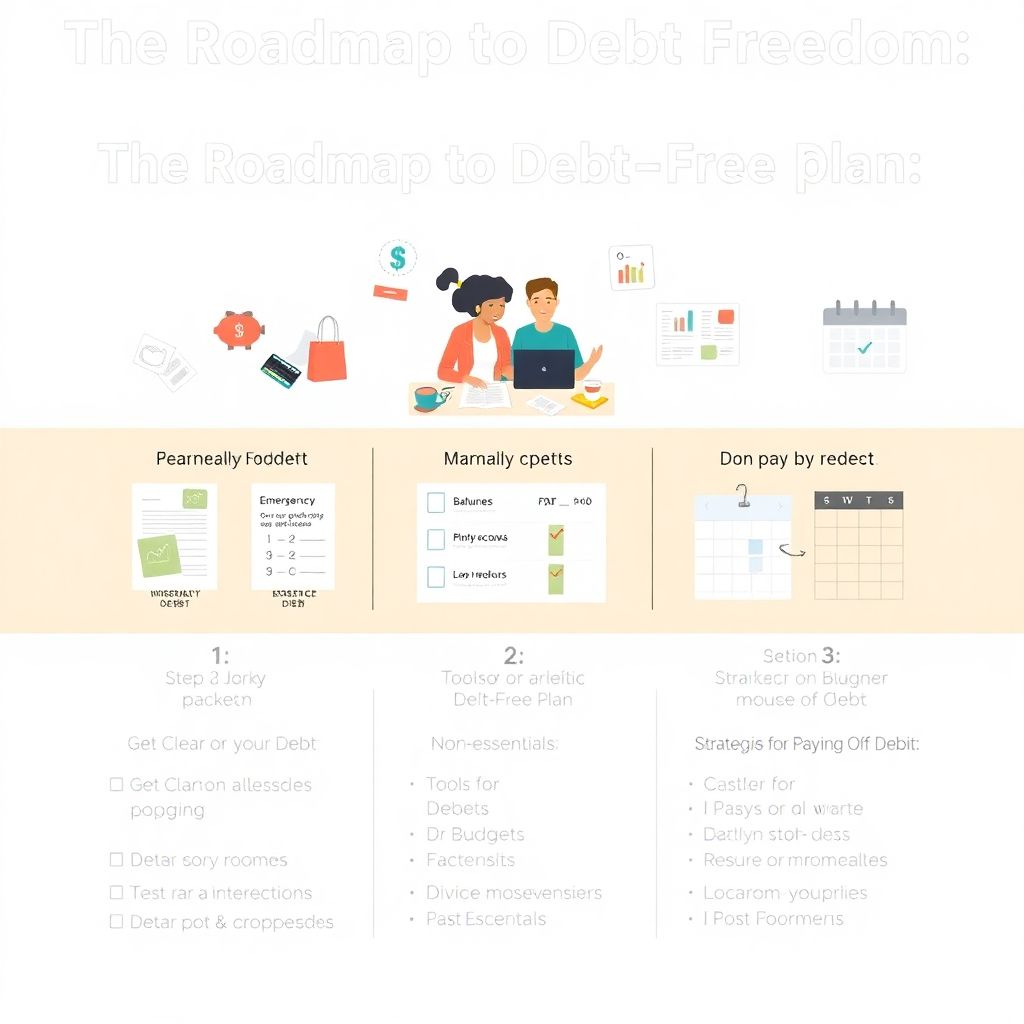
The Roadmap to Debt Freedom: A Realistic Plan
Getting out of debt isn’t about magic tricks or “one weird hack.” It’s about building a simple, realistic plan and actually following it when you’re tired, stressed, and tempted to give up. Let’s walk through a practical roadmap to debt freedom, compare different approaches, and talk honestly about what works, what usually doesn’t, and how to adapt when life gets messy.
—
Step Zero: Get Clear on the Real Problem
Before talking tactics, you need a diagnosis. Debt itself is a symptom: of low income, overspending, emergencies, lack of planning, or some mix of all four. If you skip this step, even the smartest strategy will feel like pushing a boulder uphill.
Ask yourself three blunt questions:
– Is this mostly old debt from a crisis (job loss, medical bills, divorce)?
– Is this mostly behavioral (impulse spending, lifestyle creep, poor tracking)?
– Is this mostly an income problem (you simply don’t earn enough to cover a modest life)?
Usually it’s a blend. Being honest about this lets you choose the right tools instead of just picking whatever sounds good in an ad.
—
Necessary Tools for a Realistic Debt-Free Plan
You don’t need fancy apps or complicated spreadsheets. You need a few basic, boring tools used consistently.
1. A Clear Picture of Your Numbers
At minimum, list:
– Every debt: balance, interest rate, minimum payment, due date
– All monthly income (after tax)
– All essential expenses (housing, food, transport, insurance, minimums)
This gives you a “money map” so your debt freedom plan isn’t based on guesswork.
Useful tools (pick what you’ll actually use):
– A notebook or Google Sheet for a simple debt tracker
– A budgeting app or even a notes app to log spending
– Calendar reminders for due dates, so you avoid late fees
Doesn’t matter if it’s high-tech or low-tech. Consistency beats sophistication.
—
2. A Simple, Flexible Budget (Not a Financial Prison)
You need a budget that:
– Covers essentials
– Separates must-haves from nice-to-haves
– Leaves a *deliberate* amount every month for debt payoff
A rigid, zero-fun budget usually fails. Build in small, realistic “fun money” so you don’t rebel against your own plan after three weeks.
—
3. A Chosen Strategy for Attack
Your strategy is the “engine” of your roadmap. Without a defined method, every month is random. You have several options:
– DIY methods (snowball, avalanche, “hybrid”)
– Professional help: debt management plan services
– Restructuring: debt consolidation programs, balance transfers, settlement, even bankruptcy in extreme cases
We’ll compare these in detail below.
—
Core Approaches to Paying Off Debt: What Actually Works?
Let’s look at the main approaches people use and how they stack up on speed, psychology, and risk.
Approach 1: DIY Payoff – Snowball vs Avalanche vs Hybrid
If you want full control and you can stay organized, a DIY credit card debt payoff plan or multi-debt plan is a powerful option.
Debt Snowball
– You pay minimums on all debts.
– You throw every extra dollar at the *smallest* balance first.
– When that’s gone, roll its payment into the next smallest, and so on.
Pros:
– Quick wins; you see accounts disappear, which is very motivating.
– Simple to manage; you always know the “next target.”
Cons:
– You may pay more interest because you’re not attacking the highest-rate debt first.
Debt Avalanche
– You pay minimums on all debts.
– You target the debt with the *highest interest rate* first, regardless of balance.
Pros:
– Mathematically fastest and cheapest in terms of interest.
– Great if you’re very numbers-driven and disciplined.
Cons:
– Progress can feel slower if that top-rate debt has a big balance.
– Emotionally tougher; less early gratification.
Hybrid Method
You can combine the two:
– Start with one or two smaller balances for a psychological boost.
– Then switch to avalanche on the rest, focusing on interest savings.
This hybrid is often the best compromise between staying motivated and staying efficient.
—
Approach 2: Professional Help – Debt Management Plans
When DIY feels overwhelming, debt management plan services (often offered by non-profit credit counseling agencies) can be a middle ground between doing it all yourself and more drastic options.
How they typically work:
– A counselor reviews your debts, income, and expenses.
– They negotiate with your creditors for lower interest rates and possibly waived fees.
– You make a *single monthly payment* to the agency, and they distribute it to your creditors.
– Credit cards enrolled in the program are usually closed.
Pros:
– Simplifies your life to one payment.
– Often reduces interest rates significantly, which speeds up payoff.
– Structure and accountability can help if you struggle with following through.
Cons:
– You lose access to those credit cards (which is good for many people, but it’s still a constraint).
– There may be small monthly fees.
– Not all debts qualify (e.g., some medical or private loans).
Who this suits:
– People who *can* afford to pay the debt but feel out of control.
– People tired of juggling many due dates and rates.
—
Approach 3: Debt Consolidation and Relief Companies
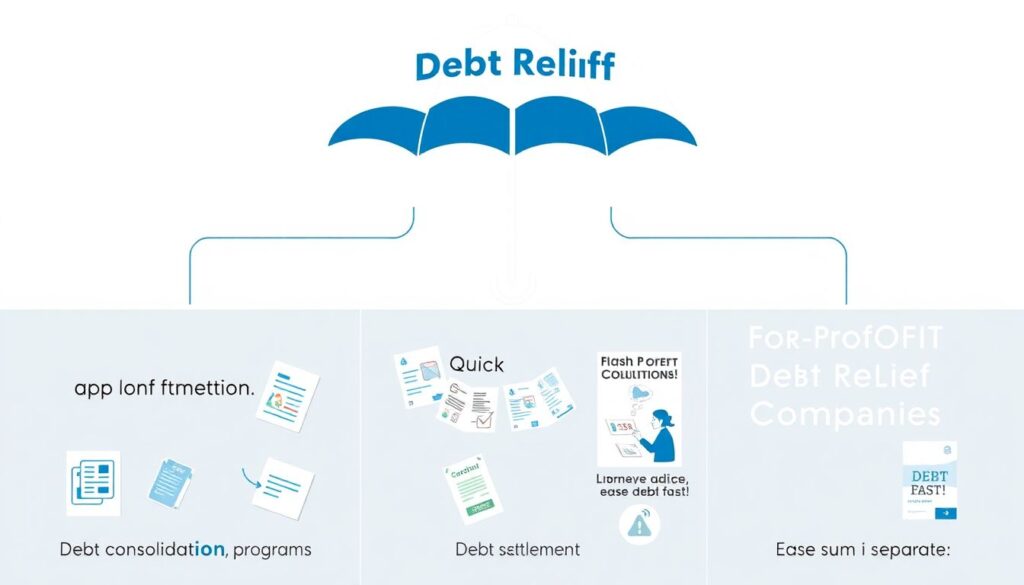
This is where marketing can get confusing. Under one big umbrella, you’ll see:
– Debt consolidation programs (often loans or structured plans)
– Debt settlement (negotiating lump-sum payoffs for less than you owe)
– For-profit best debt relief companies promising quick solutions
You need to separate the useful tools from the risky ones.
Debt Consolidation Loan
You take one new loan to pay off several existing debts. Ideally, the new loan has a lower rate and more manageable payment.
Pros:
– One payment, one due date.
– Can reduce interest if your credit is decent.
– Predictable payoff schedule.
Cons:
– If the rate isn’t truly better, you’re just rearranging chairs.
– If you keep using the newly freed credit cards, you can end up worse off (double the debt).
– Requires discipline and decent credit.
Debt Settlement
A company tries to negotiate with your creditors to accept less than the full amount.
Pros:
– Can reduce total debt if successful.
– Might help when you’re already behind and can’t realistically pay in full.
Cons:
– Seriously damages your credit for a while.
– Creditors aren’t required to agree.
– Fees can be high; bad actors exist in this space.
– You may get hit with tax on forgiven debt in some countries.
How to evaluate “best debt relief companies”
Red flags:
– “Guaranteed” results or timelines.
– Telling you to stop paying all your creditors immediately in every case.
– Huge upfront fees before any results.
If you’re considering these services, cross-check them with consumer protection agencies and independent reviews. Often, a non-profit credit counselor is a safer first stop.
—
Approach 4: Extreme Options – Bankruptcy and Legal Routes
Bankruptcy is not “giving up”; it’s a legal tool for when there’s no realistic way out. It wipes out or restructures certain debts but has heavy consequences for your credit and sometimes your assets.
It can be the right move if:
– You’re facing unpayable medical or legal debts.
– Your income is permanently too low for any realistic payoff plan.
– Collections, lawsuits, or garnishments are already happening.
You’d only go this route with actual legal advice tailored to your situation.
—
How to Become Debt Free Fast vs. How to Stay Debt Free
There’s a big gap between learning how to become debt free fast and making sure you don’t slide back in a few years.
Speed comes from:
– Cutting non-essential spending hard (for a season, not forever).
– Increasing income with overtime, side gigs, or career moves.
– Reducing interest with consolidation, management plans, or refinancing where appropriate.
– Avoiding new debt during the payoff period.
Stability comes from:
– Building an emergency fund so you don’t reach for the card every time something breaks.
– Creating systems (automatic transfers, bill reminders) instead of relying on willpower.
– Changing habits: planning purchases, comparing prices, delaying “wants.”
Fast without stability can leave you right back where you started.
—
Step-by-Step Process: Building Your Personal Roadmap
Let’s put the pieces together into a concrete, realistic sequence.
Step 1: Collect the Facts
1. List all debts with balance, rate, and minimum payment.
2. Tally your monthly income after taxes.
3. Track actual spending for at least one month (even if it’s ugly).
This is your starting point, not your identity.
—
Step 2: Design a Bare-Bones but Livable Budget
Trim where you can without creating a plan you’ll resent:
– Reduce subscriptions you barely use (streaming, apps, memberships).
– Cap variable categories (eating out, delivery, impulse online purchases).
– Shop more intentionally for groceries and recurring expenses.
The money you free up becomes your dedicated “debt attack” amount. Even $100 a month matters; compounded over time, it moves the needle.
—
Step 3: Choose Your Primary Strategy
This is where you deliberately pick the main “engine” of your plan:
– If you’re motivated by progress you can *see*: start with a debt snowball or a small hybrid.
– If numbers drive you and you can be patient: use an avalanche method.
– If you’re overwhelmed by many creditors: consider debt management plan services with a reputable non-profit agency.
– If your interest rates are brutal but your credit is okay: research quality debt consolidation programs or a personal loan from your bank or credit union.
Whichever you choose, write it down like a rule set:
“Minimums on all debts. Extra $X goes to [target debt] until it’s gone, then rolled to [next debt].”
—
Step 4: Automate and Simplify
Reduce the number of decisions you make each month:
– Set up automatic minimum payments to avoid late fees.
– Automatically move your “extra” payoff amount the day after payday to a dedicated payment or account.
– Use calendar alerts to review your plan once a month.
The fewer decisions you make in the moment, the fewer chances to derail your plan.
—
Step 5: Review Monthly, Adjust Quarterly
Every month, do a short check-in:
– Did all payments go through?
– Did balances drop as expected?
– Where did the budget go off course?
Every 3–4 months, do a deeper review:
– Can you increase your payoff amount (raise, bonus, side income)?
– Any high-rate debt now small enough that you want to switch targets?
– Is your current approach still sustainable, or do you need help?
This is where you decide whether to pivot—maybe from DIY to professional help, or from snowball to avalanche.
—
Troubleshooting: When the Plan Breaks Down
Even the best roadmap collides with reality: car repairs, layoffs, health problems, burnout. The point isn’t to avoid problems; it’s to know how you’ll respond.
Problem 1: You Keep Falling Back into Credit Card Use
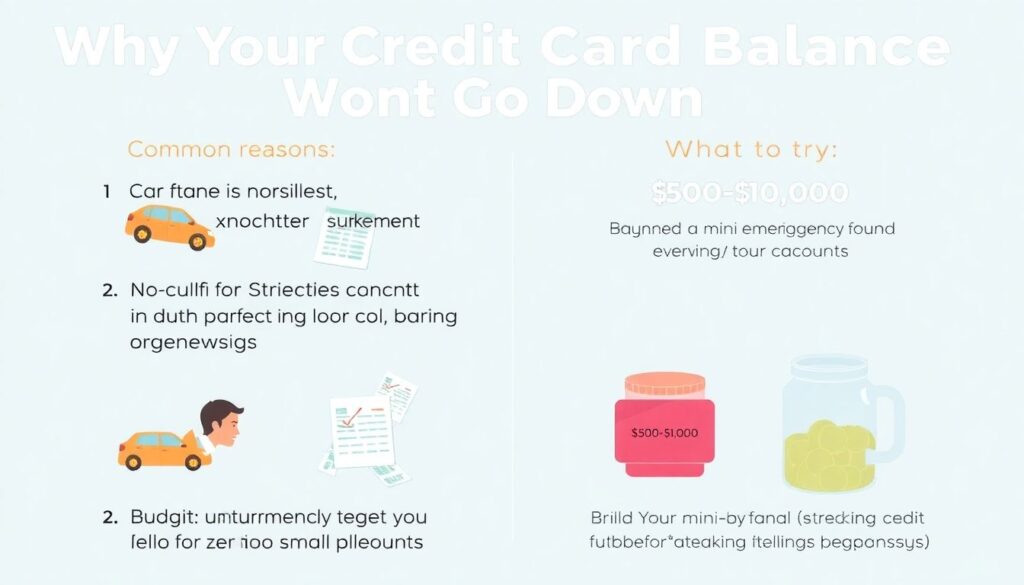
Common reasons:
– No emergency fund, so every surprise goes on the card.
– Budget is unrealistically tight; you left zero room for small pleasures.
– Payments are stretched over too many accounts.
What to try:
– Build a mini emergency fund (even $500–$1,000) *before* attacking debt aggressively.
– Leave a small, guilt-free spending line in the budget to reduce impulsive splurges.
– Consider simplifying with either a consolidation loan or a managed plan, if appropriate, so you’re not juggling eight different cards.
—
Problem 2: You’re Overwhelmed by Choices and Offers
You’re bombarded with balance transfer offers, ads for the “best debt relief companies,” suggestions from friends, and conflicting internet advice.
How to cut through the noise:
– First, confirm: can you pay all minimums and still have *some* extra for debt?
– If yes, DIY or a non-profit management plan is usually enough.
– If no, you may need more serious restructuring or legal advice.
– Judge every option by three things:
– Does it *lower* interest or improve cash flow?
– Does it simplify, not complicate, your payments?
– What are the costs (fees, impact on credit, long-term risk)?
If an option fails on those criteria, skip it.
—
Problem 3: You Want Speed but Life Won’t Cooperate
Maybe you long for a fast finish, but your job, health, or family situation limits how aggressive you can be.
Your plan might need to slow down, but it doesn’t have to stop:
– Accept a longer timeline while maintaining *consistency*.
– Focus harder on interest reduction (lower-rate cards, consolidation, negotiation).
– Look for small, repeatable ways to increase income (an extra shift, freelance gigs, selling unused items), even if they don’t feel dramatic.
Debt freedom is a direction more than a date. Staying pointed in the right direction is 80% of the battle.
—
Comparing the Main Approaches Side by Side (In Plain Language)
Here’s a quick, conversational comparison to help you decide what fits you:
– DIY Snowball/Avalanche
– Best if you’re organized and willing to track things.
– Cheapest long-term if you stick with it.
– Requires steady discipline but gives you maximum control.
– Debt Management Plan (Non-profit)
– Best if you’re overwhelmed but still able to pay.
– Simplifies everything into one payment.
– Good balance between structure and avoiding extreme measures.
– Debt Consolidation Loan / Programs
– Best if you have okay credit and high-interest card debt.
– Can work well *if* you stop using the old cards.
– Risky if consolidation becomes an excuse to keep overspending.
– Debt Settlement / For-Profit Relief Companies
– Last resort before legal options for some people.
– Damages credit; not guaranteed to succeed; fees can be high.
– Needs careful vetting and a clear understanding of the trade-offs.
– Bankruptcy
– For when no other plan is realistically workable.
– Powerful fresh start tool, but with serious long-term impacts.
– Requires professional legal guidance.
Think of it as a ladder: start with the least drastic, most sustainable tool that fits your situation. Only climb to the next rung if the lower ones truly aren’t enough.
—
Putting It All Together
A realistic roadmap to debt freedom doesn’t promise a painless journey or an overnight miracle. It promises something better: a plan you can actually live with.
In practical terms, that means:
– Getting brutally clear on your numbers.
– Choosing one main strategy (DIY, management plan, consolidation, etc.) instead of dabbling in everything.
– Automating as much as possible and checking in regularly.
– Troubleshooting honestly when things go sideways, instead of pretending everything is fine.
You don’t need perfection. You need a direction, a method, and the willingness to keep adjusting. Debt freedom is rarely a straight line, but with the right tools and a strategy that fits your life—not someone else’s—you can make steady, visible progress until the balance finally hits zero.