

Historical context of risk and reward
If you think debates about risk are new, imagine Dutch merchants in the 1600s buying shares in trade voyages. One shipwreck – and profits vanished. That was an early, very real lesson in risk vs reward. Later, in the 20th century, economists began to formalize these ideas: higher expected return usually comes with higher uncertainty. From there grew modern portfolio theory, stock indexes and the idea that you can spread risk across many assets instead of betting on a single company or project. Today, the same logic guides everyday investors, just with slicker apps and more data.
How ideas about risk evolved
For a long time, risk was mostly “gut feeling”: rich families, traders and bankers trusted reputation and experience. As markets globalized, this stopped being enough. Governments and exchanges needed numbers to price loans, bonds and shares. Gradually, statistics and probability entered the game, making risk something you could at least estimate. That history still matters: models are useful, but they’re built on averages and assumptions. When you decide how much to invest in stocks, you’re inheriting centuries of trial, error and occasional disaster, not a perfect scientific formula.
Basic principles of balancing risk and return
At its core, risk is about how much your investment can bounce around – and how badly it can drop when things go wrong. Reward is the payoff you expect for living with that uncertainty. Balancing them starts with a simple idea: don’t take more risk than you need to reach your goals. Chasing every extra percent of return often adds sleepless nights and deeper drawdowns. A sensible approach accepts that volatility is normal, but aims to avoid a single bad bet knocking out years of careful saving and planning.
Key building blocks of your risk level
Three factors drive how much risk makes sense. First, your time horizon: money needed in two years should not ride the same roller coaster as money for retirement in 25 years. Second, your capacity: if losing 30% would force you to sell your home, your room for error is small. Third, your psychology: some people obsessively check quotes, others barely look. A realistic self-view often matters more than fancy charts. Combine these, and you start to see how to choose the right risk level for investing that you can stick with through rough markets.
Different approaches to choosing your risk level
There are several ways to decide how much risk to take, and each has trade‑offs. A classic starting point is the investment risk tolerance assessment you see in broker apps and banks. You answer questions about losses, income and goals, then get labeled “conservative”, “balanced” or “aggressive”. The plus: it’s quick and gives rough guidance. The minus: answers often reflect today’s mood, not your behavior in a true crash. Many people discover they were “aggressive” right up until the first real bear market arrives.
Comparing common risk‑setting strategies
Here are three frequently used approaches that frame the same problem differently:
1. Age‑based rules: for example, “110 minus your age in stocks”. Simple, but ignores big differences in income, pensions and temperament.
2. Goal‑based planning: start from concrete goals, then work backward to the return you need, adjusting risk to match. More work, but more personal.
3. Professional guidance: working with a financial advisor for investment risk management who can stress‑test your plan and challenge overconfident assumptions. Costs money, yet can prevent expensive mistakes and panic‑selling.
Behavior‑focused vs math‑focused methods
Some people rely on spreadsheets and simulations to set their risk; others lean on behavior and feelings. Math‑focused strategies try to build the best investment portfolio for risk and return using diversification across stocks, bonds, real estate and sometimes alternatives. The strength is clear logic and historical data. The weakness: living, breathing humans don’t behave like neat formulas. Behavior‑focused methods start with, “What can I actually endure?” They may be less “optimal” on paper, but they dramatically raise the odds you’ll hold your investments when markets get ugly.
Practical examples of risk vs reward
Imagine three friends investing for 20 years. Anna hates volatility, so she holds mostly government bonds and cash. Her account grows steadily, but slowly. Ben goes all‑in on stocks; his highs are thrilling, his lows painful, and he sometimes sells at the worst moment. Cara sits in the middle: a mix of global stocks and bonds, rebalanced once a year. Over time, Cara often ends up ahead of Anna and sometimes even Ben, not because she found magic, but because she chose a risk level she could stick with consistently.
Low, medium and high‑risk choices in practice
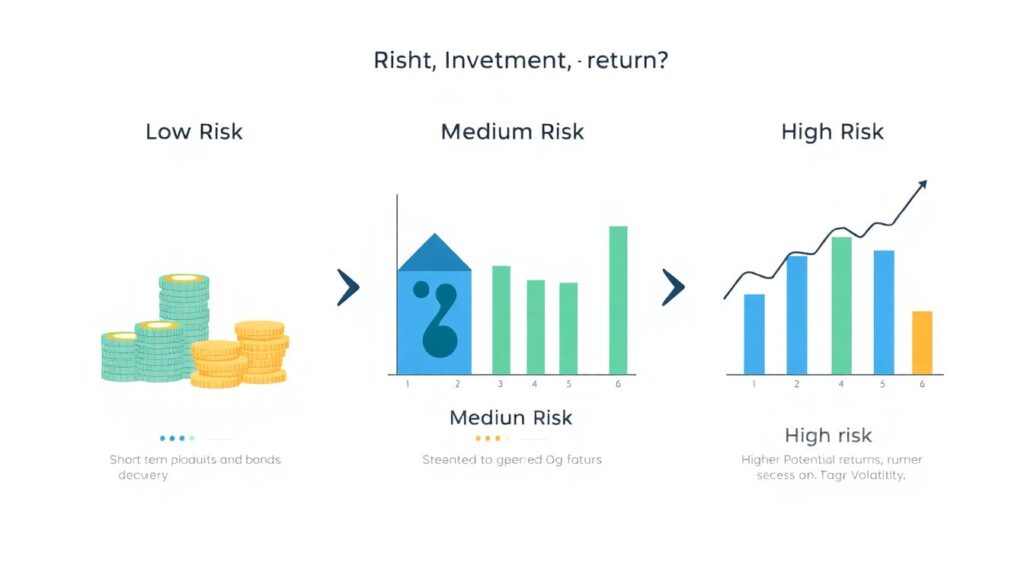
People often ask for low risk high return investment options as if they’re hidden somewhere on page two of a search result. In reality, low risk usually means lower, steadier returns: think short‑term government bonds, insured deposits or high‑quality money market funds. Medium risk might be a balanced fund holding both stocks and bonds. High risk could be concentrated stock bets, crypto, or leveraged products. The trick is mixing these in proportions that match your goals and nerves, rather than chasing the hottest thing your coworker mentioned at lunch.
Adjusting risk over time
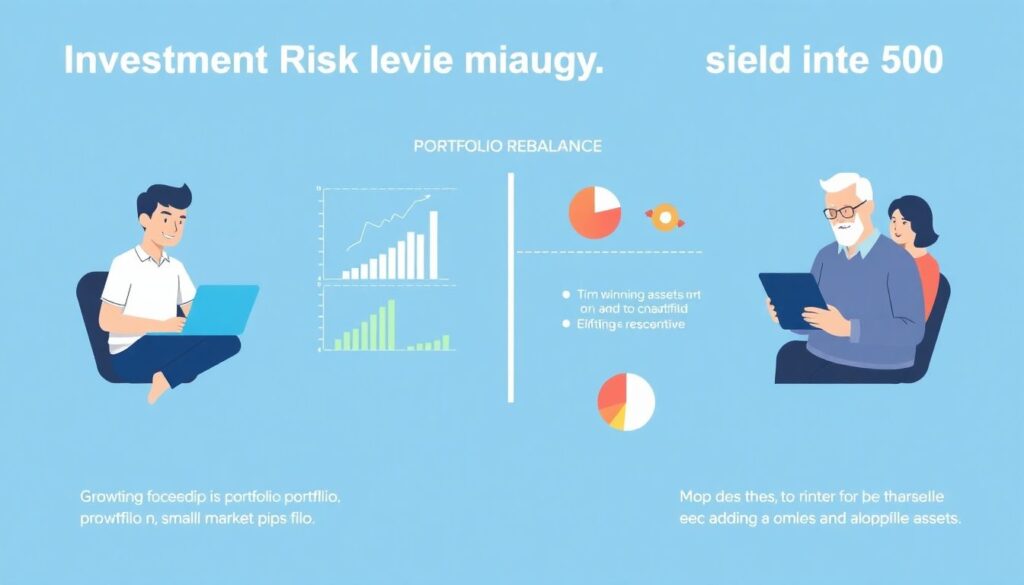
Your ideal risk level is not frozen. Job changes, children, inheritances and health issues all shift what’s appropriate. In your 20s, you may prioritize growth and shrug off market dips. By your 50s, capital preservation may matter more. Rebalancing your portfolio – trimming winners, topping up laggards – nudges risk back to your chosen range without drama. This gradual tuning beats emotional overhauls like “selling everything” during a crash or “going all in” after a long rally, which usually lock in the worst prices at exactly the wrong time.
Common misconceptions about investment risk
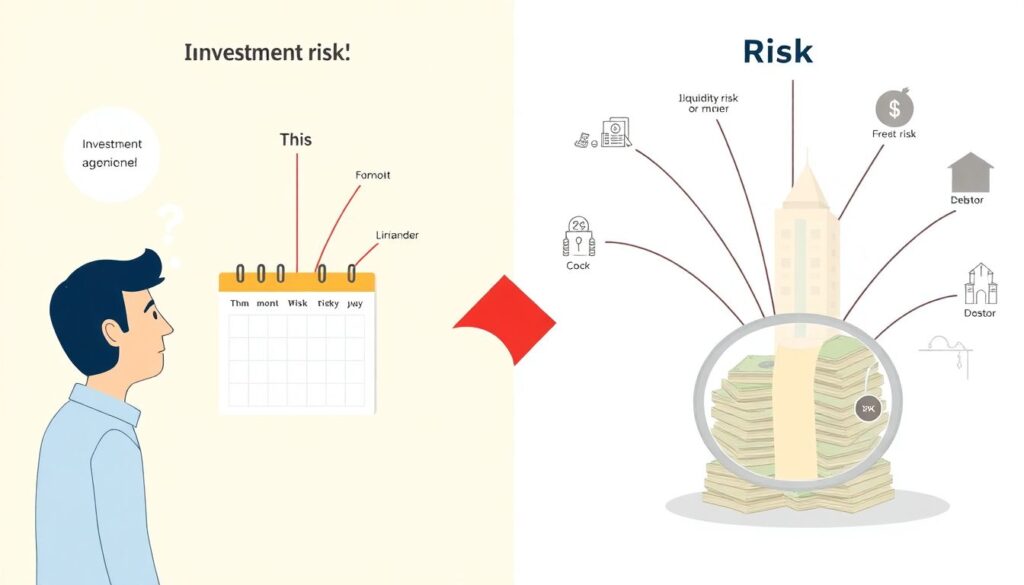
One widespread misconception is that risk equals “chance of losing money this month”. In reality, risk is multidimensional: inflation risk, liquidity risk, credit risk and more. Another myth: cash is always safe. Over long periods, inflation quietly erodes cash, so the “no‑risk” choice can be very risky to your future lifestyle. A third misconception is that there’s a secret formula everyone else knows. There isn’t. Understanding risk vs reward is less about clever tricks and more about honest self‑assessment, patience and a repeatable decision process.
Mistakes when comparing different strategies
People often compare strategies using only past returns, ignoring the path they took. Two portfolios might end at the same amount, but one could have dropped 50% along the way. If you would have bailed out mid‑crash, that strategy was never truly viable for you. When you look at different approaches – rules of thumb, model portfolios, professional advice, or DIY stock picking – weigh not just the math, but also how each fits your personality and habits. The “best” strategy is the one you can follow through both booms and downturns.