
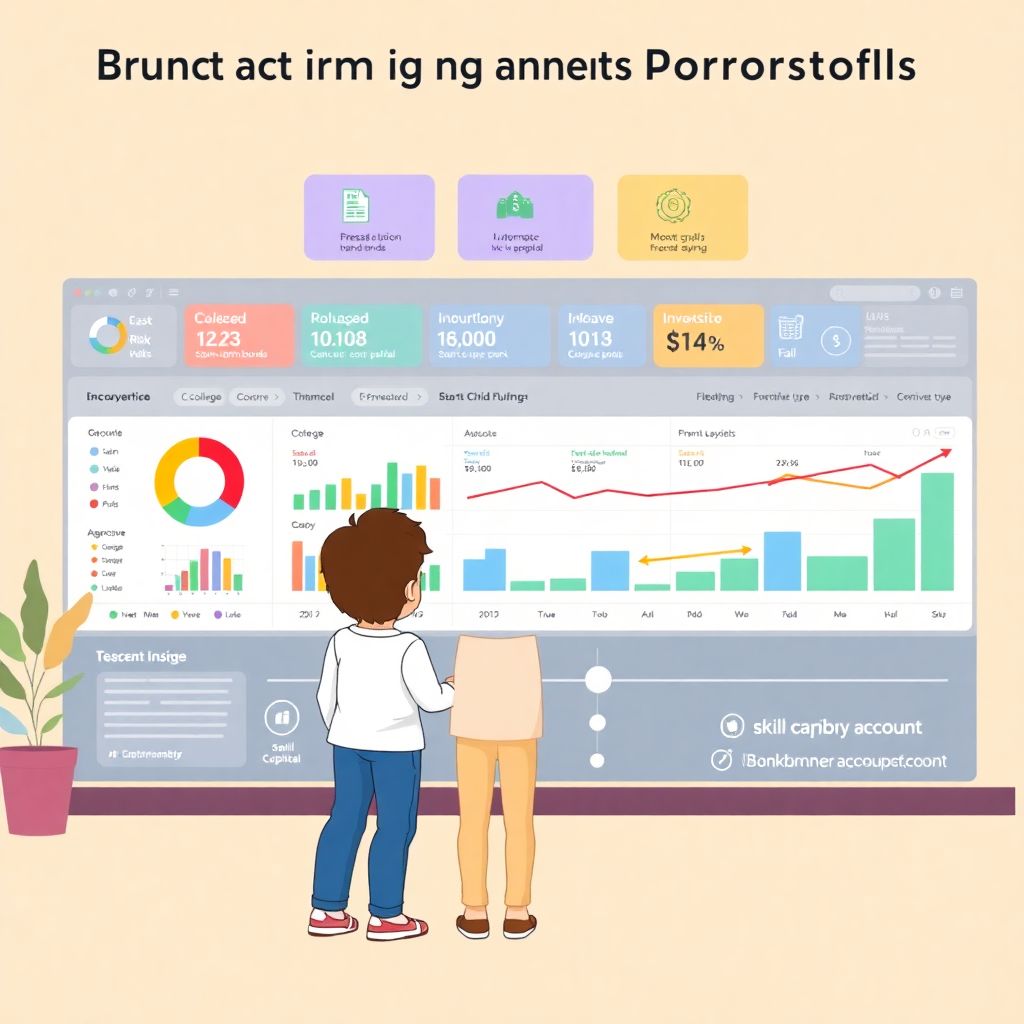
Why a Child’s Portfolio Is Different From Yours
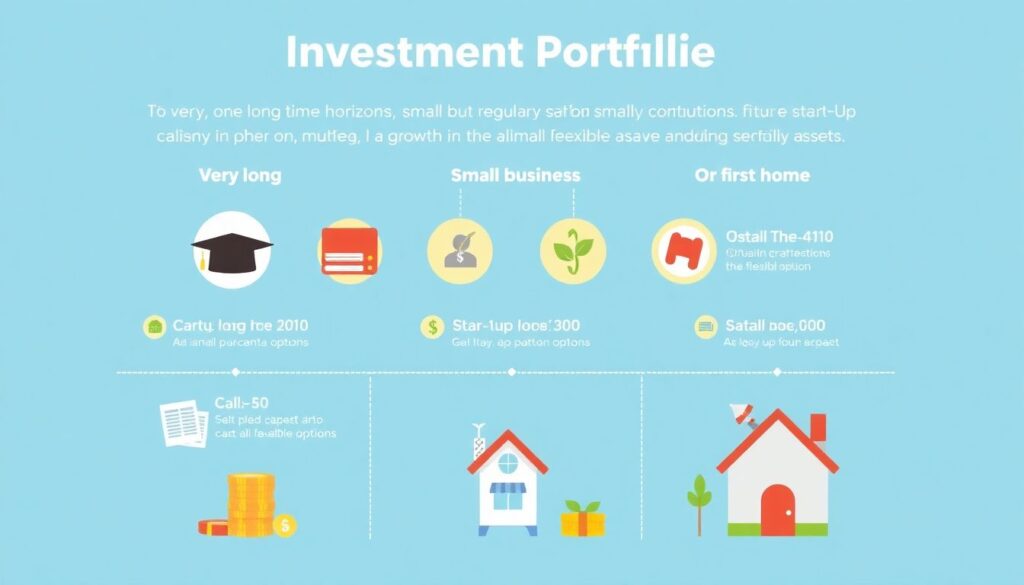
A portfolio for a kid isn’t just “mini adult investing.” You’re dealing with very long horizons, small but regular contributions, and goals that may change from “college” to “start‑up capital” or “first home.” That’s why best investment plans for child’s future usually mix growth assets with flexible withdrawal rules, instead of locking everything into one rigid education product. You’re designing an engine that runs for 15–20 years, survives market crashes, and still lets your child access money without tax or legal headaches when real life starts.
Necessary Tools: Accounts, Assets, Automation
1. Accounts: Where the Money Lives
Step one in how to build investment portfolio for child is picking the right account wrappers. In many countries you’ll choose between taxable brokerage accounts, education‑focused plans with tax perks, and custodial or trust structures where you remain in control until the child becomes an adult. Instead of using only one structure, consider splitting contributions: one bucket for education‑linked tax benefits, one fully flexible bucket for anything else. This diversification of account types hedges against future changes in tax law and your child’s life plans.
2. Assets: What You Actually Buy
You don’t need exotic instruments to achieve long term investment for child future returns, but you do need clarity. The core building blocks are broad equity index funds, high‑quality bond funds, and possibly a small sleeve of alternatives like REITs. For hands‑off parents, the best mutual funds for child education planning are often low‑cost target‑date or lifecycle funds that auto‑shift from stocks to bonds. If you prefer more control, use separate ETFs for global equities and bonds, then define a target allocation—say 80/20 or 70/30—based on years until the first expected withdrawal.
3. Infrastructure: Automation and Control
To make the plan resilient, combine automatic transfers, automatic reinvestment of dividends, and clear access controls. Use standing orders from your checking account into the child’s portfolio on payday so you never “forget” to invest. Turn on dividend reinvestment to keep cash from sitting idle. Add two-factor authentication and separate login credentials so an impulsive teenager can’t day‑trade their education fund. Finally, use simple tracking software or even a spreadsheet to monitor contributions, annualized returns, and whether the allocation is drifting away from your target risk profile.
Step‑by‑Step Process to Build the Portfolio
Step 1: Define Concrete, Time‑Stamped Goals
Start by mapping cash flows instead of just saying “for the future.” List scenarios: first tuition payment in 12 years, gap year travel in 13, seed money for a business in 18. This lets you assign time horizons to each goal and prevents overfunding one use while starving another. Attach approximate amounts in today’s money, then adjust with a modest inflation assumption. Suddenly a vague dream turns into a schedule of liabilities, and you can design specific sub‑portfolios for “near‑term education,” “launch capital,” and “opportunity fund” rather than one undifferentiated pot.
Step 2: Translate Goals Into Risk Buckets
Next, convert those dated goals into risk buckets. Money needed within 3–5 years belongs mostly in low‑volatility instruments like short‑term bonds and cash‑equivalents. Funds for 10+ years can tolerate high equity exposure because they have time to recover from drawdowns. Build at least three layers: a conservative bucket for early tuition years, a balanced bucket for mid‑term needs, and an aggressive bucket for post‑graduation ambitions. Assign each goal to a bucket and document it; this simple mapping keeps you from panicking and selling growth assets during inevitable bear markets.
Step 3: Asset Allocation and Rebalancing Rules
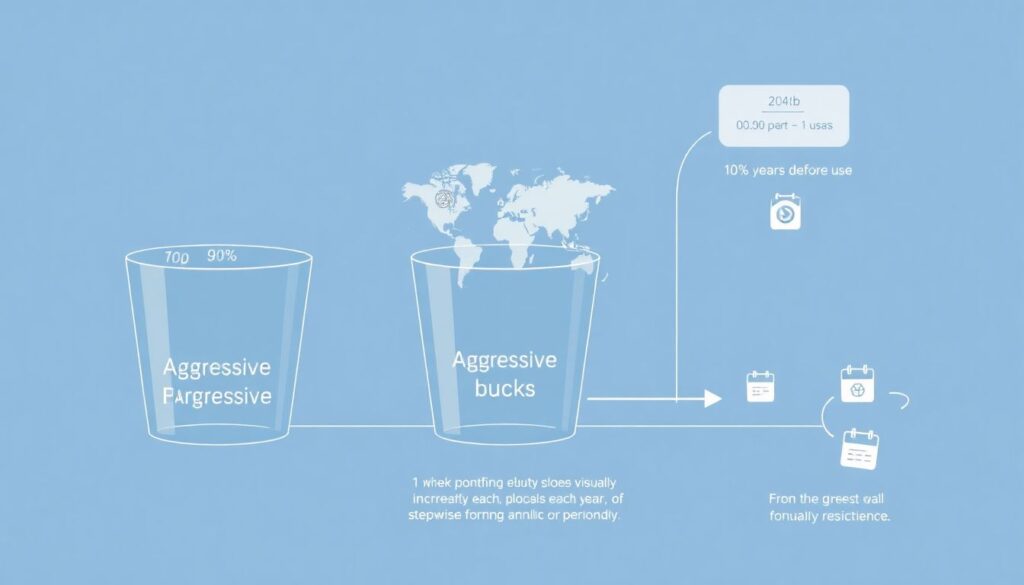
Once buckets are clear, define percentage allocations and the rules that maintain them. For example, the aggressive bucket might be 90% global equities and 10% bonds until five years before use, then glide down 10 percentage points of equity each year. Formalize a rebalancing cadence—annually or when allocations drift by, say, 5%. Write this as a short “investment policy statement” for your child’s account. Treat it like a protocol: deviations happen only for structural reasons (new goal, change in legal status), not just because markets feel scary this month.
Step 4: Funding Strategy and Upside Capture
Instead of waiting for large lump sums, implement a systematic funding plan tied to your own income cycles and windfalls. Set a base monthly amount, then route irregular inflows—bonuses, tax refunds, gifts from relatives—directly into the child’s portfolio. To make child education investment plans comparison more real, periodically simulate where you’d be if you kept cash in a savings account instead. Run a simple compounding model; seeing the gap in projected balances helps you stick to the equity allocation even when volatility spikes, and it turns family gifts into visible long‑term leverage.
Unconventional but Practical Ideas
1. Create a “Skill Capital” Sleeve
Most parents focus on tuition, ignoring that marketable skills can yield far higher lifetime returns than any fund. Dedicate a specific slice—say 10%—to a “skill capital” sleeve: future coding bootcamps, design equipment, language immersion, or early entrepreneurial experiments. Invest this sleeve conservatively for stability but keep it flexible in terms of use. Explain to your child that this pot exists to buy time and tools to learn things that compound their earning power. That framing turns them from a passive beneficiary into an active capital allocator.
2. Co‑Investment With Your Teenager
When your child is old enough, open a small “sandbox” sub‑account alongside the main portfolio. Set strict rules: limited contribution size, no leverage, focus on learning position sizing and risk. Let them pick a few individual stocks or thematic ETFs, but track performance against the boring core index fund. Over time they’ll see empirically whether their ideas beat the benchmark. This live child‑friendly lab teaches opportunity cost, volatility, and diversification in a way no lecture can—while the bulk of their future remains safely parked in the disciplined core portfolio.
3. Convert Chores and Projects Into Equity
Instead of always paying pocket money in cash, occasionally pay in “units” of the family investment fund. When a big task is completed—helping with a move, building something, running a small resale project—log an agreed amount and buy extra fund units in their name. Show them transaction confirmations and updated balances. Over years, they see a direct causal chain: effort → investment → growth. This rewires their mental model away from consumption and towards asset accumulation, arguably one of the most valuable non‑academic lessons you can transmit.
Troubleshooting Common Problems
Markets Drop and You Panic
Drawdowns are a feature, not a malfunction. If the portfolio falls 20–30% and you feel alarmed, revisit your written risk buckets and time horizons. Ask: did the goals change, or only prices? For long‑dated buckets, a crash is statistically a sale on future returns. You can even pre‑define an “if market falls 20% then increase contributions by X%” rule. This mechanical approach prevents emotionally driven selling, and over a child’s multi‑decade arc, a few disciplined buys during crises often dominate overall performance. Panic is a sign of mis‑sized risk, not bad tools.
Goals or Laws Change Midway
Maybe your child skips college, or tax rules for education accounts are revised. Treat this like refactoring code: you keep tested modules and rewrite interfaces. Assess which accounts impose penalties for non‑education uses and prioritize redirecting new contributions to flexible structures. Shift some assets from “tuition” bucket into the broader opportunity bucket, then gradually re‑optimize allocation. Document the new policy and explain the changes to your child. The underlying principles—diversification, low costs, long horizon—remain valid even if specific wrappers or endpoints need adjustment.
Portfolio Becomes Overcomplicated
It’s easy to accumulate overlapping funds, half‑used apps, and stray accounts. When tracking becomes confusing, perform a simplification sprint. List all holdings, identify duplicated exposures, and consolidate into a minimal set of broad funds aligned with your buckets. If you can’t explain the entire structure to a smart 15‑year‑old in five minutes, it’s probably too complex. Complexity isn’t sophistication; it’s just technical debt in financial form. Aim for a clean, well‑documented architecture that your child could realistically take over and maintain by the time they reach adulthood.
Handing Over the Controls
From “For the Child” to “With the Child”
As your child approaches 16–18, shift from secrecy to transparency. Walk them through statements, show performance versus simple benchmarks, and reveal mistakes as well as wins. Gradually let them decide what to do with new contributions within guardrails. By the time legal ownership transfers, they won’t just inherit assets; they’ll inherit a playbook, a mindset, and a live example of compounding in action. That combination of capital plus competence is the real outcome of building an investment portfolio for your child’s future, beyond any number on a statement.