

Why Global Bond Funds Deserve a Spot in Your Portfolio
If your portfolio is just stocks and a local bond fund, you’re basically looking at the world through a keyhole.
Global bond funds let you lend money not only to your own government and companies, but also to other countries and corporations around the globe. That means different interest rates, different economic cycles, and different currencies all working for (or against) you.
In plain language: you’re not betting on one country’s mood swings.
For beginners, this can sound intimidating. Different time zones, strange tickers, unfamiliar risks. But once you break it down into a step‑by‑step process, investing in global bond funds becomes much more straightforward than it looks from the outside.
Let’s walk through it practically, with a focus on decisions you can actually take this month—not abstract theory you’ll forget tomorrow.
What Exactly Is a Global Bond Fund?
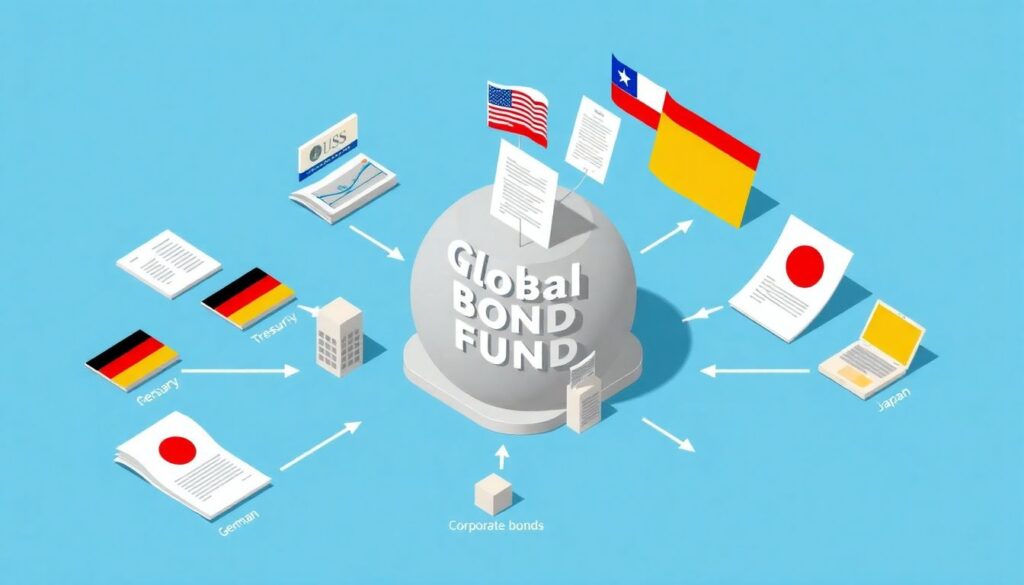
A global bond fund is a basket of bonds from many countries, managed inside one fund (mutual fund or ETF). Instead of you buying one German bond, one Japanese bond, one US corporate bond, etc., the fund does it for you.
Typically, a global bond fund might include:
– Government bonds (US Treasuries, German Bunds, Japanese Government Bonds, etc.)
– Investment‑grade corporate bonds from large international companies
– Sometimes emerging‑market bonds (Mexico, Brazil, Indonesia, etc.)
The manager (or index rules) decides:
– Which countries to lend to
– Which sectors and maturities to focus on
– Whether to hedge currency risk or leave it open
Your job is not to become an expert in every bond. Your job is to pick a sensible fund and use it intelligently inside your overall portfolio.
The Real Reasons to Use Global Bonds (Beyond Textbook Diversification)
You’ve heard the usual: “diversification”, “risk spreading”, “non‑correlation”. Useful, but vague. Let’s get more concrete.
Here’s what global bond funds can actually do for you:
– Offset your “home bias”
Most people own way too much of their own country’s assets. If your job, home, currency, and pension are all tied to one economy, adding global bonds is like installing a second engine on a plane.
– Smooth out interest‑rate shocks
When your central bank hikes rates aggressively, bonds at home can get hammered. At the same time, another region may be cutting rates, which supports their bond prices. Global exposure evens out the blow.
– Add income sources from different regions
Some countries have structurally higher yields than yours. Sensibly used, that can boost income without going all‑in on risky junk bonds.
– Give you “optionality” on global trends
Currency shifts, reforms in emerging markets, falling inflation in one region—all these can feed into bond returns, even if your own economy is going sideways.
In short, you’re not just diversifying; you’re building a more flexible engine for your wealth.
Active vs Index: Which Approach Fits a Beginner?
When you look for the best global bond funds to invest in 2025, you’ll notice two big camps: active and index.
– Index (passive) global bond funds
Track a bond index. Lower fees. Very broad diversification. No “star manager” trying to outsmart the market.
– Active global bond funds
Have a manager making calls: “More Brazil, less Japan, hedge this currency, avoid that bank’s bonds,” and so on. Higher fees. Potentially higher returns—or not.
For beginners, a simple rule:
– Start with an index or low‑cost core fund as your main position
– Add a small active fund later if you want “spice” and are willing to research the manager’s track record
When you compare options, specifically look for global bond index funds with lowest fees. Over 10–20 years, cost differences compound more than most people expect. A 0.2% vs 1% annual fee gap can easily eat thousands from a modest portfolio.
Currency Risk: Danger, Opportunity, or Both?
One of the trickiest parts of global bonds is currency.
You’ve got two flavors:
– Hedged: The fund uses derivatives to neutralize most currency moves relative to your home currency.
– Unhedged: You experience full currency fluctuations on top of bond movements.
For a beginner, hedged share classes often make sense as a *core* holding. They let you focus on interest‑rate and credit risk without your return swinging wildly because one currency had a bad year.
But here’s the non‑standard twist: you don’t have to choose only one.
A practical approach:
– Use hedged global bonds for your main “safety” bucket
– Use a smaller unhedged fund as a deliberate currency bet (for example, if you believe the US dollar or Swiss franc will stay strong versus your home currency)
Think of hedged vs unhedged as two different tools, not a moral choice between “right” and “wrong”.
How Much of Your Portfolio Should Be in Global Bonds?
There’s no magic percentage, but you can use a simple structure rather than guessing.
Try this framework:
– Decide first: What percent of your portfolio belongs in bonds at all?
– Conservative: 50–80% bonds
– Balanced: 30–50% bonds
– Aggressive: 10–30% bonds
– Then, of that bond slice, choose how much goes global vs domestic.
A starting guideline many beginners can live with:
– 40–60% domestic bonds
– 40–60% global bonds
If you live in a small or unstable economy, it can be reasonable to tilt even more heavily to global bonds. If your domestic bond market is very deep and stable (e.g., US, euro area), you can keep more at home and still be diversified.
Choosing a Global Bond Fund: A Practical Checklist
Don’t get lost in glossy brochures. Use a consistent checklist instead.
When comparing the top international bond mutual funds for beginners, look at:
– Fees
– Total expense ratio (TER) or OCF
– Any entry/exit loads for mutual funds
– Type and scope
– Global aggregate (gov + corporate) or just gov or just corporate?
– Developed only or including emerging markets?
– Currency policy
– Hedged to your home currency or unhedged?
– Credit quality
– Mostly investment grade (safer, lower yield) vs high yield (riskier, higher yield)
– Duration (interest‑rate sensitivity)
– Short: less sensitive, smaller price swings
– Long: more sensitive, can move sharply when rates change
Hidden red flags to avoid:
– Very high ongoing charges “justified” by marketing buzzwords
– Funds with tiny assets under management (can be closed or merged away)
– Overly complicated strategies you don’t truly understand
If you can’t explain to a friend in two sentences what a fund does, don’t buy it yet.
How to Invest in Global Bond Funds Online Without Getting Lost
You don’t need a private banker. You need a clear simple process.
Typical step‑by‑step:
1. Choose your platform
– Reputable online broker or fund supermarket with low trading fees
– Make sure it offers global bond ETFs and/or mutual funds in your region
2. Filter by your preferences
– Bond category: “Global Aggregate”, “Global Government”, “Global Corporate”
– Currency: find your preferred hedged/unhedged share class
– Fee level: sort by expense ratio from low to high
3. Check minimum investment
– ETFs: you can usually buy just 1 share
– Mutual funds: sometimes have higher minimums, but some online platforms offer very low thresholds
4. Place a test order
Start with a small amount just to learn the process.
– For ETFs: use a simple market or limit order during main trading hours
– For mutual funds: your order executes at end‑of‑day NAV
5. Automate
Many brokers let you set up recurring investments. Automating monthly buys keeps you from overthinking every news headline.
When you master how to invest in global bond funds online with a small sum, scaling up becomes a question of discipline, not complexity.
Non‑Obvious Strategies: Going Beyond “Buy One Fund and Forget It”
Most guides stop at “buy a diversified global bond fund, hold long term.” That’s fine, but you can go a bit further without becoming a full‑time trader.
Here are some unconventional—but still disciplined—ideas:
– Barbell your safety
Combine:
– A very conservative global government bond fund (short duration, high credit quality)
– A small allocation to a global high‑yield or emerging‑market bond fund
The goal: keep overall risk moderate but add a deliberate “return booster” without pushing everything into riskier bonds.
– Use time‑based buckets
– 0–3 year goals: mostly short‑term, high‑quality global bonds (low volatility)
– 3–10 year goals: mix of global gov + global corporate
– 10+ year goals: more room for emerging‑markets and long‑duration bonds
You’re matching *when* you need the money to *how risky* the bonds are, so you’re not forced to sell something volatile at the wrong moment.
– Interest‑rate regimes as a guide
Instead of trying to predict the exact next move of central banks, define regimes:
– Rates clearly rising
– Rates stable
– Rates clearly falling
Then pre‑decide your actions:
– Rising: favor shorter‑duration global funds
– Stable: stay with your normal mix
– Falling: allow more longer‑duration funds to potentially capture bigger price gains
You’re not guessing the future; you’re creating a rulebook in advance so emotions don’t drive you.
Global Bond Fund Investment Strategies for Income

Many people buy global bonds primarily for steady cash flow. But “income” is not just “buy the fund with the highest yield.”
To build more thoughtful income strategies:
– Step 1: Set an income target, not a fantasy
For example: Aim for a 3–4% yield that seems sustainable, instead of chasing 7–8% from very risky funds.
– Step 2: Mix yield sources
– Developed‑market government bonds
– Investment‑grade corporates
– A controlled slice of emerging markets or high yield
– Step 3: Decide payout style
– Accumulating share classes: reinvest income automatically (good for compounding)
– Distributing share classes: pay out regular coupons to your cash account
– Step 4: Reinvest excess
If the fund’s natural yield is higher than your spending needs, reinvest the difference into the same or another fund to maintain purchasing power against inflation.
The key: income strategy ≠ “find the fattest coupon”. It’s about reliability and staying invested through different cycles without being forced to sell at a loss.
Risk Management: Protecting Your Downside Without Paranoia
Global bonds are often called “safer” than stocks, but that can be misleading. They can still lose value, sometimes sharply, especially when interest rates spike or credit spreads blow out.
To manage risk realistically:
– Diversify within bonds, not just globally
– Don’t put everything in emerging‑market bonds because yields look attractive
– Mix government and corporate, different regions, different durations
– Cap your riskier slices
Decide a hard cap, e.g.:
– Max 20–25% of your bond allocation in sub‑investment‑grade or emerging‑market bonds
– Monitor duration
Longer‑duration funds can fall a lot when rates jump. If you’re nervous about volatility or have short‑term goals, lean shorter.
– Avoid leverage
Some funds or ETFs use leverage to “enhance” bond returns. They can look good in calm times and brutal in stress. Beginners don’t need that.
Risk management is mostly about what you *refuse* to do, not about finding some magic hedge.
Common Mistakes Beginners Make (And How to Dodge Them)
A few pitfalls come up over and over:
– Mistake 1: Treating bonds as “cash with extra yield”
Global bonds can fluctuate. If you need the money in 6 months, they’re not a savings account.
– Mistake 2: Ignoring currency share classes
Buying an unhedged fund in a currency you don’t understand can turn a solid year in bonds into a flat result after FX swings.
– Mistake 3: Chasing last year’s winner list
A ranking of the best performers in 2024 often leads people into higher‑risk funds right *after* they’ve had an unusually strong run.
– Mistake 4: Over‑complicating too early
Having seven different global bond funds with overlapping holdings adds paperwork, not real diversification.
Better approach: two or three well‑chosen funds, clear rules for how much in each, and a rebalancing plan.
A Simple Action Plan for Your First Global Bond Allocation

To translate all of this into concrete steps, here’s a streamlined action plan you can execute over the next few weeks:
– Define your overall bond allocation (e.g., 30–40% of portfolio).
– Decide on a global vs domestic split (for example, 50/50 to start).
– Pick one low‑fee global aggregate bond index fund as your core holding.
– Decide whether you want the hedged or unhedged version—or a mix with clear percentages.
– Optionally choose one small satellite fund: high‑yield global or emerging‑market bonds, capped at 10–20% of your bond bucket.
– Set up monthly automated investments through your broker.
– Once a year, rebalance back to your target weights instead of reacting to every headline.
As you review candidates, you’ll come across plenty of marketing claims. Keep your focus: sensible allocation, low costs, clear structure. Tools that promise miracles can safely be ignored.
Build the “boring but resilient” bond engine first. Once it’s humming smoothly, you’ll find that decisions about stocks, real estate, or other investments feel less stressful—because your global bond foundation is doing its quiet, steady job in the background.