

Why Your Retirement Spending Plan Matters More in 2025 Than Ever
If you’re trying to figure out how to build a realistic retirement spending plan in 2025, you’re already ahead of most people. Prices jump faster than headlines can track, longevity keeps increasing, and “traditional retirement” (stop at 65, live on a pension) is slowly disappearing. Instead, many people move through phases: partial work, sabbaticals, side gigs, travel bursts, then a quieter stage. A modern plan has to reflect this reality, not an outdated picture from a textbook. That’s why you need a flexible, numbers-based approach that still respects your lifestyle and personal values, not just a spreadsheet fantasy.
Short Historical Look: How Retirement Planning Got Here
For most of the 20th century, retirement was simpler to model. Many people worked one career, retired with a company pension, and counted on government benefits plus some savings. Life expectancy was lower, medical technology was less advanced, and health care, while not cheap, wasn’t the budget-dominating monster it can be today. In that world, a fixed monthly check and a relatively short retirement period made guessing expenses less risky and planning less complex.
The big shift came in the late 20th and early 21st century as defined benefit pensions faded and defined contribution plans like 401(k)s and IRAs took over. Responsibility for both saving and spending strategy moved from employers to individuals. Add in longer lifespans, rising medical costs, and the erosion of predictable interest income, and it’s no surprise that people began asking “how much do i need to retire comfortably” with growing anxiety. That question now demands a structured process rather than a quick rule-of-thumb answer.
Core Principles of a Realistic Retirement Spending Plan
Principle 1: Plan Around Phases, Not One Static Number
The old idea of picking one big number and assuming you’ll spend it every year for 30 years is outdated. Retirement today tends to unfold in phases: an “active” phase with travel and hobbies, a “settling” phase with steadier routines, and sometimes a “care-heavy” phase with increased health or long‑term care expenses. A realistic retirement budget planner acknowledges that early years might be more expensive for fun reasons, while later years may cost more for health-related reasons, even if you travel less.
Work through your likely phases and imagine how you live in each: housing, car use, trips, giving money to kids, caring for parents, or even supporting adult children. This doesn’t have to be perfectly accurate, but it should be concrete. Those mental pictures help you transform vague wishes into specific monthly numbers that can be plugged into tools like a retirement planning calculator.
Principle 2: Start With Your Lifestyle, Then Translate to Numbers
Instead of starting with your current income and assuming you’ll need some percentage of it, start with your desired lifestyle. Where will you live? How often will you travel? Will you upgrade your home or downsize? Are you envisioning restaurant dinners twice a week or mostly home cooking? Many rules suggest you’ll need 70–80% of your pre-retirement income, but that’s only a rough guide. What matters is your actual spending behavior.
Grab a notebook or app and list what a “normal month” looks like in retirement: groceries, utilities, digital subscriptions, gym, health insurance, hobbies, gifts, and transport. Then list irregular but predictable expenses like vacations, home repairs, car replacements, and medical procedures. Spread those irregular costs across the year to avoid underestimating. This exercise often reveals that you’re either overestimating or seriously underestimating what your real lifestyle will cost.
Principle 3: Separate Needs, Wants, and “Nice-to-Haves”
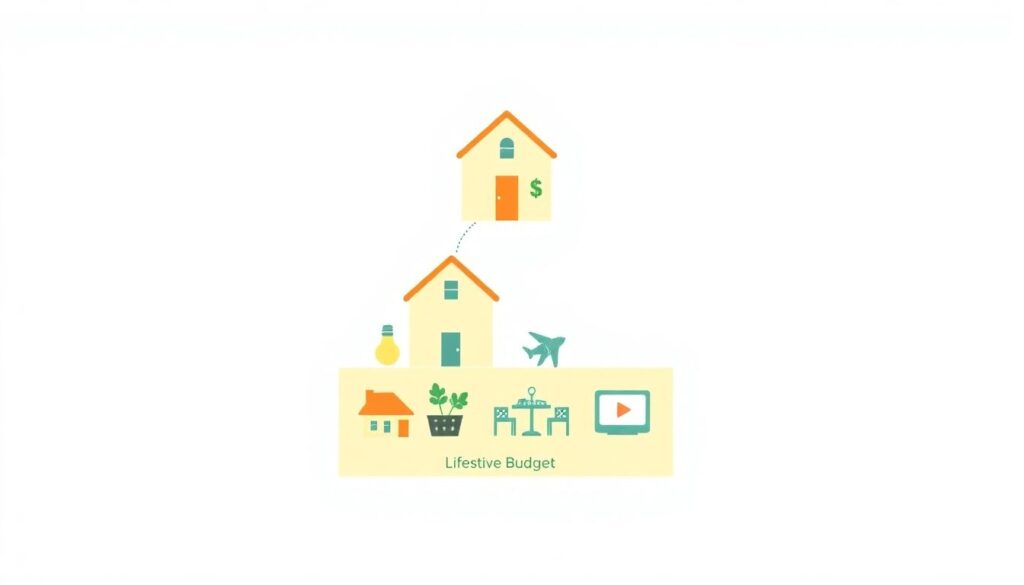
A practical way to make your plan durable is to group expenses by priority. Fixed essentials like housing, basic food, utilities, and minimal health coverage form your core “must-have” budget. Above that sit flexible lifestyle choices like dining out, travel, club memberships, and premium streaming bundles. The top layer is “nice-to-haves”—things you’d love but can live without if markets are rough or health expenses spike.
This hierarchy gives you levers you can actually pull when reality doesn’t match the forecast. In good years, you can fund travel and extras fully; in bad market years or after big medical bills, you know what can be trimmed without triggering panic. That’s how a spending plan becomes a living strategy instead of a rigid guess that collapses the first time something goes wrong.
Principle 4: Build in Inflation and Changing Prices
In 2025, ignoring inflation is asking for trouble. Food, housing, and especially health care don’t all inflate at the same rate. A realistic plan assumes that some costs rise faster than the broad inflation number you see in the news. Health-related expenses, in particular, historically outpace general inflation, which can quietly erode your purchasing power over a long retirement.
When using a retirement planning calculator or working with retirement income planning services, pay attention to the inflation assumptions. If a tool lets you assign different inflation rates to categories—say, one rate for general spending and a higher rate for health care—that’s even better. It’s not about perfection; it’s about not pretending that all dollars will buy the same basket of goods 20 years from now.
Principle 5: Match Spending Flexibility to Income Sources
Think of your income in layers as well. Government benefits and annuities can cover core needs because they tend to be stable and sometimes inflation-adjusted. Investment portfolios, rental income, or part-time work can fund the more flexible lifestyle layer. By matching guaranteed income to essential expenses, you reduce the odds that a market downturn forces you to cut back on basics like medicine or rent.
In practice, this might mean aiming to cover housing, insurance, groceries, and basic utilities with Social Security, pensions, or annuity payments. Then, travel and non-essential extras depend more on investment returns or occasional income. If markets perform well, you enjoy more; if not, you already know where to adjust without threatening your stability.
Modern Trends You Must Factor In (2025 Reality Check)
Longer Lives, Later Retirements, and Partial Work
Humans are living longer, healthier lives, and that changes everything. Many people in their late 60s today are still energetic, digitally savvy, and interested in some form of work—consulting, freelance projects, or passion-driven part-time jobs. That means retirement is less a switch and more a dimmer: you reduce income from work gradually while building up withdrawals from savings.
When you ask yourself how much do i need to retire comfortably, you now must decide what you mean by “retire.” Is that when you stop full-time work? When any earned income stops? Or when you stop working for money altogether? Getting clear on your personal definition will materially change your spending plan, because a few years of modest part-time income can significantly relieve pressure on your investment withdrawals.
Remote Living, Geo-Arbitrage, and Flexible Housing
One of the biggest trends of the 2020s is geographic flexibility. Remote work culture has made living abroad or in lower-cost regions socially and logistically easier. Many near-retirees experiment with “test drives” in different cities or countries to lower their cost of living while maintaining a high quality of life. This can dramatically reshape a retirement budget, especially when relocating from an expensive urban center to a more affordable area.
However, this isn’t only about saving money. It’s about aligning your lifestyle with what you value: climate, community, healthcare access, and cultural options. When building your spending plan, model at least two scenarios: staying where you are, and moving to a lower-cost (or higher-cost but more desirable) location. See how housing, transportation, and health costs shift; the difference often surprises people.
Health Tech, Telemedicine, and New Types of Expenses
Health technology has exploded. Telemedicine, wearable health trackers, AI-based diagnostics, and digital therapeutics are moving from niche to normal. While some of these innovations lower certain medical costs by catching issues earlier, they also introduce new spending categories: subscription services, devices, and premium care models that many retirees willingly pay for to preserve independence and mobility.
Yet, even with these advances, long-term care remains a financial wild card. Assisted living, memory care, or in-home health aides can drain savings quickly. A realistic spending plan in 2025 has a line item or at least a strategy bucket for long-term care—whether through insurance, earmarked investments, or home equity. Ignoring this piece is one of the fastest ways for an otherwise solid plan to fail.
Digital Life, Subscriptions, and Non-Traditional “Must-Haves”
Twenty years ago, very few retirees had streaming services, multiple cloud storage plans, cybersecurity subscriptions, and app-based fitness programs. Today, these digital tools can be as essential to comfort and safety as a landline phone used to be. They should appear as explicit categories in your retirement budget, not as an afterthought.
This is where a modern retirement budget planner shines: it helps you capture recurring digital and tech costs you’d otherwise dismiss as “small.” In aggregate, these “small” costs can rival or exceed traditional utilities. As big tech firms keep moving to subscription models in 2025, retirees must track and periodically prune their digital spending just as carefully as any other category.
How to Build Your Spending Plan Step-by-Step
Step 1: Audit Your Current Spending—With Brutal Honesty
Before forecasting the future, study your present. Pull the last 6–12 months of bank and card statements and categorize every expense. Don’t assume you know where your money goes; most people are surprised by how much “leaks” through convenience purchases, fees, and unused subscriptions. This baseline becomes the starting point for deciding which patterns will follow you into retirement and which you plan to change.
As you go through this audit, tag expenses you consider non-negotiable in retirement, ones you’d like to keep if possible, and ones you plan to reduce. That simple tagging system clarifies priorities later when you build scenarios with different spending levels. The more transparent you are now, the easier it becomes to answer questions about what a comfortable retirement actually costs for you, not for an average person in a study.
Step 2: Sketch Your Retirement Lifestyle in 5–10 Year Chunks
Next, split your future into rough time blocks: maybe 60–70, 70–80, and 80+. In each block, imagine your health, energy, travel habits, and likely responsibilities. Will you help aging parents? Are you likely to help grandchildren with education? Will you maintain a large home or downsize to a condo? Narrative thinking like this might feel “soft,” but it gives you concrete clues about the kinds of expenses to model.
From these stories, extract real categories: flights per year, nights in hotels, memberships, insurance types, car replacements, and home projects. Then assign ballpark annual costs, inflating them modestly for far-future decades. Don’t obsess over precision; a realistic plan is more about ranges and patterns than perfect numbers.
Step 3: Use Modern Tools—but Don’t Blindly Trust Them
This is where technology helps. A good retirement planning calculator or app allows you to input your expenses, expected income sources, savings amount, and some assumptions about returns and inflation. These tools can simulate different withdrawal strategies and probability of success over 25–40 years, giving you a reality check against your hopes and fears. They also make it easier to test “what if” scenarios quickly.
However, calculators only know what you tell them. If you underestimate travel or ignore long-term care costs, the outputs will look overly optimistic. Use tools to stress-test your plan, not to decide what you “should want.” When you see a probability or forecast, ask yourself which input assumptions are most uncertain and create a version with conservative numbers as well as a more optimistic case.
Step 4: Define Income Sources and Map Them to Expenses
List all your expected retirement income streams: government benefits, pensions, annuity payments, rental income, part-time work, and planned withdrawals from investment accounts. Note which are guaranteed and which are variable, and when each starts. For example, Social Security may not begin right when you quit full-time work if you delay claiming for higher future benefits.
Then map these streams against your expense categories. Guaranteed income goes first to essentials, variable income and portfolio withdrawals fund the rest. This is also where professional help can add value. A financial advisor for retirement planning can construct tax-efficient withdrawal sequences, coordinate account types, and align your investments with your spending timeline so that short-term needs aren’t exposed to too much market volatility.
Step 5: Build in Guardrails and Periodic Check-Ins
No matter how carefully you plan, life and markets will deviate from your forecasts. The solution isn’t to throw out the plan but to give yourself explicit rules about how and when you’ll adjust spending. For example, you might decide that if your portfolio drops by more than 15% in a year, you’ll temporarily cut discretionary spending by 10–15% until it recovers.
Set a schedule for check-ins—once or twice a year—to compare actual spending and portfolio performance to your projections. Use this time to adjust your plan: tweak travel budgets, reconsider large gifts, or change the timing of big purchases like cars or home renovations. This ongoing course correction is what turns a static estimate into a resilient, realistic roadmap.
Examples of Putting a Realistic Plan Into Practice
Example 1: The “Phased Freedom” Couple
Imagine a couple, both 60, planning to leave full-time work at 63 but expecting to consult part-time until 68. They want heavy travel for the first 10 years, then fewer but longer trips, and finally more local activities. They use a retirement planning calculator to model high spending between 63–73, moderate between 73–80, and more health-related spending after 80. Their calculator shows that front-loading travel is possible if they’re willing to trim late-life discretionary spending and keep consulting income for at least five years.
They align guaranteed income (a small pension plus Social Security later on) with housing, utilities, and health coverage. Investments and consulting income fund travel and hobbies. They also earmark a slice of their portfolio for long-term care, acknowledging that one of them may need intensive support in their 80s. This approach keeps their early, active years vibrant while still preserving a safety margin for later.
Example 2: The Solo Retiree Embracing Geo-Arbitrage
Consider a 55-year-old single professional aiming to cut back to part-time remote work at 60 and relocate to a lower-cost country with good healthcare. They forecast their housing costs dropping by 30–40%, but travel back to their home country increasing. Their retirement budget planner highlights that while daily expenses will fall, airfare, international insurance, and visa-related fees will rise.
To keep the plan realistic, they build three budgets: one for living abroad full-time, one for a half-year-abroad/half-year-home pattern, and one for moving back home permanently if health issues arise. Running these scenarios with retirement income planning services helps them see that maintaining flexibility is affordable if they rent instead of own in both locations. This “modular” lifestyle-backed plan reflects modern mobility trends and avoids locking into one rigid path.
Example 3: The Late-Career Career-Shifter
Picture someone at 52, burned out from a high-stress job, dreaming of retiring at 60 but also tempted to shift to a lower-paid, more meaningful career. They’re worried that the pay cut will wreck their retirement targets. A closer look at their spending reveals high, unsatisfying expenses tied to stress—frequent takeout, expensive commutes, and impulse shopping. By switching careers at 55, they accept lower income but also naturally reduce some current costs.
In building a retirement spending plan, they model a modest lifestyle both now and in retirement, focusing on meaning-rich but not extravagantly priced activities. The shift keeps their savings trajectory on track because their spending falls along with income. For them, the key insight is that realistic retirement planning isn’t just about a distant future; it’s about reshaping present choices to better match the life they actually want to live.
Common Myths and Misconceptions About Retirement Spending
Myth 1: “I Just Need a Big Lump Sum and I’m Safe”
A common misconception is that once you hit a certain savings number, the work is done. In reality, a large nest egg without a thoughtful spending strategy can disappear faster than you think, especially with volatile markets, unexpected health costs, or family obligations. The right question isn’t only “how much do i need to retire comfortably” but also “how will I draw this money out in a way that supports my lifestyle and manages risk year after year.”
People who focus only on the lump sum often ignore timing issues like retiring right before a market downturn or claiming benefits too early. A realistic spending plan considers when you tap which accounts, how you adjust withdrawals in bad years, and how you’ll handle major shocks. Without that framework, even a seemingly large balance can feel precarious.
Myth 2: “My Spending Will Automatically Drop a Lot After I Retire”
Many assume their costs will naturally fall once they stop commuting and paying for work clothes. While that’s true for some, others find their expenses stay flat—or even rise—as they finally have time for trips, hobbies, and home upgrades. In the first decade of retirement, spending often remains similar to pre-retirement levels or slightly higher because of increased leisure activities.
Relying on the belief that expenses “must” drop can cause severe underestimation. This is where your current spending audit and lifestyle sketch become invaluable. The point isn’t to scare you into austerity; it’s to replace wishful thinking with informed projections. Some categories will shrink; others will expand. The net effect depends on your actual plans, not on generalized assumptions.
Myth 3: “DIY Planning Is Always Cheaper and Good Enough”
The proliferation of apps, blogs, and calculators has empowered many people to take control of their finances. That’s positive—but it can also tempt you to ignore situations where professional help could save you more than it costs. A seasoned financial advisor for retirement planning can help you model taxes, sequence withdrawals, manage risk, and avoid costly mistakes that aren’t obvious in a simple spreadsheet.
This doesn’t mean you must hand over full control. You can use a hybrid approach: do your own detailed spending work, then use retirement income planning services for specific questions—like Social Security claiming strategies, Roth conversions, or setting up guardrails for withdrawals. Think of professionals as specialists you consult when stakes and complexity are high, not as replacements for your own judgment.
Myth 4: “Once the Plan Is Built, I Don’t Need to Touch It”
Retirement planning is not a one-and-done project. Prices change, tax laws evolve, your health shifts, and your priorities mature. A plan that looked perfect at 60 may be misaligned at 70 if you never revisit it. Treat your spending plan like a living document, something you update regularly, not a contract written in stone.
Set calendar reminders for annual or semiannual reviews, and also update the plan after major life events: a serious diagnosis, a big inheritance, the sale of a business, or a significant market crash. These checkpoints keep the plan anchored in reality and let you make smaller, earlier adjustments instead of painful, sudden ones later.
Practical Checklists to Keep Your Plan Grounded
Key Questions to Ask Yourself While Planning
– What does “comfortable” actually mean in my daily life—what am I doing, where am I living, and who am I supporting?
– Which expenses would I absolutely protect in a downturn, and which could I cut quickly without feeling deprived?
– How long do I realistically expect to work in some form, and how secure are those income sources?
– How might my housing situation change over time—downsizing, relocating, or aging in place with modifications?
– What are the three biggest financial shocks that could derail my plan, and what buffers am I building for each?
Signals That Your Retirement Spending Plan Needs an Update
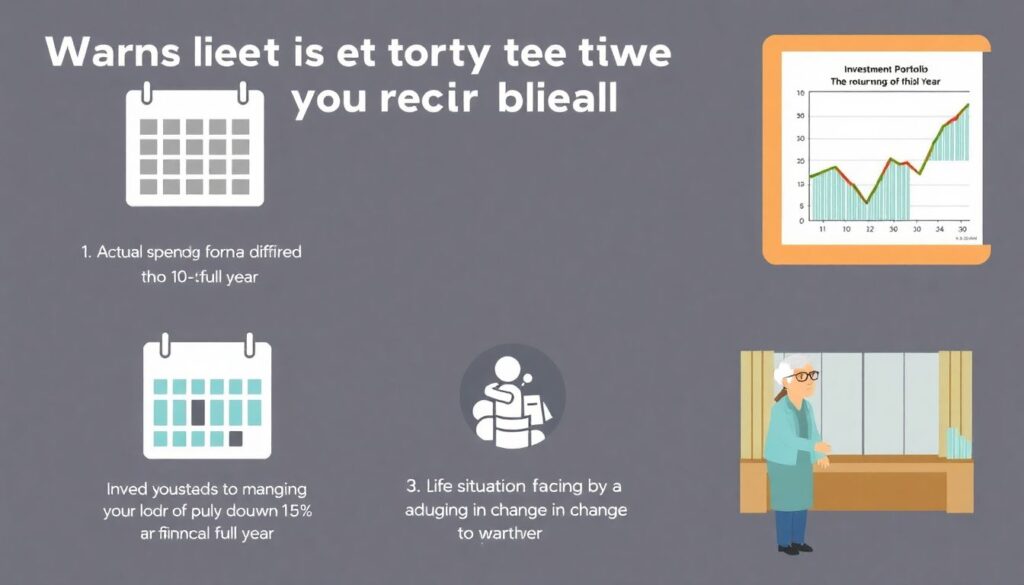
– Your actual spending has differed from your plan by more than 10–15% for a full year.
– Your portfolio has experienced a major swing, up or down, and you haven’t adjusted withdrawals or goals.
– You’ve had a significant life change—new health condition, loss of a partner, or a change in family responsibilities.
– Inflation in your area or country has spiked beyond what your original assumptions anticipated.
– You feel persistent anxiety about money despite having a written plan, which may suggest gaps or unrealistic assumptions.
Bringing It All Together
A realistic retirement spending plan in 2025 is less about chasing a magic number and more about weaving together your lifestyle, income sources, and modern financial realities into a flexible framework. You start by understanding who you are and how you want to live, translate that into detailed, categorized expenses, and then stress-test those numbers with tools and, when helpful, professionals. Along the way, you embrace new trends—remote living, digital health, evolving work patterns—without losing sight of fundamentals like inflation and long-term care.
If you treat your plan as a living blueprint and regularly compare it with your real life, you’ll be far better prepared to adjust as the world changes. And that’s ultimately what a realistic retirement spending plan offers: not a guarantee, but a higher probability that your money will support the life you actually want, for as long as you need it to.