
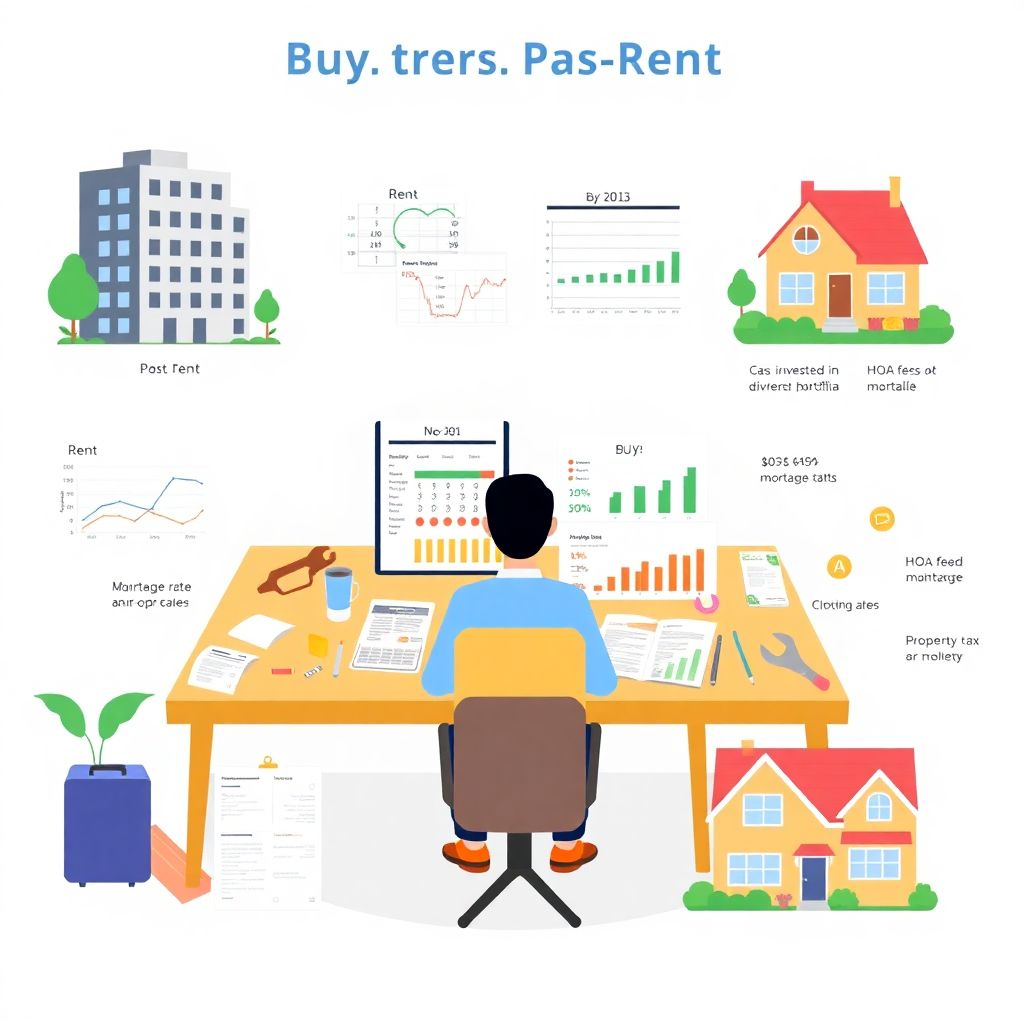
In plain terms, the buy‑vs‑rent decision is a long, nerdy math problem hiding inside an emotional life choice. You’re balancing cash flow, risk, taxes, and flexibility over 5–10+ years, not just asking “is it better to buy or rent a home this year?”. A solid decision comes from translating your lifestyle plans into numbers, then pressure‑testing those numbers against realistic market data for the last few years, not just today’s headline mortgage rate.
Key market trends from the last three years
If you zoom out and look at the last three years of widely cited U.S. data (roughly 2021–2023), you see why the answer keeps changing. According to Federal Reserve and major listing‑site statistics, 30‑year mortgage rates climbed from around 3% in early 2021 to roughly 7% by late 2023, while national home prices still rose about 30–35% from pre‑pandemic levels. Over the same period, median asking rents jumped about 15–20%, with 2022 showing the sharpest spike and 2023 flattening into low single‑digit growth or even small declines in some big cities. Practically, that means a mortgage vs rent cost comparison that looked like a slam‑dunk for buying in 2021 can look break‑even or worse in 2023 unless you hold the home longer or put more money down.
Necessary tools: what you actually need on your desk
You don’t need Wall Street software, but you do need a few precise instruments to turn gut feelings into a proper home buying vs renting pros and cons analysis. First, a robust buy vs rent calculator (not just a simplistic “rent equals wasted money” meme) that allows you to input mortgage rate, property tax rate, maintenance as a percentage of property value, expected rent inflation, and an assumed investment return on money you don’t put into a down payment. Second, current local market data: recent sale prices for comparable homes, typical HOA fees, insurance premiums, and realistic local rent for a unit you’d actually live in. Third, a tax impact estimator that factors in mortgage interest and property tax deductions only if you itemize, plus any first‑time buyer credits in your region. Finally, a basic spreadsheet so you can tweak assumptions yourself instead of trusting a single online result.
Baseline questions before you touch the numbers
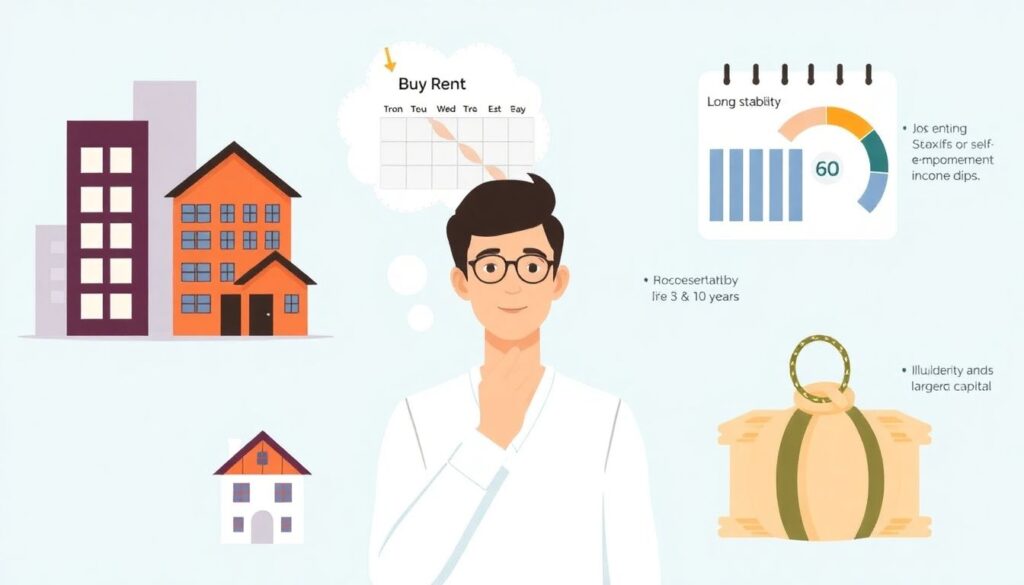
Before you run any model, lock down time horizon and stability: How long do you realistically expect to stay in one city and one rough housing type—five years, eight, ten? How safe is your income stream against layoffs or self‑employment dips? And how comfortable are you with illiquidity—tying a big chunk of your net worth into one highly local asset? The shorter your time horizon and the shakier your job, the more the math will tend to favor renting plus investing the difference.
Step‑by‑step framework: from rent to a full ownership cost
Start by defining the “equivalent” home: same neighborhood tier, size, commute, and school quality. Take today’s rent for a comparable unit and project it forward using a realistic rent growth rate; recent U.S. numbers suggest not using the wild 2021–2022 spikes forever—something like 2–3% annually is more reasonable after the recent run‑up. Next, build the owner’s cash‑flow stack: principal and interest based on your actual credit‑score‑driven rate, property taxes, home insurance, private mortgage insurance if your down payment is under 20%, maintenance at roughly 1–1.5% of home value per year, plus any HOA. Once you have monthly owner cost, net out tax benefits you truly qualify for and any principal reduction (forced savings) component. Feed all this into a first-time home buyer vs renting guide worksheet or your own spreadsheet, then compare the total economic cost of owning to renting over your planned holding period, including transaction costs when you eventually sell.
Interpreting the buy vs rent calculator output
When you hit “calculate,” don’t treat the output as a verdict; treat it as a sensitivity analysis playground. If one scenario says buying starts to beat renting only after year eight, ask yourself how realistic an eight‑year stay is for your job or family plans. Then perturb key variables: knock 1% off your expected home price growth, add 1% to your mortgage rate, or lower your assumed stock market return. In the last few years, many buyers implicitly assumed 6–8% home appreciation because 2020–2022 were so strong; but the 30‑year national real (inflation‑adjusted) appreciation rate is more like 1–2% per year. If a small change in appreciation or rent growth flips the answer, that means the decision is fragile and non‑financial factors like flexibility should carry more weight.
Core financial trade‑offs: liquidity, leverage, and risk
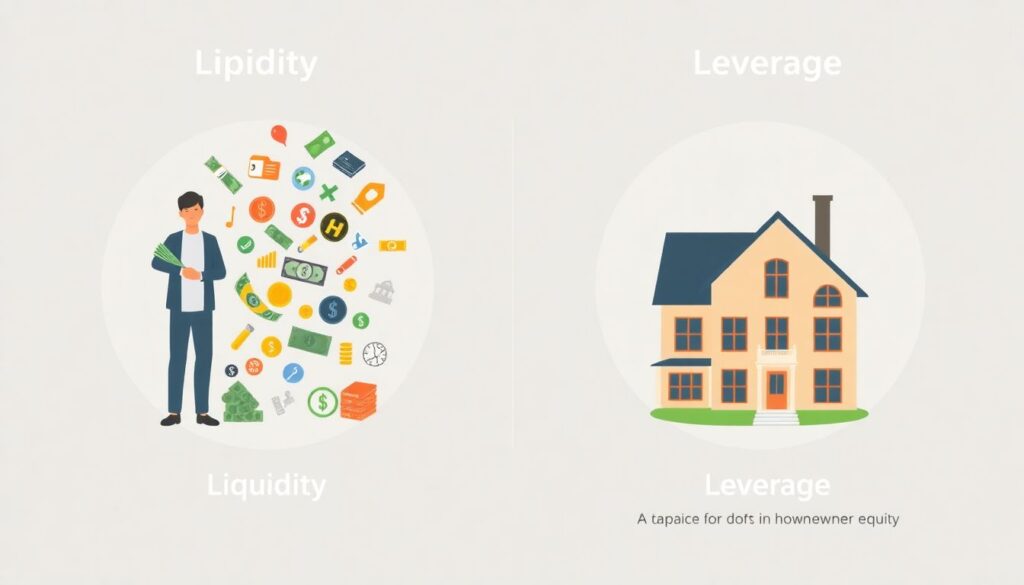
Underneath the lifestyle talk, the decision boils down to three technical levers. Liquidity: renters keep more capital in flexible, diverse assets; owners lock capital in one property that’s slow and costly to sell. Leverage: a mortgage amplifies both gains and losses; a 10% home price drop on a 10%‑down purchase wipes out your equity, while the same cash in a diversified fund historically shows lower volatility. Risk concentration: a homeowner is exposed to local job market plus local property market risk at the same time, whereas a renter can more easily move if either turns sour. The last three years of elevated rate volatility made leverage more expensive, which means the hurdle for buying to “beat” renting has gone up unless you strongly value housing stability or expect outsize local growth.
Real‑world stats: when did buying probably win?
Looking at broad U.S. data, households that bought in 2020–early 2021 locked in sub‑3.5% mortgages while rents and prices later surged, so many of them now pay a monthly housing cost well below current market rent for comparable units. In contrast, buyers in late 2022–2023 often faced 6–7% mortgage rates and peak prices: according to major listing portals, in several large metros by mid‑2023 the monthly cost of owning a median‑priced home with 10–20% down exceeded the cost of renting a similar unit by 20–30%. However, if those higher‑rate buyers hold for 10+ years and rates eventually fall (allowing a refinance), the long‑run outcome can still favor ownership through equity build‑up and partial inflation protection—assuming local prices don’t stagnate.
Building your own mini “first‑time home buyer vs renting guide”
To make this concrete, draft your own mini‑playbook. Step one: document your current rent, annual rent hikes over the last three years, and the best alternative rentals you’d consider if prices rose faster. Step two: simulate a realistic purchase using today’s actual listings, not hypothetical “average” homes—pull address‑level taxes and HOA fees. Step three: allocate hypothetical down‑payment funds into an index‑fund scenario and project its expected return versus home equity growth under conservative assumptions. Step four: layer in non‑cash outcomes like commute time, noise, or school access, giving them explicit scores. This transforms buying vs renting from a vague feeling into a decision matrix where both money flows and life quality sit side by side, and where you can explain, even to yourself, why you’re leaning one way.
Troubleshooting: common errors in buy vs rent analysis
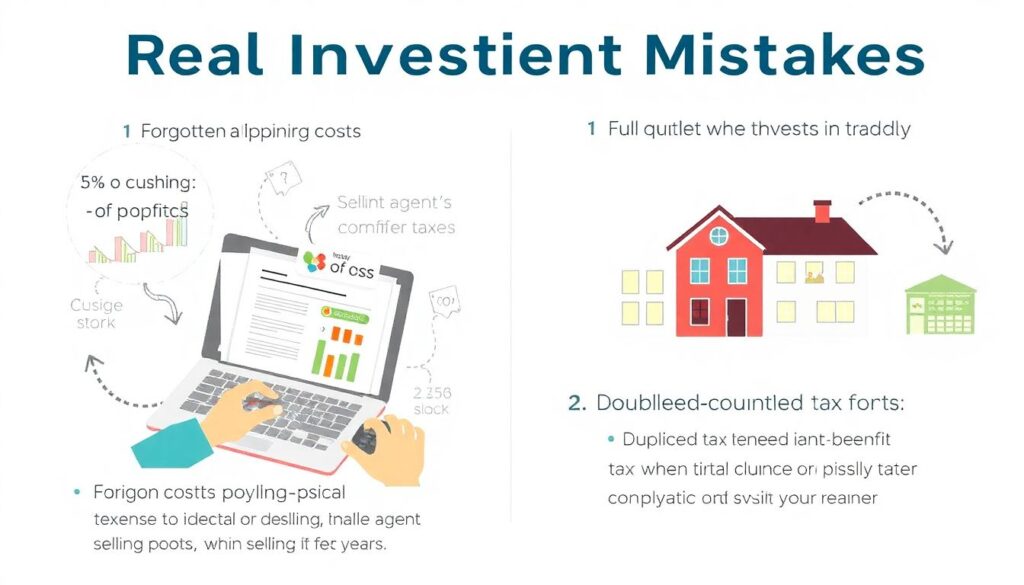
Several recurring mistakes can quietly sabotage your model. People often omit closing costs (which can reach 3–5% of purchase price) and selling costs (agent commissions, transfer taxes), which distort results if you sell within five years. Another error is double‑counting tax benefits—assuming full mortgage interest deduction despite not itemizing, or not accounting for recent standard deduction increases. On the rent side, users sometimes plug in aggressive rent inflation based on 2021–2022 data, even though 2023 already showed normalization. Finally, many calculators default to optimistic investment returns (8–10% annually) for money you’d invest as a renter; if your actual behavior is keeping cash in a low‑yield account, that dramatically alters the rent‑and‑invest scenario. Adjust these to your real behavior, not your idealized self.
What to do if the numbers are inconclusive
Often, the spreadsheet ends in a near tie: maybe owning is only slightly cheaper than renting in year ten, or renting looks cheaper but only by a narrow margin. When the financial delta is small and sensitive to minor assumptions, it’s a signal that qualitative factors should dominate. In that case, treat ownership like a bundled product: part housing, part forced savings, part lifestyle anchor. If you anticipate major life changes—kids, career pivots, possible relocation—prioritize optionality and lower fixed obligations, which usually argues for renting. If your job is stable, you’re deeply rooted in a specific metro, and you value customizing your space, then the thin numerical edge is less important than aligning your housing with the life you’re actively building.
Putting the last three years into your future plan
The last three years proved that neither buying nor renting is permanently “smarter”; the winner shifts with interest rates, local supply, and your personal volatility. Use a sophisticated buy vs rent calculator or your own spreadsheet to replay what would have happened if you’d bought or rented in 2021, 2022, and 2023 under your current assumptions; this back‑test builds intuition for how sensitive outcomes are to timing. Then freeze today’s numbers and make a forward‑looking choice you’d still be comfortable with if prices moved sideways and rents grew modestly. Treat the decision less as a bet on quick appreciation and more as a risk‑managed, multi‑year allocation of your time, capital, and flexibility.