

Most people don’t quit budgeting because math is hard. They quit because the system they chose doesn’t fit real life. A budgeting journal that actually sticks feels more like a trusted sidekick than a school assignment—and you can design it that way from day one.
Below is a practical, research-backed guide to building a budgeting journal that lasts, with tips from financial coaches, behavioral economists, and planners who see what works (and what quietly falls apart).
—
Why a Budgeting Journal Still Matters in a Digital World
If everything’s in apps now, why bother with a notebook?
Behavioral research has a simple answer: what you write by hand, you remember and internalize better. Financial therapists often point out that the physical act of writing about money slows you down just enough to notice emotions, patterns, and impulses. Apps are great for tracking; journals are great for changing behavior.
Surveys from 2022–2024 across the U.S. and Europe keep repeating the same pattern: around 60% of adults say they live paycheck to paycheck, even as digital finance tools explode in popularity. So tech alone clearly isn’t solving the problem.
A paper or hybrid budget planner journal adds something those tools usually miss: reflection, context, and your own words.
—
Step Zero: Decide What “Success” Looks Like
Before you buy the prettiest notebook on Instagram, ask one blunt question:
What problem am I actually trying to solve over the next 12 months?
Experts in financial planning recommend picking just one or two primary outcomes, such as:
– Stop overdrafting your account
– Pay off one credit card
– Build a three‑month emergency fund
– Stop feeling guilty every time you spend
A budgeting journal for beginners that tries to fix *everything* at once becomes a guilt museum. Pick a few outcomes; your journal will be built around helping you inch toward those.
—
Choosing the Right Format: Paper, Digital, or Hybrid?
Financial coaches often see higher follow‑through when people literally touch their money system every day, not just swipe through it.
Here’s how experts usually break it down:
Paper only
Great if you like analog tools and minimal screens. A simple notebook can absolutely be your financial planner budget book. You control every layout, which makes it easier to adapt—but you must enter everything by hand.
Digital only
Useful if your life is already inside your phone. Spreadsheets and apps handle math, recurring payments, and charts for you. The risk? People open them when things are urgent, not daily. That kills consistency.
Hybrid (the “sticky” favorite)
Behavioral economists tend to love hybrid systems:
– App or bank site for raw numbers
– Notebook for plans, rules, and reflections
You let tech crunch data while your budget planner journal stays focused on decisions, priorities, and “why” you’re doing any of this.
—
What to Put in Your Budgeting Journal (Core Sections)
Think of your journal as a personal money OS. Experts recommend at least these five core sections.
1. Money Snapshot
One or two pages that show:
– Income sources (after tax)
– Fixed monthly bills
– Debts (balance + interest rate)
– Savings and investments
Update it once a quarter. This turns vague stress into specific numbers you can work with.
2. Monthly Plan
Here your monthly budget journal becomes a dashboard. Financial planners usually encourage:
– Income at the top
– “Non‑negotiable” bills next
– Flexible categories (groceries, fun, transport) after
– Savings and debt payments listed as *bills to your future self*
Experts strongly suggest you decide this plan before the month begins—ideally 20–40 minutes near the end of the prior month.
3. Daily or Weekly Money Check‑ins
This is where most systems fail: no regular contact.
Coaches who see long‑term success recommend either:
– 5–10 minutes every evening, or
– One 30–40 minute “money date” each week
Log spending, adjust categories, and jot a one‑line note about how you felt about money that day or week. Short, honest, and sustainable.
4. Goals & Milestones
Here’s where the motivation hides. Make mini‑targets:
– “Pay down $300 on Card A this month”
– “Add $100 to travel fund”
– “No food delivery Mon–Thu”
Behavioral finance studies show that visible progress markers (like filling in a bar or coloring boxes) significantly increase follow‑through. Your journal is the perfect place for that visual feedback.
5. Reflections & Lessons

Every month, add a page titled something like:
– “What worked this month”
– “What sabotaged me”
– “What I’ll try differently”
Money psychologists keep repeating: self‑compassion beats self‑criticism if you want real change. This section helps you course‑correct without spiraling into shame.
—
How to Start a Budgeting Journal That Actually Sticks: 7‑Step Blueprint
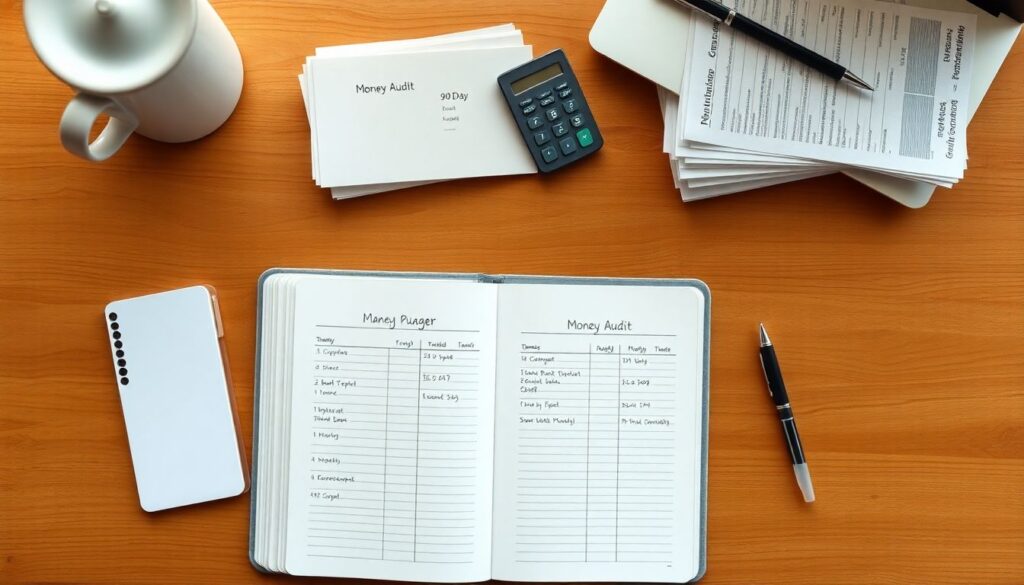
Here’s a simple sequence experts often walk clients through.
- Pick your tool for 90 days.
Choose a cheap notebook, the so‑called best budget planner notebook you’ve been eyeing, or a hybrid setup. Commit to it for three months before you judge it. - Do a one‑time Money Audit.
Print the last 1–3 months of transactions or export them to a spreadsheet. Group them by category in your journal: housing, food, transport, debt, fun, etc. This gives you a realistic starting point. - Set two clear 90‑day goals.
Examples: “Reduce dining out by 30%” or “Save $600 starter emergency fund.” Write them on the first page, like mission statements. - Design a simple monthly layout.
One page for income and bills, one for flexible spending, one for savings/debt targets, and one for notes. Don’t overdecorate on day one; function first, pretty later. - Schedule recurring “money dates.”
Add weekly check‑ins to your calendar like any other appointment. Experts say this single habit predicts long‑term success more than the exact budgeting method. - Create friction for impulse spending.
For the next 30 days, add a rule: “I must write down any purchase over $X before I tap buy.” That pause—pen in hand—often saves people more than any coupon. - Review and tweak after one month.
Ask: Which pages did I actually use? Which felt like homework? Let your real behavior, not Pinterest, shape the second month’s layout.
—
Expert Tips to Make Your Journal Survive Real Life
Financial planners and money coaches who work with hundreds of clients tend to repeat the same handful of principles.
Don’t track every penny forever
One experienced coach’s rule:
“Track every penny for 30–60 days to see patterns. After that, track categories that actually move the needle.”
If groceries and dining are your problem zones, zoom in there and keep other categories higher‑level. Hyper‑detailed tracking burns people out.
Use “guardrails,” not strict bans
Behavioral economists stress that hard bans (“zero eating out, ever”) lead to rebound spending. Instead, use guardrails like:
– “Two dinners out per week, max”
– “Cash envelope of $150 for fun money”
Your journal is where you define and adjust those rules, so they are firm enough to matter but flexible enough to survive birthdays and bad days.
Automate the boring, journal the meaningful
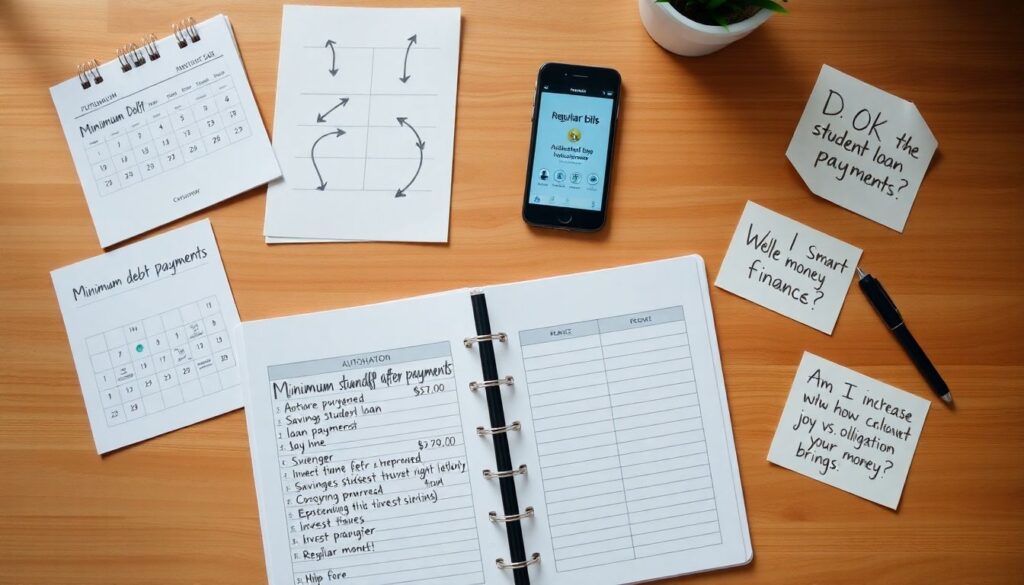
Experts suggest you automate:
– Minimum debt payments
– Savings transfers right after payday
– Regular bills
Use your financial planner budget book to handle the decisions automation can’t make: “Do I increase student loan payments or invest more?” “Am I OK with how much joy vs. obligation my money is funding?”
—
The Economic Case for a Personal Budgeting Journal
From an economic perspective, a consistent journal does three big things for an individual household:
1. Increases your personal “profit margin”
You’re basically running a one‑person business. The gap between income and spending is your profit. Journaling makes that spread visible—and therefore adjustable.
2. Smooths out shocks
Macroeconomists talk about “buffer stock saving”: households with even modest emergency funds handle job loss or medical bills with far less long‑term damage. Journals help you actually build that buffer intentionally, not just “hope” there’ll be money left.
3. Changes your lifetime cost of money
By targeting high‑interest debt early and consistently, you cut how much you pay in interest over decades. A small, regular extra payment—planned each month in your journal—can cut years off a loan.
At scale, if millions of people do this, it affects the wider economy: more financial resilience, different consumption patterns, and potentially less reliance on high‑cost credit.
—
How Budget Journaling Is Shaping the Personal Finance Industry
Budgeting used to mean spreadsheets and maybe a dusty notebook. Now, there’s an entire cottage industry around it.
Over the past few years, publishers and creators have rolled out guided journals, planners, and hybrids that merge design with behavioral science. The budgeting journal for beginners segment, in particular, has grown—simple prompts, pre‑printed categories, and quick‑win challenges aimed at people who feel overwhelmed.
Market research firms tracking personal finance tools expect steady growth in both digital apps and analog products. As inflation and interest‑rate volatility continue, demand for clarity and control usually increases rather than fades.
For creators and brands, this trend is reshaping offerings:
– Stationery and lifestyle companies now market high‑end planners as the best budget planner notebook options for “money‑mindful” consumers.
– Fintech startups integrate journaling features—prompts, notes, and goals—into apps that used to just show numbers.
– Educators and influencers sell courses bundled with printable or physical planning systems.
In short, the humble budgeting notebook has become both a personal development tool and a commercial product category—one that’s likely to keep expanding as more people seek analog calm in a digital money world.
—
Making It Yours So You’ll Keep Using It
The most effective budget planner journal isn’t the one with the fanciest layout; it’s the one you’ll still open when you’re tired, annoyed, or stressed.
A few final expert‑backed tweaks that help with that:
– Keep it visible: on your desk or nightstand, not hidden in a drawer.
– Lower the bar: even a 60‑second check‑in counts on chaotic days.
– Celebrate small wins: write down every milestone, however tiny.
– Expect imperfection: missing a week isn’t failure; it’s data. Adjust.
With a bit of structure, honest reflection, and a format that fits your life, your simple monthly budget journal can quietly become one of the highest‑ROI habits you build—guiding daily choices while helping you craft the financial future you actually want.