

Redefining Personal Finance for the Globally Mobile Remote Worker
Remote work has redefined the way we earn, spend, and live. For digital nomads and full-time remote professionals, managing personal finances while hopping between time zones is more than just balancing income and expenses—it’s about building a sustainable, borderless lifestyle. Traditional budgeting advice often fails to account for currency fluctuations, variable cost of living, and asynchronous income streams. Remote workers need a strategy that adapts to this dynamic reality. It’s time to rethink budgeting as a living system, not a static spreadsheet.
Case Study: How One Developer Turned Multi-Currency into a Financial Advantage
Take the story of Lina, a front-end developer from Poland who works with clients in the U.S., Germany, and Singapore. Instead of converting all her income to euros, Lina uses multi-currency accounts to hold payments in original currencies. She tracks exchange rates using apps like Wise and Revolut, converting funds only when rates are favorable. By doing so, she increases her annual savings by 8–10%, simply by avoiding poor conversion timing. Her approach shows how understanding global money flow can become an income multiplier for remote workers who are paid in multiple currencies.
Rethink Budgeting: Build a Time-Zone Adaptive Financial System

Budgeting across time zones requires more than tracking what you spend—it demands awareness of when and where you’re spending. A remote worker might receive a payment in the morning in EST, pay for coworking in Bali by noon local time, and invest in crypto in the evening from Lisbon. Standard monthly budgets don’t reflect the fluidity of this lifestyle. Instead, create a dynamic budgeting system using digital wallets that separate funds by purpose (e.g., daily spending, travel, taxes). Use real-time budgeting apps like YNAB or Monarch that sync across accounts and notify you of spending spikes by location and category, not just date.
Learning to Navigate Currency, Compliance, and Chaos

To build financial resilience, remote workers must educate themselves beyond basic budgeting. Understanding international tax obligations, local financial laws, and digital banking regulations is essential. Start with free resources like the Nomad Capitalist blog, Remote Work Hub, and financial literacy courses on Coursera. For those earning across borders, it’s wise to consult with an international tax advisor or use services like TaxScouts or Greenback Tax to remain compliant without losing sleep. A proactive approach to financial legality saves remote workers from costly mistakes and ensures long-term sustainability.
Unusual but Effective Strategies to Stay Ahead Financially
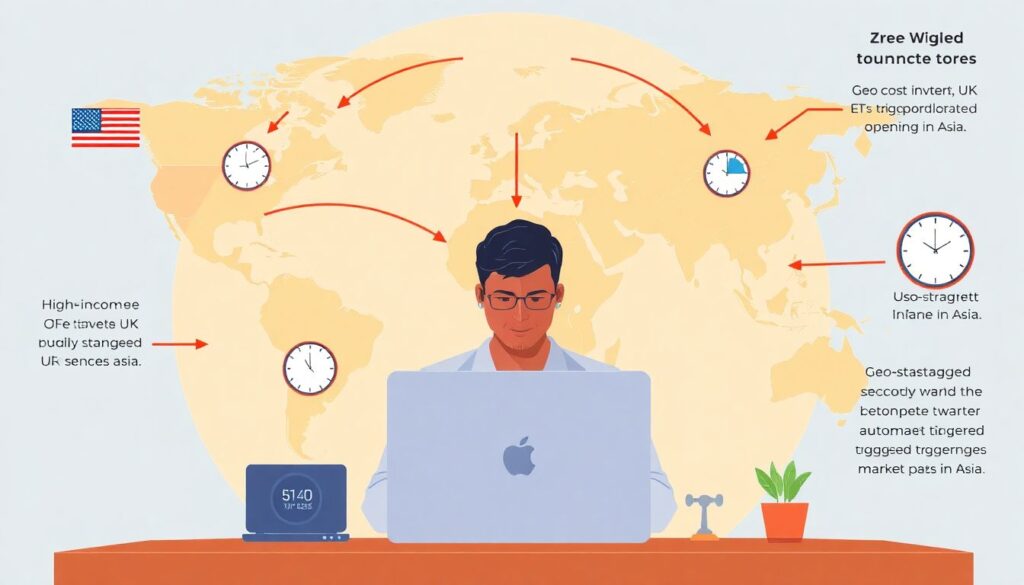
Remote workers often overlook time-based arbitrage—earning in high-income currencies while spending in low-cost regions. But few take it a step further. Try “geo-staggered investing”: set up investment triggers based on market openings across time zones. For example, automate ETF purchases in Asian markets when the European markets close, optimizing for volatility gaps. Another tactic: set delayed billing cycles to align with high-cash-flow periods. If your largest client pays on the 15th, stagger major expenses to the 17th or later. These micro-adjustments prevent overdrafts and reduce reliance on credit.
Inspiration from Real-World Projects: The Global Freelancer Cooperative
One of the most successful examples of remote financial innovation is the Global Freelancer Cooperative (GFC), a decentralized network of independent workers from 30+ countries. The GFC pools resources to negotiate better health insurance rates, invest in shared real estate, and build emergency savings funds together. Members contribute a small monthly amount based on income, and in return, gain access to emergency funding, investment advice, and peer-to-peer support. This model proves that community-led finance can outperform individual budgeting strategies, especially when members span multiple countries and time zones.
Developing Financial Discipline While Remaining Flexible
Flexibility is the heartbeat of remote work, but without discipline, financial freedom turns into instability. Develop rituals that ground your money habits—like a weekly “financial checkpoint” every Friday, regardless of where you are. Use that time to review spending, adjust budgets, and plan for the next week’s expenses. Set auto-savings goals in multiple currencies, and automate tax withholding in a separate digital wallet. Even if your income is variable, your savings should be consistent. Tools like N26 Spaces or Starling Bank’s Goals can help you segment your money visually, making discipline feel intuitive—not restrictive.
Final Thoughts: Own Your Financial Narrative Across Borders
Remote work offers a rare opportunity: to design your financial life unrestricted by geography. But that freedom comes with the need for more strategic financial thinking. Budgeting across time zones is not just about converting currencies or syncing apps—it’s about aligning your earning rhythms with your spending habits, your lifestyle with your long-term goals. Embrace the complexity, learn from those who’ve mastered it, and treat your financial journey as a creative project. With the right tools, mindset, and strategy, you won’t just survive the remote revolution—you’ll thrive in it.