
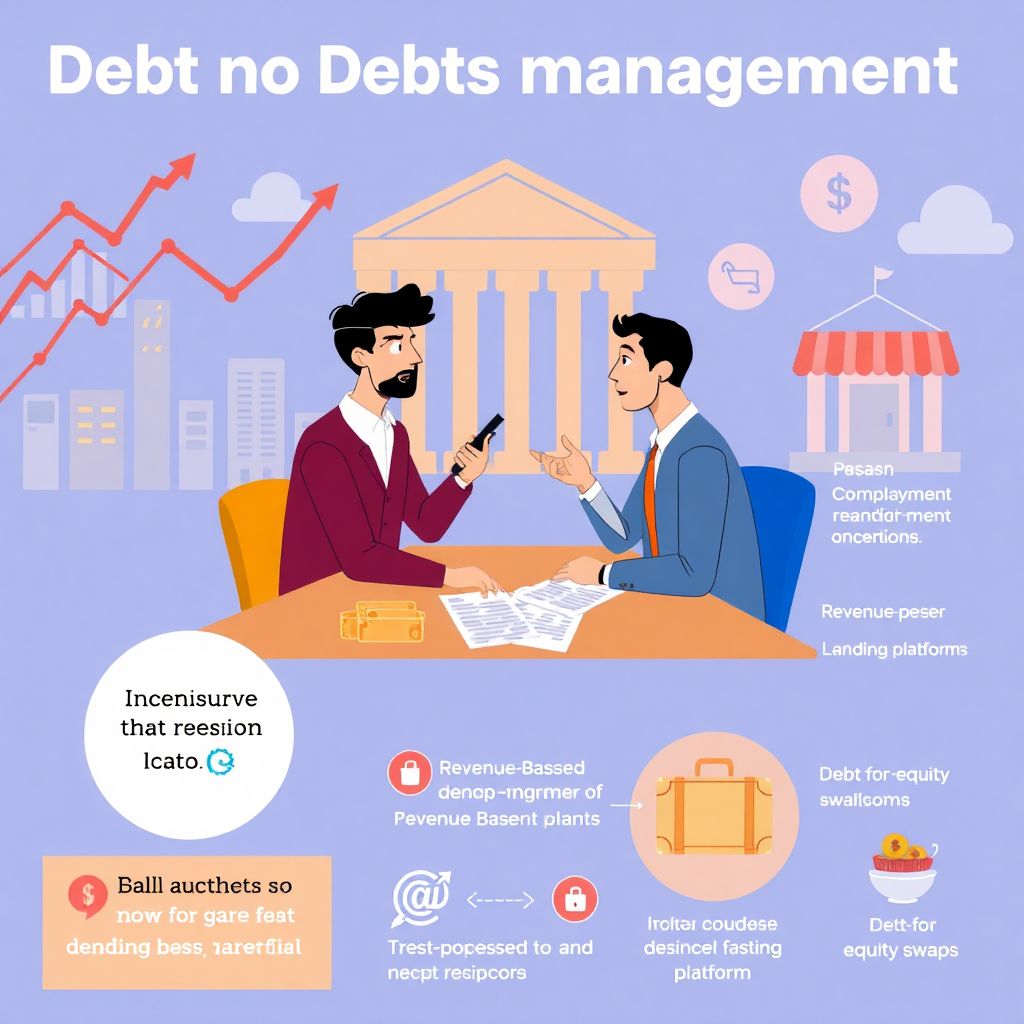
Understanding the Debt Landscape During a Recession
A recession fundamentally alters the financial ecosystem. Declining GDP, rising unemployment, and contracting credit markets create a feedback loop that increases the cost of debt servicing. For both individuals and businesses, cash flow volatility can make fixed debt obligations unsustainable. According to the Federal Reserve, consumer debt delinquency rates rose by 2.1% during the 2008 recession, illustrating the fragility of traditional repayment models under economic stress.
Case Study: Small Business Debt Management in Crisis
Consider the real-world case of “Urban Brew Co.,” a mid-sized craft brewery based in Michigan. During the 2020 COVID-induced recession, the company experienced a 60% drop in revenue due to restaurant closures. Their existing debt structure, based on aggressive expansion loans with fixed monthly payments, became untenable. Instead of defaulting, the CFO negotiated a revenue-based repayment model with their primary lender. This adaptive strategy tied monthly repayments to a percentage of actual revenue, preserving liquidity and avoiding bankruptcy. By 2022, as sales normalized, the company had repaid 85% of the restructured debt.
Counterintuitive Solutions That Preserve Solvency
While deferring payments or seeking forbearance are common tactics, some non-obvious strategies prove more effective in the long term:
1. Debt Laddering with Variable Instruments: Instead of consolidating all debts into a single instrument, selectively refinancing high-interest obligations into variable-rate loans can reduce monthly outflows during periods of rate cuts—a common monetary policy during recessions.
2. Reverse Amortization: Temporarily opting for interest-only payments on secured loans can free up capital for high-interest unsecured debt repayment, improving the overall debt-to-income ratio.
3. Asset Reallocation: Divesting non-core assets to create a liquidity buffer allows for prepayment of strategically selected high-penalty debts, reducing long-term interest exposure.
These approaches require precise modeling of cash flow scenarios and risk tolerances, but can significantly improve debt sustainability metrics.
Alternative Methods Beyond Traditional Restructuring
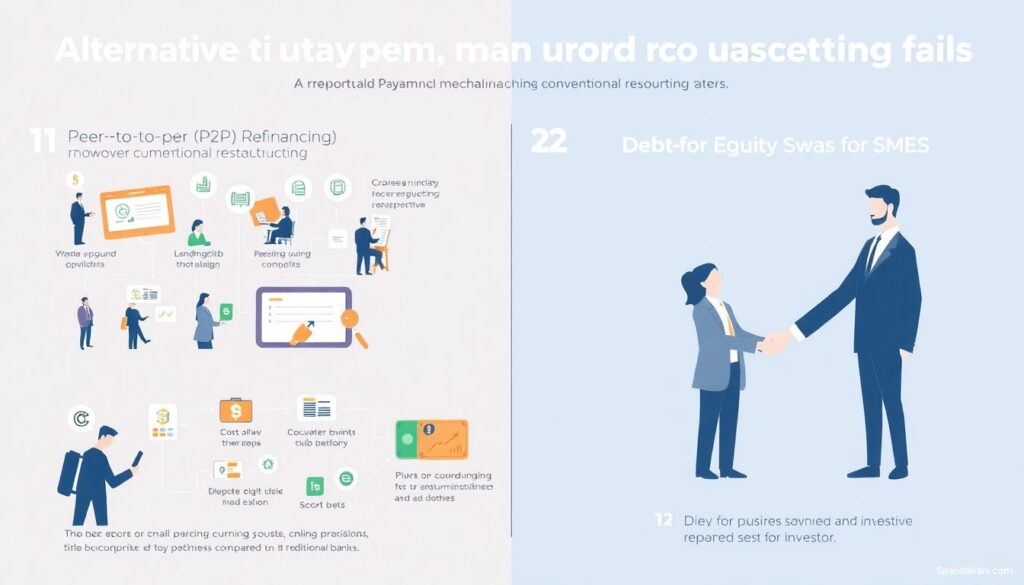
When conventional restructuring fails, alternative repayment mechanisms can offer relief:
1. Peer-to-Peer (P2P) Refinancing: Platforms like LendingClub and Prosper allow borrowers to refinance at competitive rates, often with more flexible terms than banks.
2. Debt-for-Equity Swaps (for SMEs): In distressed situations, some creditors may accept equity stakes in lieu of payments—a tactic that preserves operational continuity and aligns long-term interests.
3. Community Development Financial Institutions (CDFIs): These mission-driven lenders offer below-market interest rates and more lenient terms, especially for underserved borrowers during economic downturns.
An illustrative example is a Chicago-based minority-owned logistics firm that leveraged a $250,000 CDFI loan at 3% APR to retire higher-cost merchant cash advances, improving their debt service coverage ratio (DSCR) from 0.9 to 1.3 over a 12-month period.
Pro Tips and Professional Repayment Hacks

Seasoned financial advisors and debt managers often implement nuanced tactics that are not widely publicized:
1. Debt Snowball Optimization Using AI Models: Advanced software like Tally and Undebt.it can algorithmically prioritize repayment order based on behavioral economics, not just interest rates, increasing borrower compliance and reducing default risk.
2. Tax-Loss Harvesting to Offset Debt Costs: Investors with taxable portfolios can strategically realize capital losses to offset gains, using the tax savings to accelerate debt repayment.
3. Sinking Funds with Inflation-Hedged Assets: Establishing a sinking fund invested in Treasury Inflation-Protected Securities (TIPS) creates a buffer that retains real value and can be used for lump-sum debt payments when conditions improve.
These strategies require coordination between financial planners, tax advisors, and legal counsel but can yield substantial long-term benefits.
Conclusion: Strategic Agility Is Key
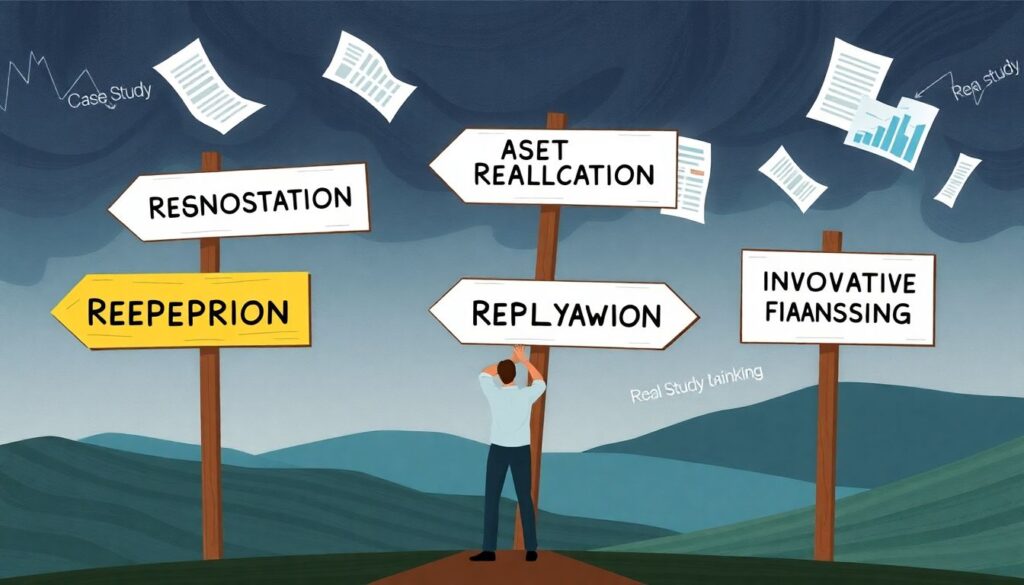
Debt repayment during a recession demands more than simple austerity. It requires an integrated tactical framework involving renegotiation, asset reallocation, and innovative financing. Real-world case studies underscore the importance of adaptive thinking and proactive creditor engagement. As seen with Urban Brew Co. and others, those who approach debt with a dynamic, data-driven strategy not only survive recessions but often emerge more resilient and financially optimized.